Whistler East Chute
Two laps on the east chute of Whistler Mountain — a cold November morning, a cloud inversion in the valley, and steep powder between rock walls that was too good to ride just once.
Elevation Profile
First Light
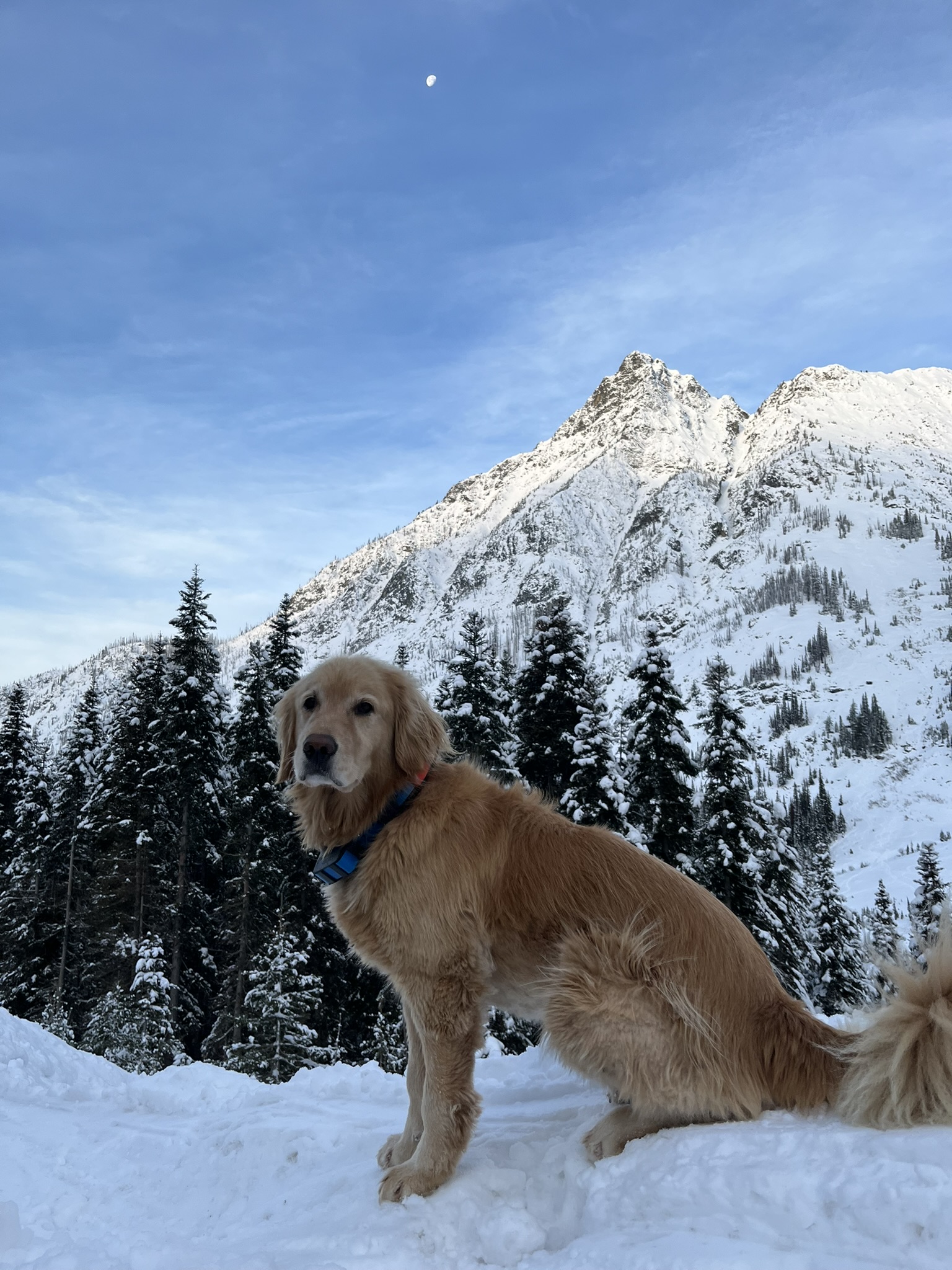
November 9th. A week after the west drainage, and back on Whistler for the other side. We started at first light, the air 14 degrees and sharp, the moon still hanging over the peaks as the sky turned from black to blue.
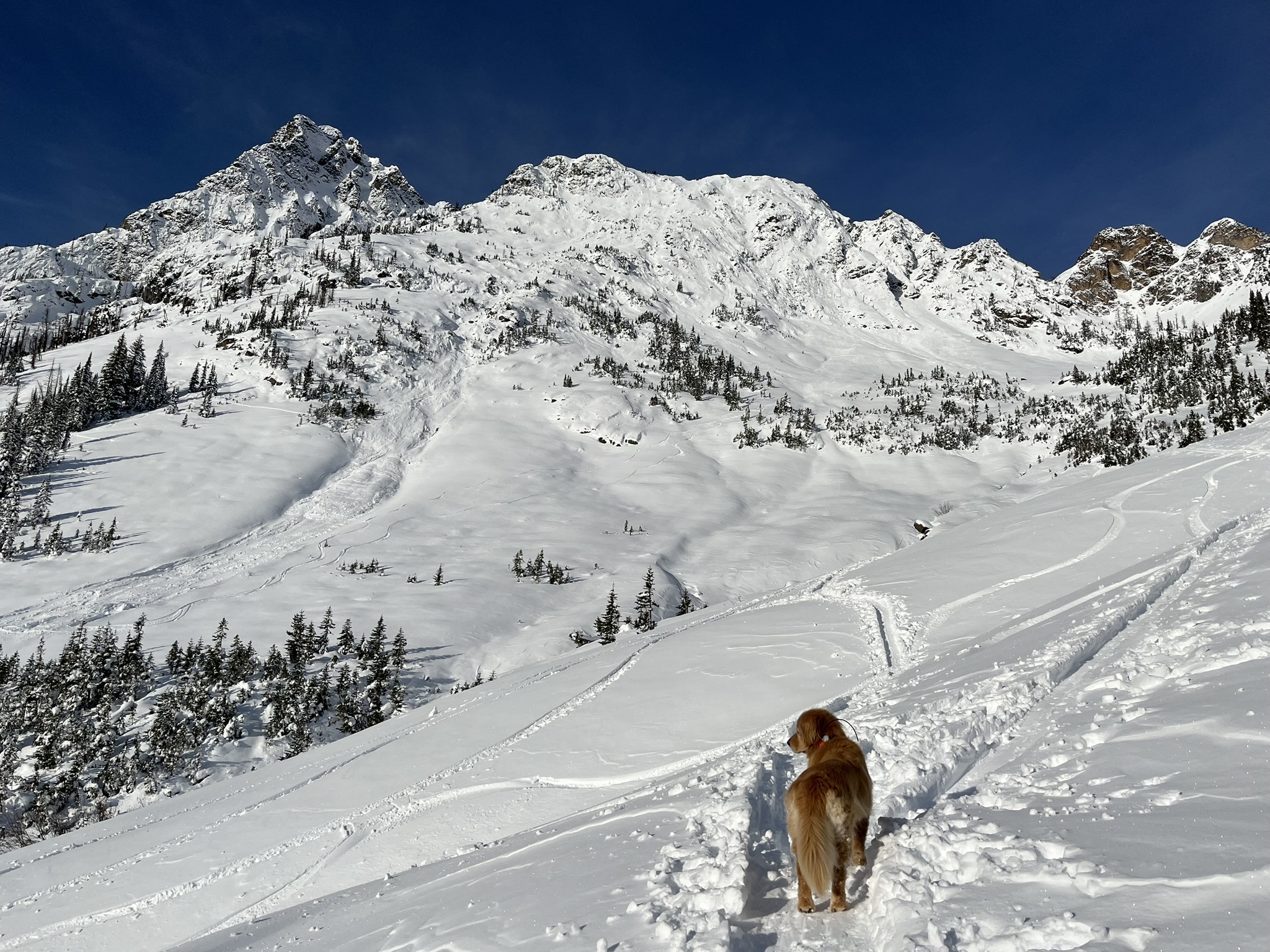
The approach climbed east from Washington Pass through deep timber, then broke into open terrain where the full face of Whistler's east side came into view. It was enormous — a wall of snow and rock rising two thousand feet above us, the east chute cutting through it like a highway.
Into the Alpine
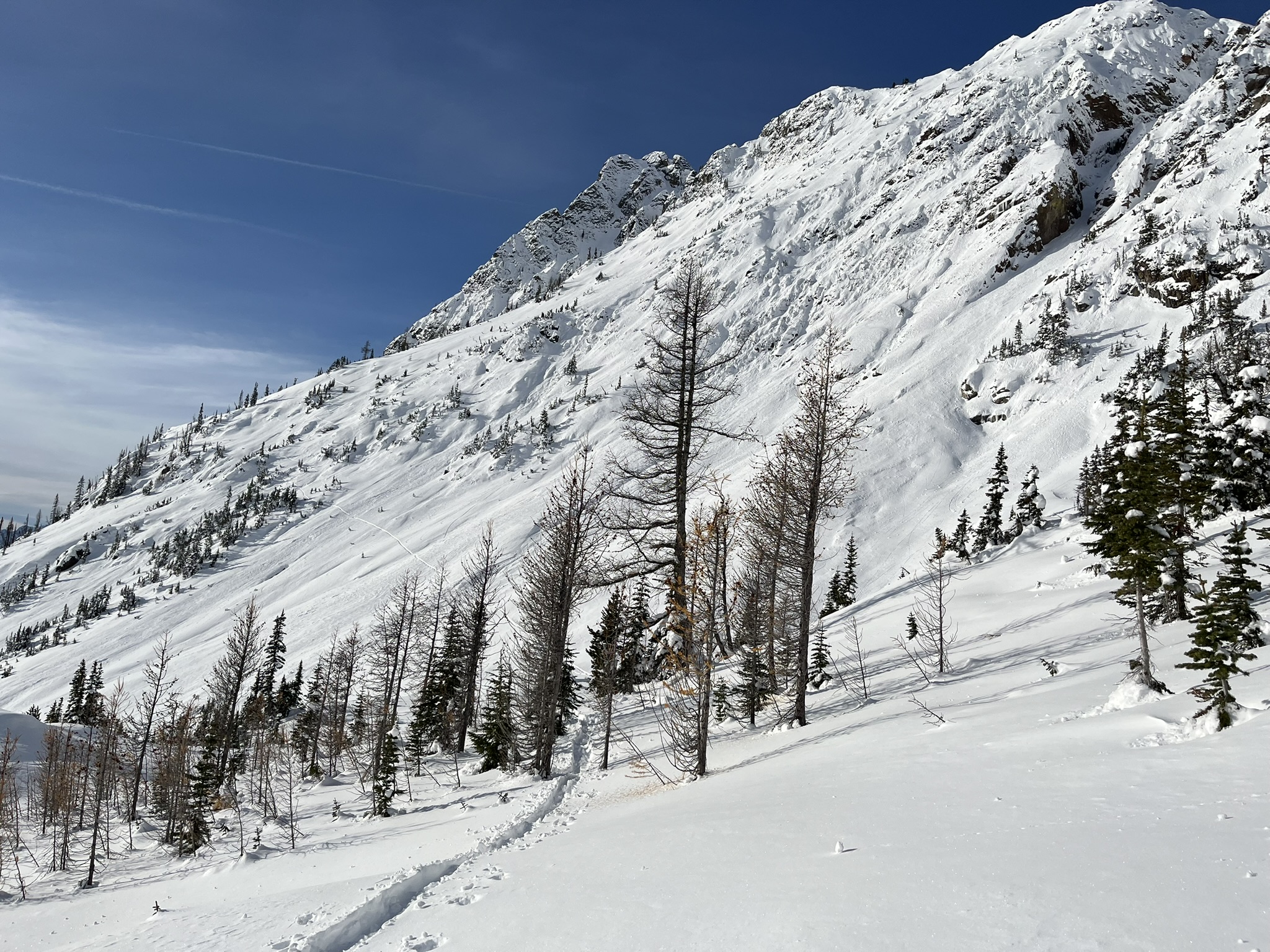
Above 6,000 feet we climbed through scattered larch — the last gold of their needles showing through the snow. The terrain steepened. The mountain got bigger with every step.
First Lap
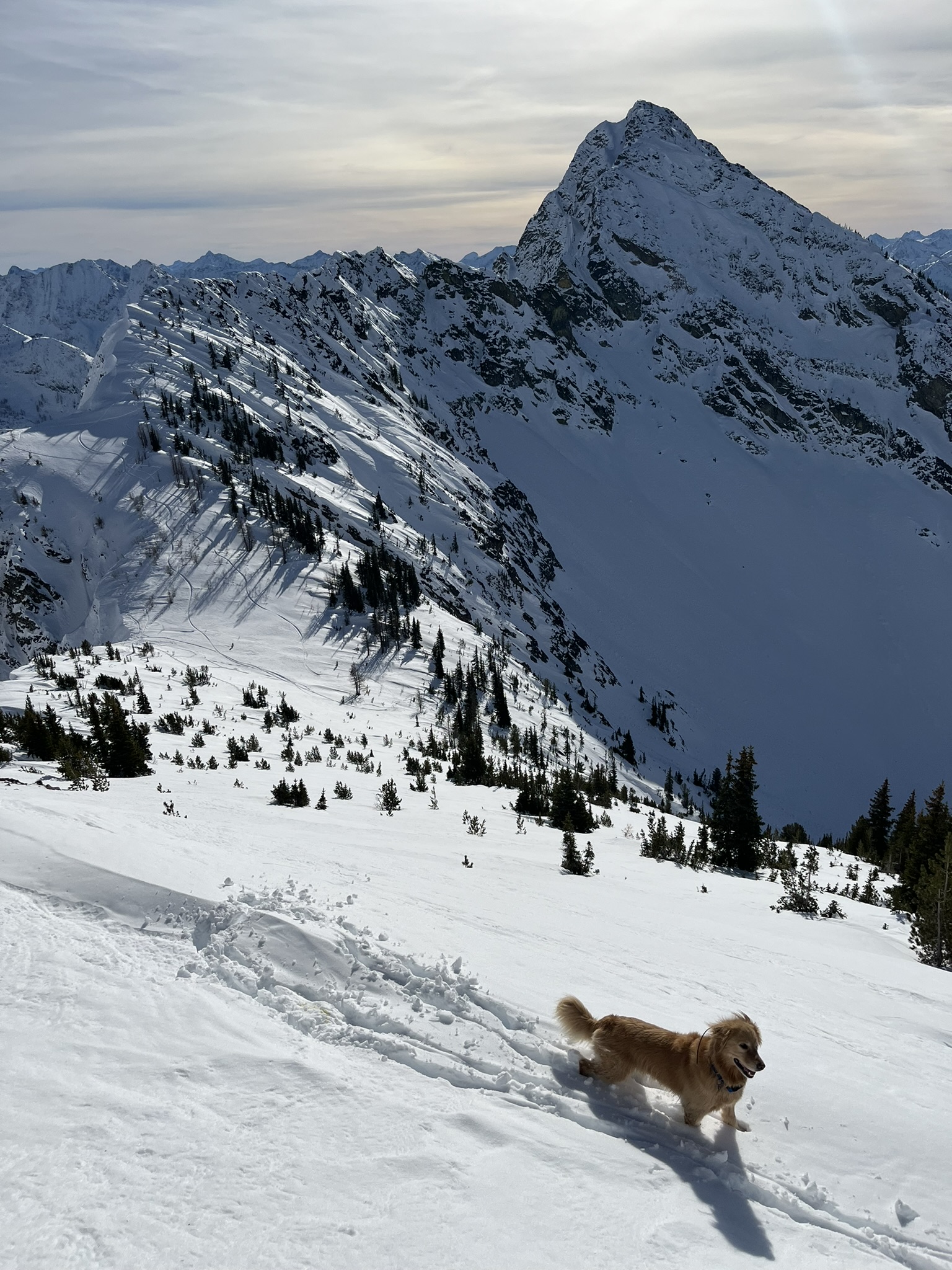
At 7,227 feet we reached the top of the chute. Below us, the valley was filled with cloud — a perfect inversion, white cotton stuffed into every drainage, the peaks rising out of it like islands. The east chute dropped away into the cloud and then through it.
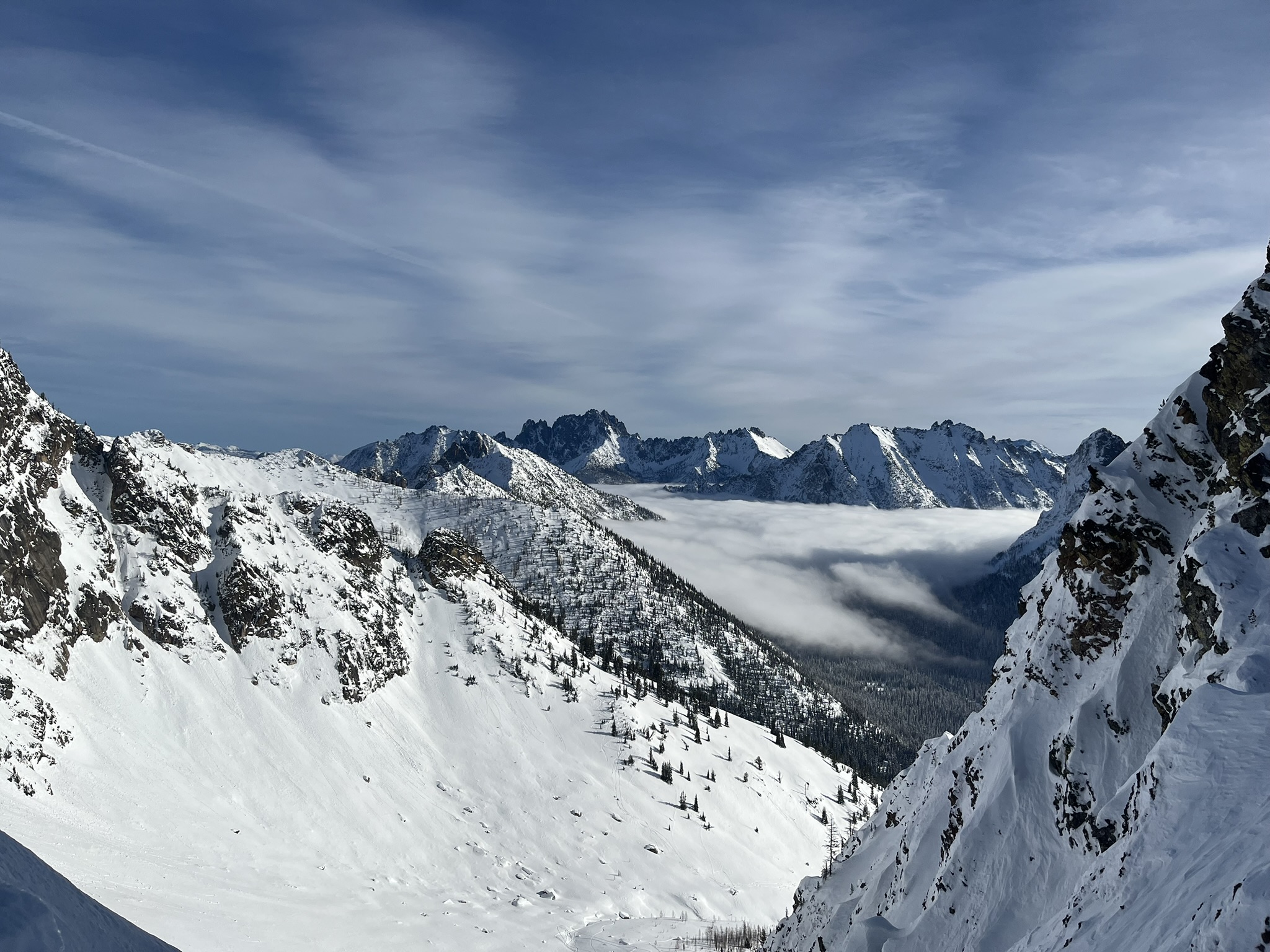
My human dropped in. I followed. The chute was steep, narrow at the entrance, then widening into a sustained face of cold powder. We descended a thousand feet into the cloud and through it, the snow quality perfect from top to bottom — dry, light, untouched.
At the base of the chute we stopped. Looked up. The tracks we'd just made were visible as thin lines on the white face above.
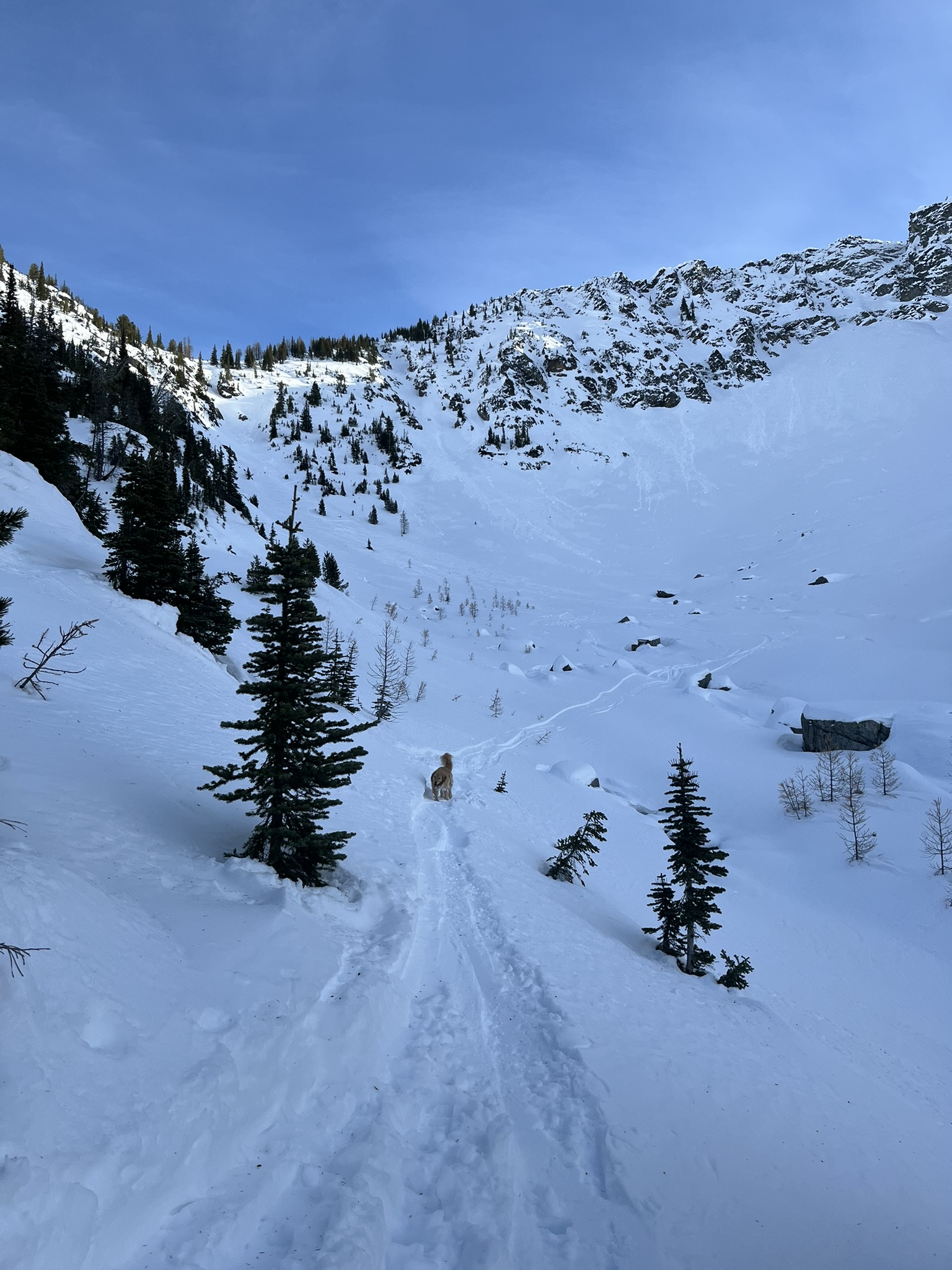
We skinned back up.
Second Lap
The second ascent was harder. Legs already cooked from the morning's climbing, the bootpack steep, the sun not yet warm enough to help. But the chute was right there above us, and we'd already seen what it could do.
At 7,461 feet — higher than the first lap — we topped out on the ridge. The inversion was lifting now, the cloud thinning, the peaks sharpening.
We dropped in again. Same chute, but different — the light had changed, the shadows were different, and our tracks from the first lap had left a reference line that made everything feel more dialed. The snow was still cold and dry. Still untouched except for our earlier run.
The Evidence
At the bottom I looked back up at the chute. The evidence was written on the mountain in arcing turns — two sets of tracks, two laps, every line visible from the basin floor.
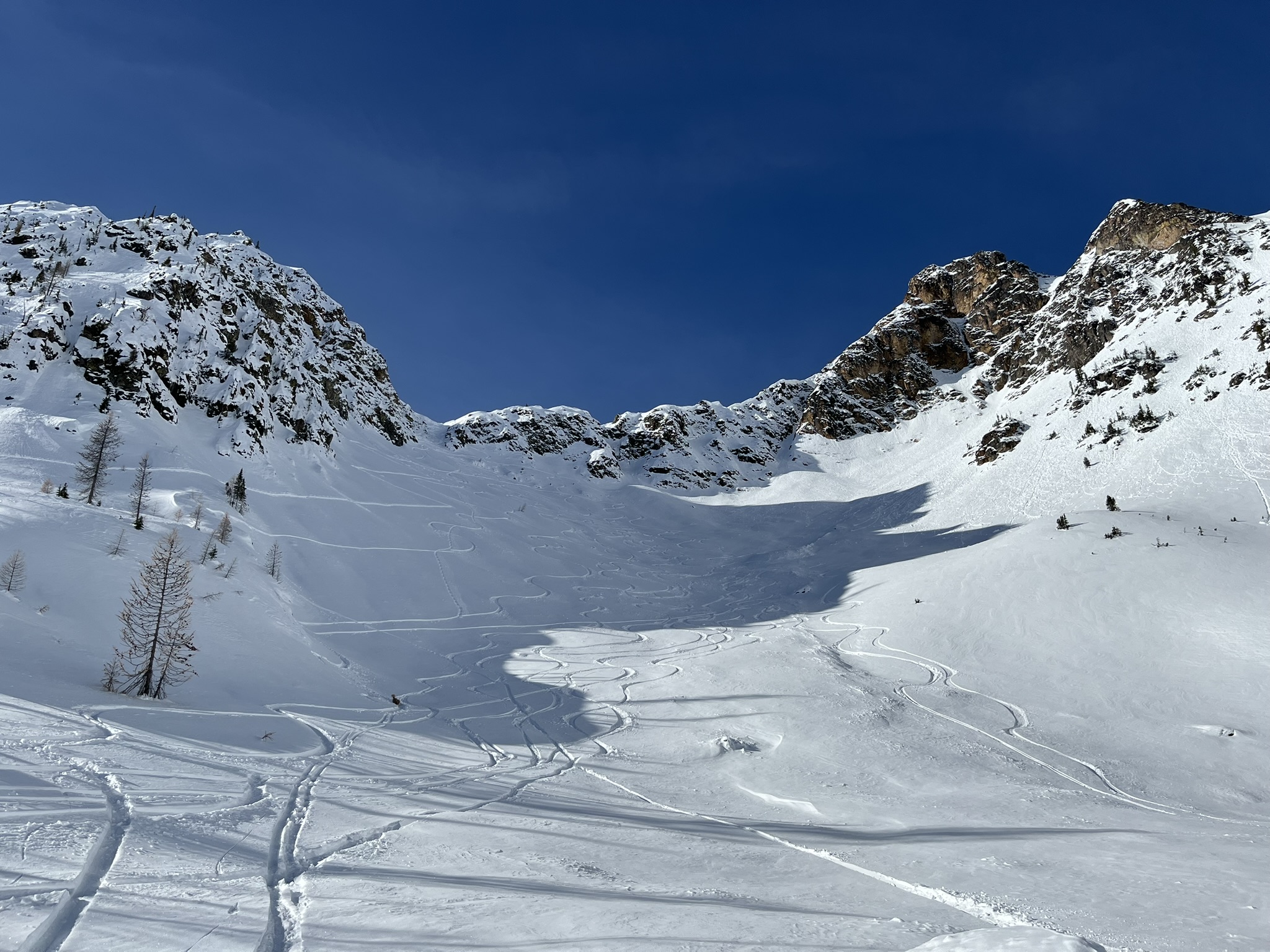
Back at the trailhead by noon. The sun was full on the peaks now, the inversion gone, the mountains sharp and clear. Nova stood in the snow and looked up at Whistler one more time.
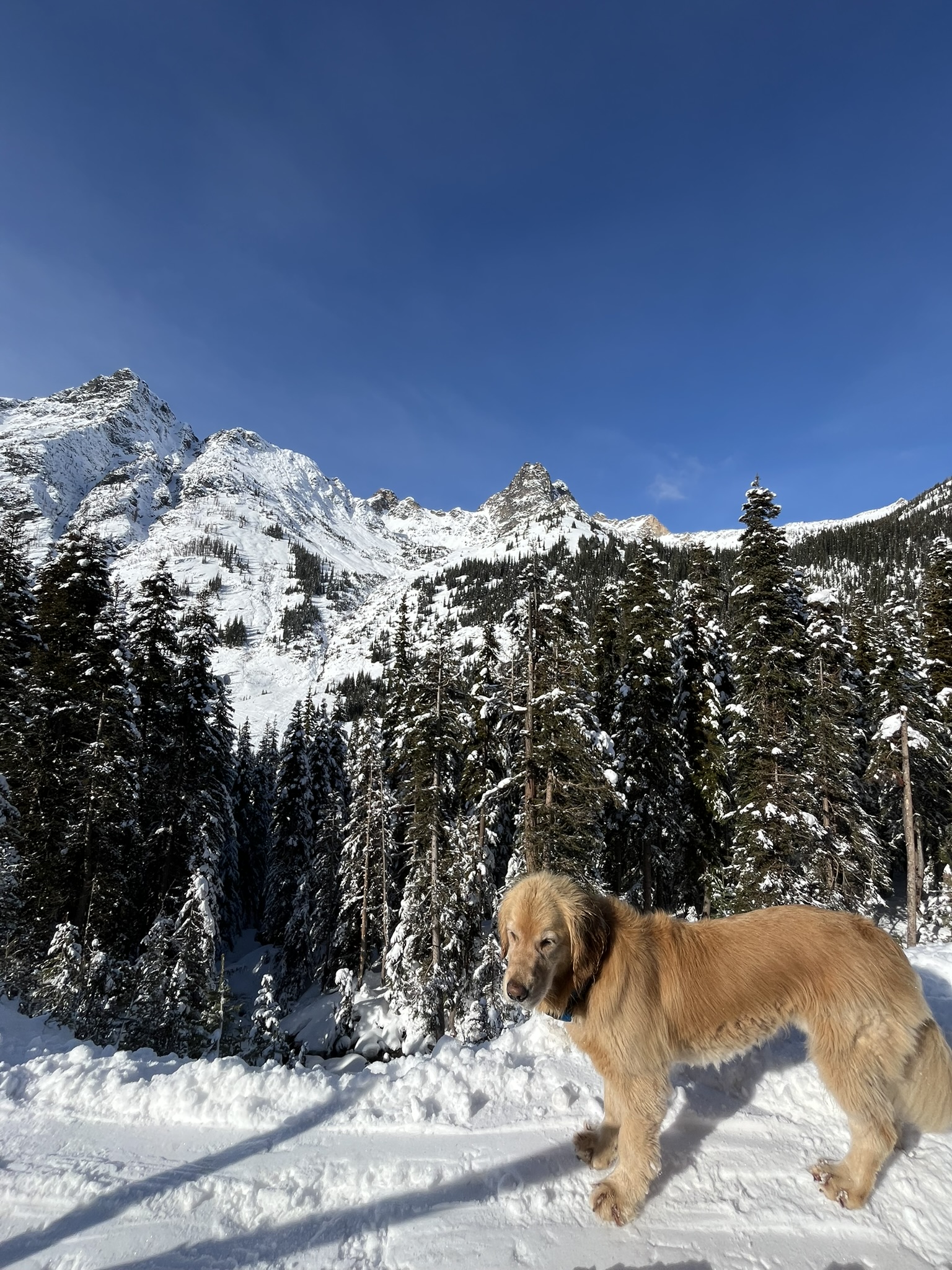
Five miles. Thirty-two hundred feet of climbing. Two laps of the east chute. Some lines are good enough to ride once. Some lines make you skin back up the moment you reach the bottom, before your legs even register what just happened. This was the second kind.