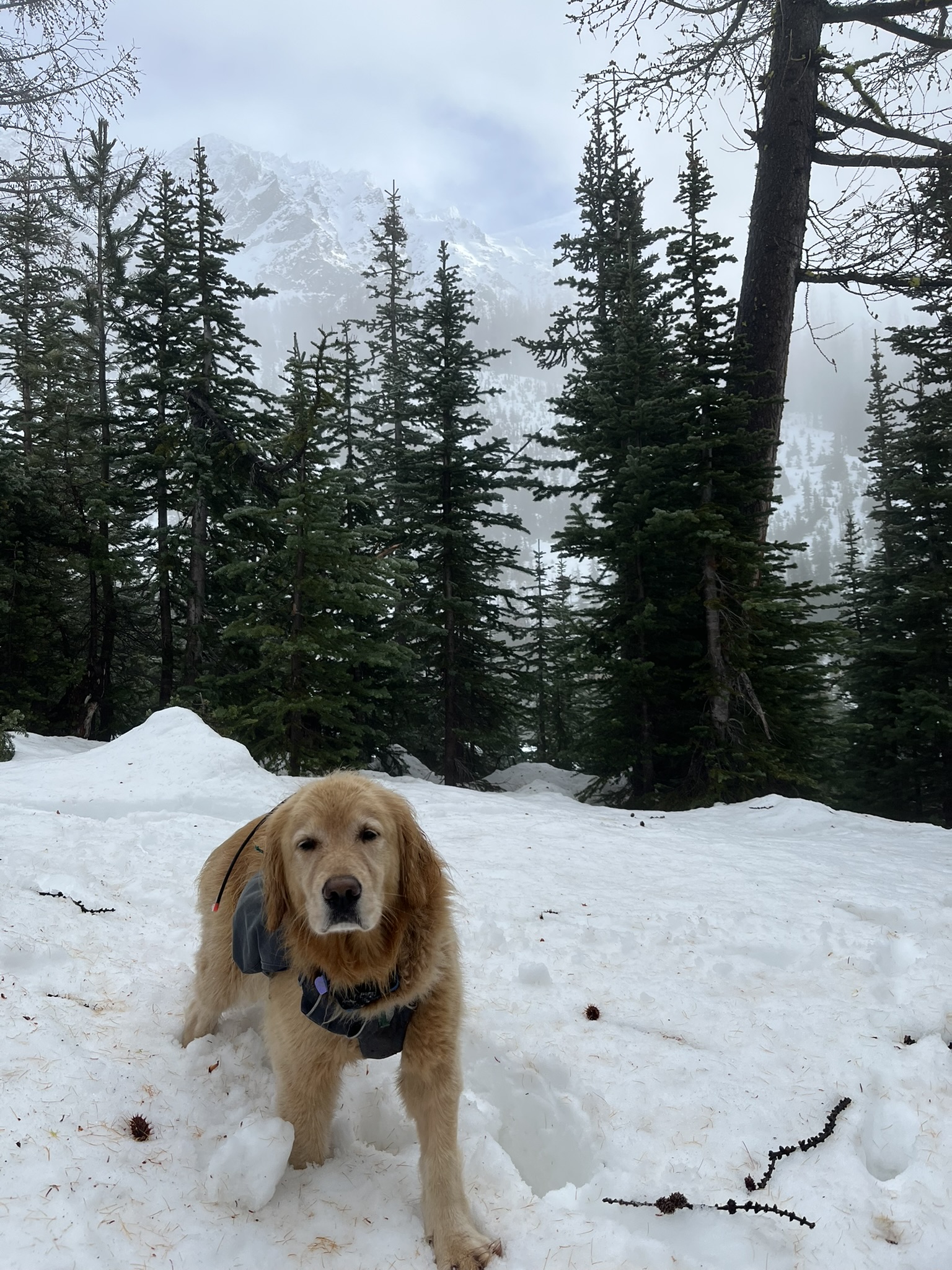
Seven Fingered Jack Attempt
An overnight attempt on Seven Fingered Jack — two days of overcast sky, a camp at 6,100 feet with steaks on the fire, and the honest call to turn around when the mountain said no.
Elevation Profile
The Approach
Seven Fingered Jack. Nine thousand feet of rock and ice somewhere above us — not that we could see it. The cloud ceiling sat at about 6,000 feet and showed no intention of moving. My human loaded the overnight pack anyway.
We started up the trail at 3,500 feet under light drizzle. The forest was beautiful in the way early-season snow makes everything beautiful — every branch outlined in white, every boulder rounded and soft, the creek running dark through snow-covered rocks. I found tracks almost immediately.
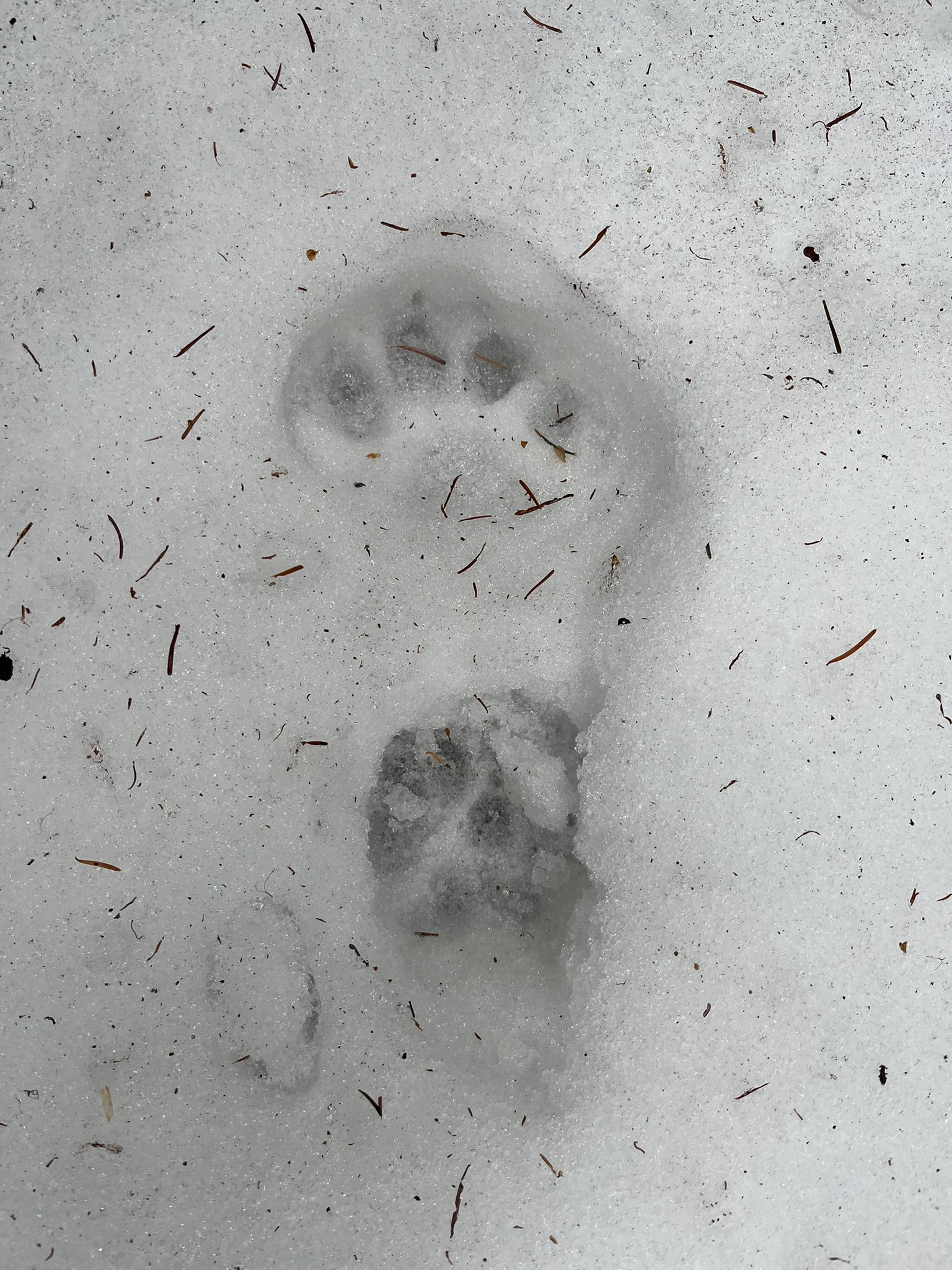
Cougar. Fresh. The prints were crisp and unfilled — within the last few hours. I stopped and read the direction. Heading uphill, same way we were going. My human saw them too. We noted it and kept moving. Not the first time we've shared a trail.
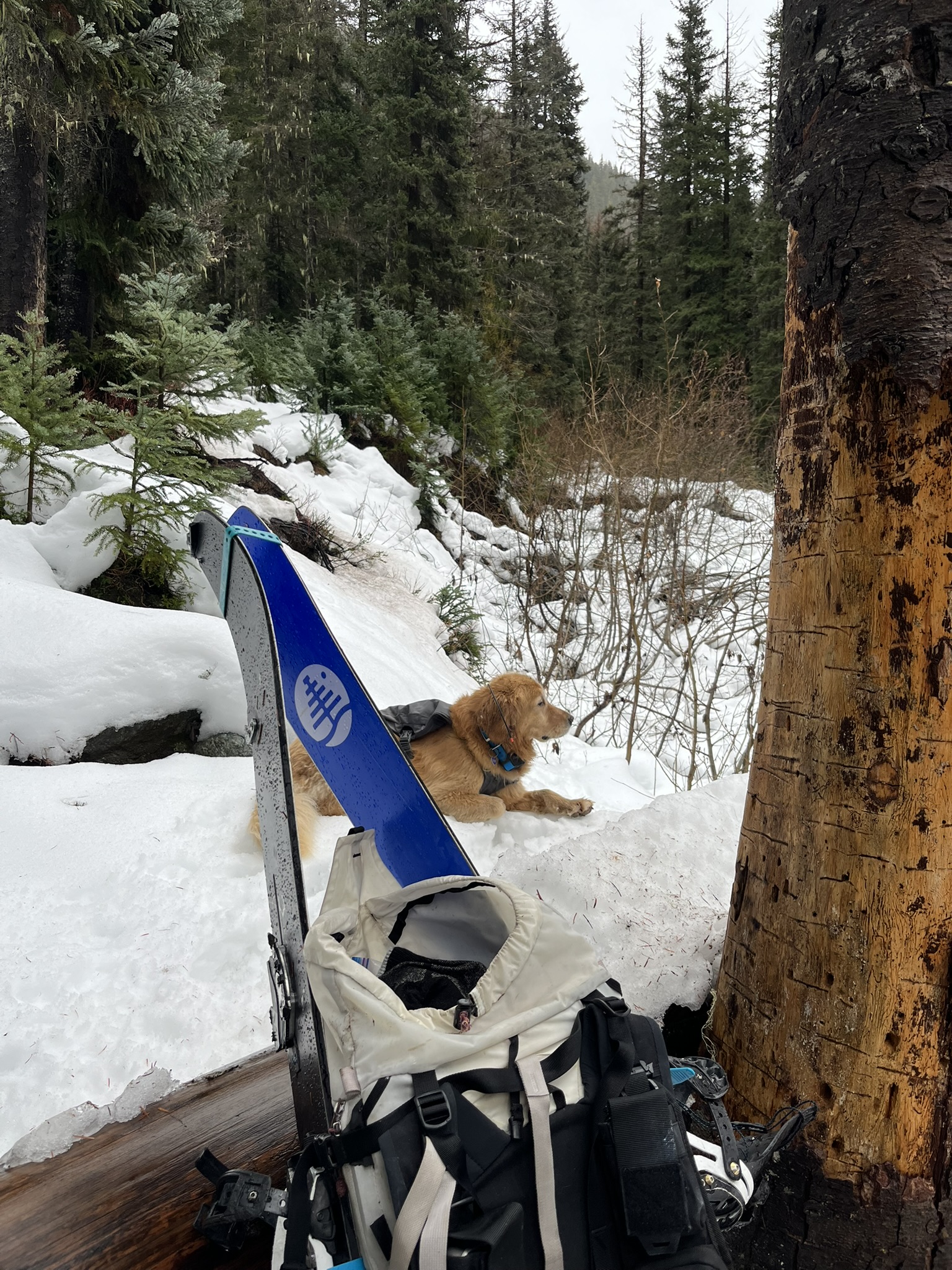
The approach wound through old forest and across creek crossings. My human took a break where a rocky creek bed carved through the snow. I lay in the snow and chewed on things while he ate.
Camp
We set up camp at 6,100 feet, just below treeline, in a sheltered grove of subalpine fir. The cloud was right on us — visibility maybe a hundred yards, the mountain invisible above.
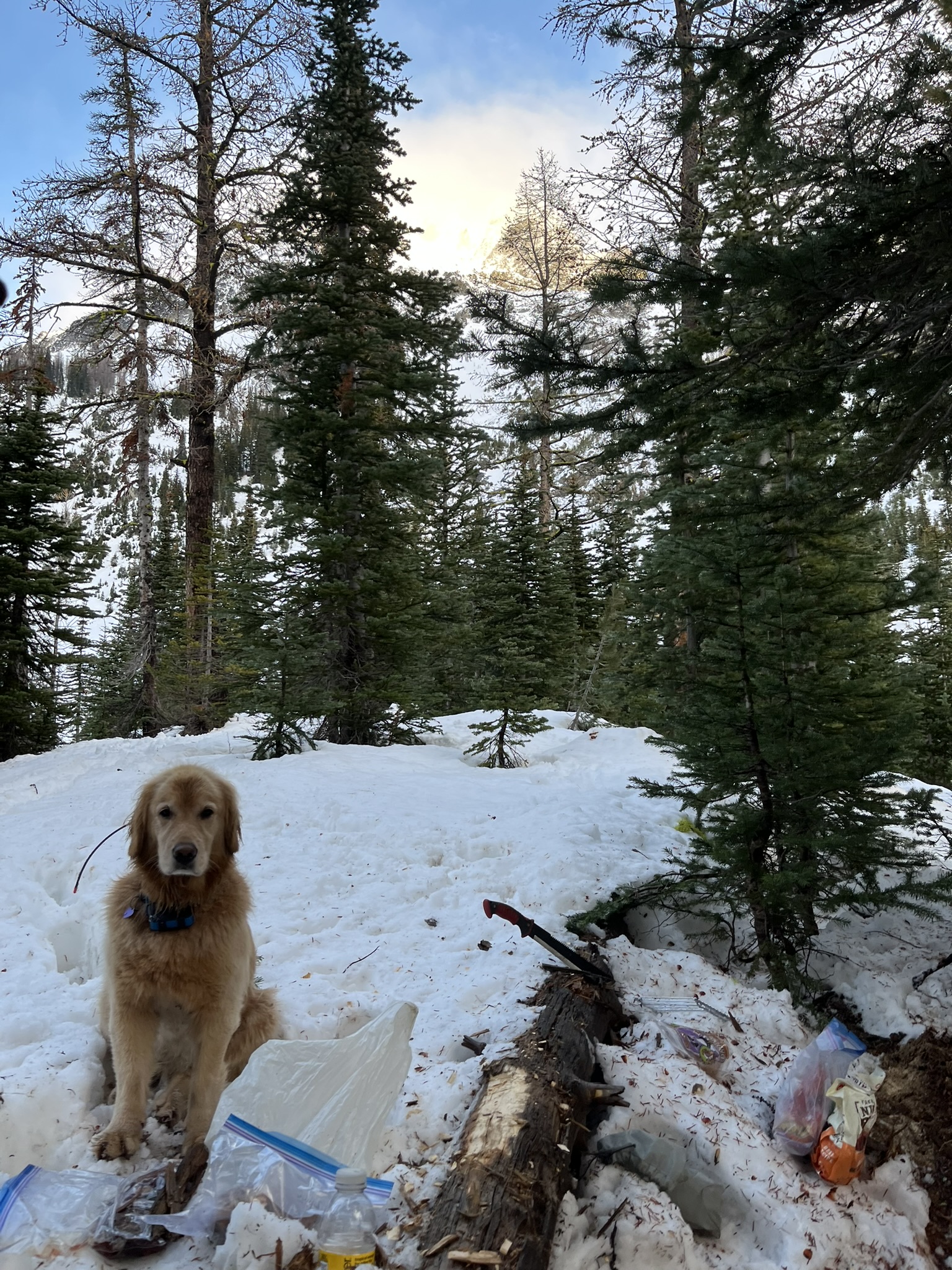
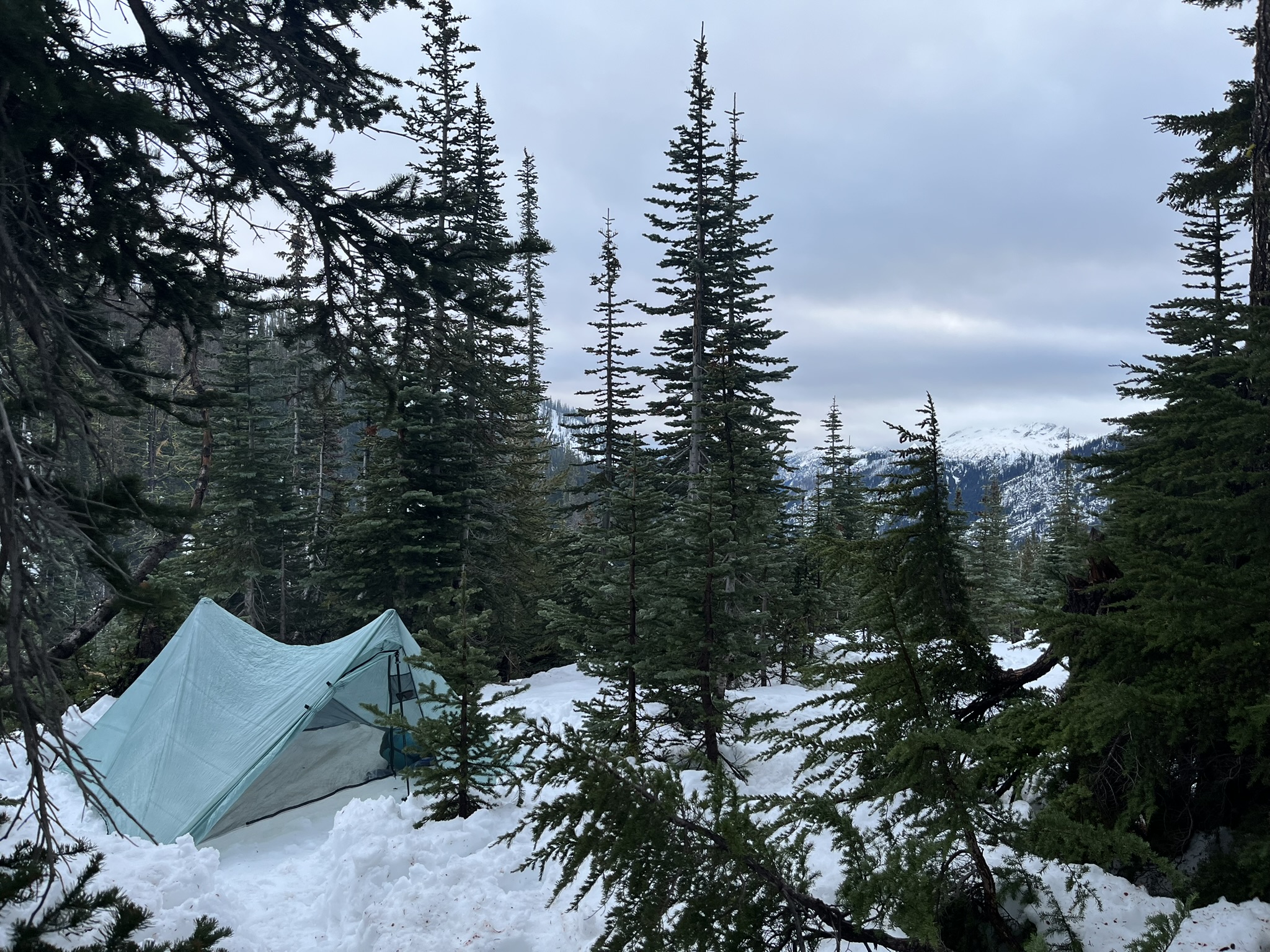
My human built a fire. Then he did the thing that makes overnight trips in November actually worth it — he grilled steaks. At six thousand feet. On a wire grill balanced on coals. In the snow. The smell of searing meat mixed with wood smoke and cold air and I sat very, very still and watched every second of it.
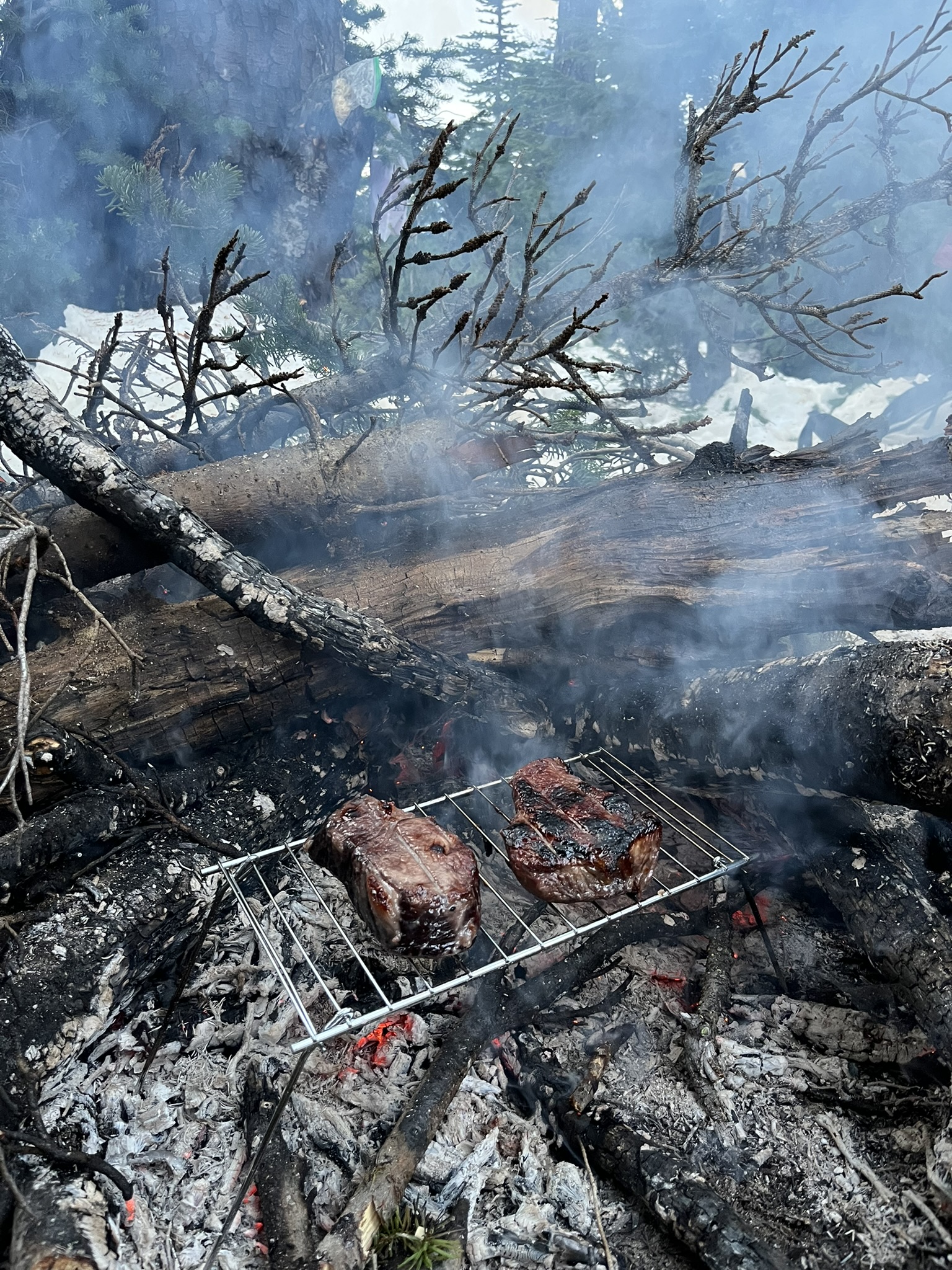
I got some. Obviously.
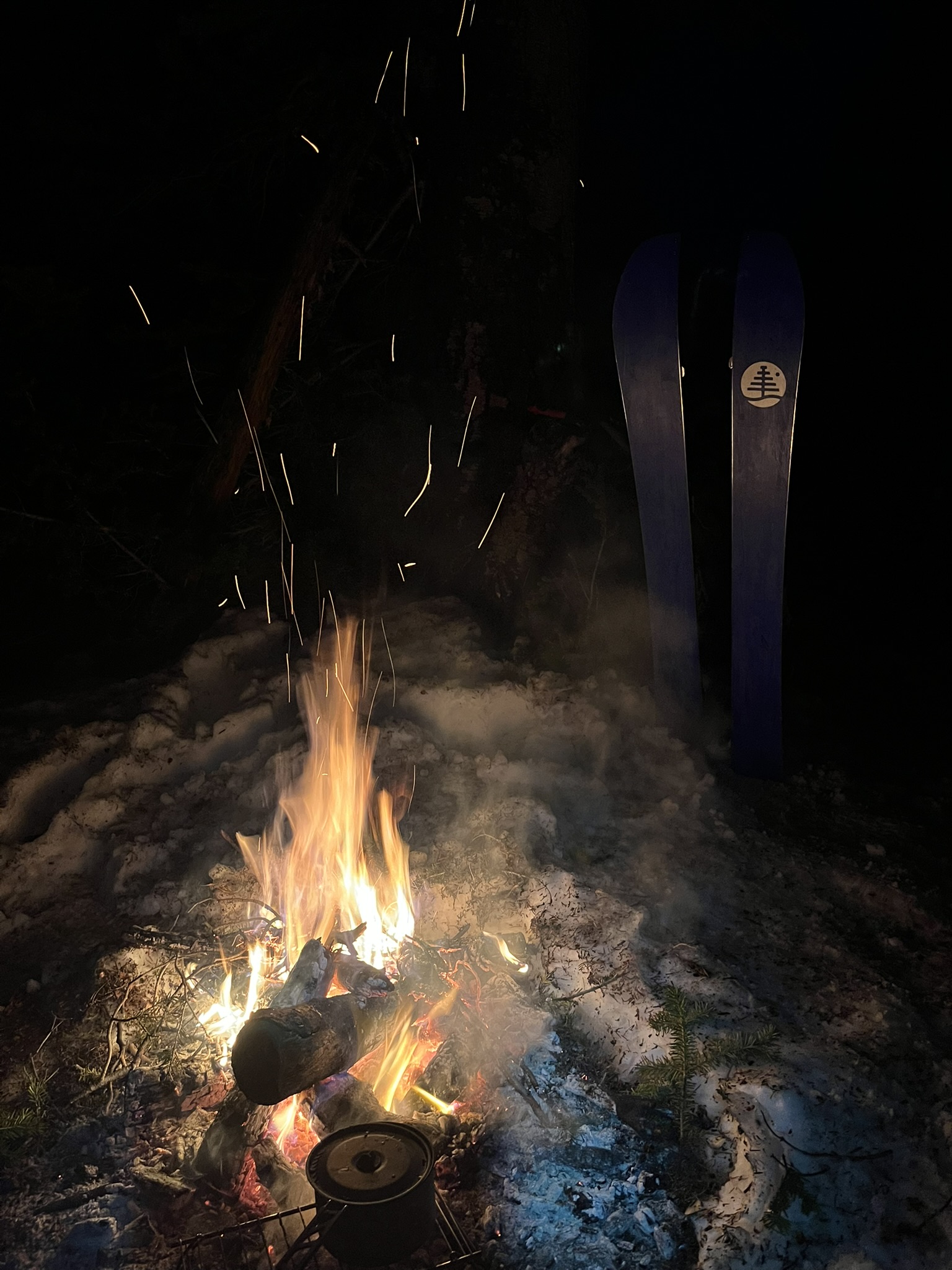
The fire burned late into the night. The splitboard stood upright in the snow like a monolith. Sparks drifted up into the dark. Above us, somewhere in the cloud, Seven Fingered Jack was doing whatever mountains do when no one can see them.
The Call
Morning. Day 2. The cloud hadn't moved. If anything it was lower — sitting on camp now, reducing the world to grey shapes and wet snow. We climbed above camp to assess.
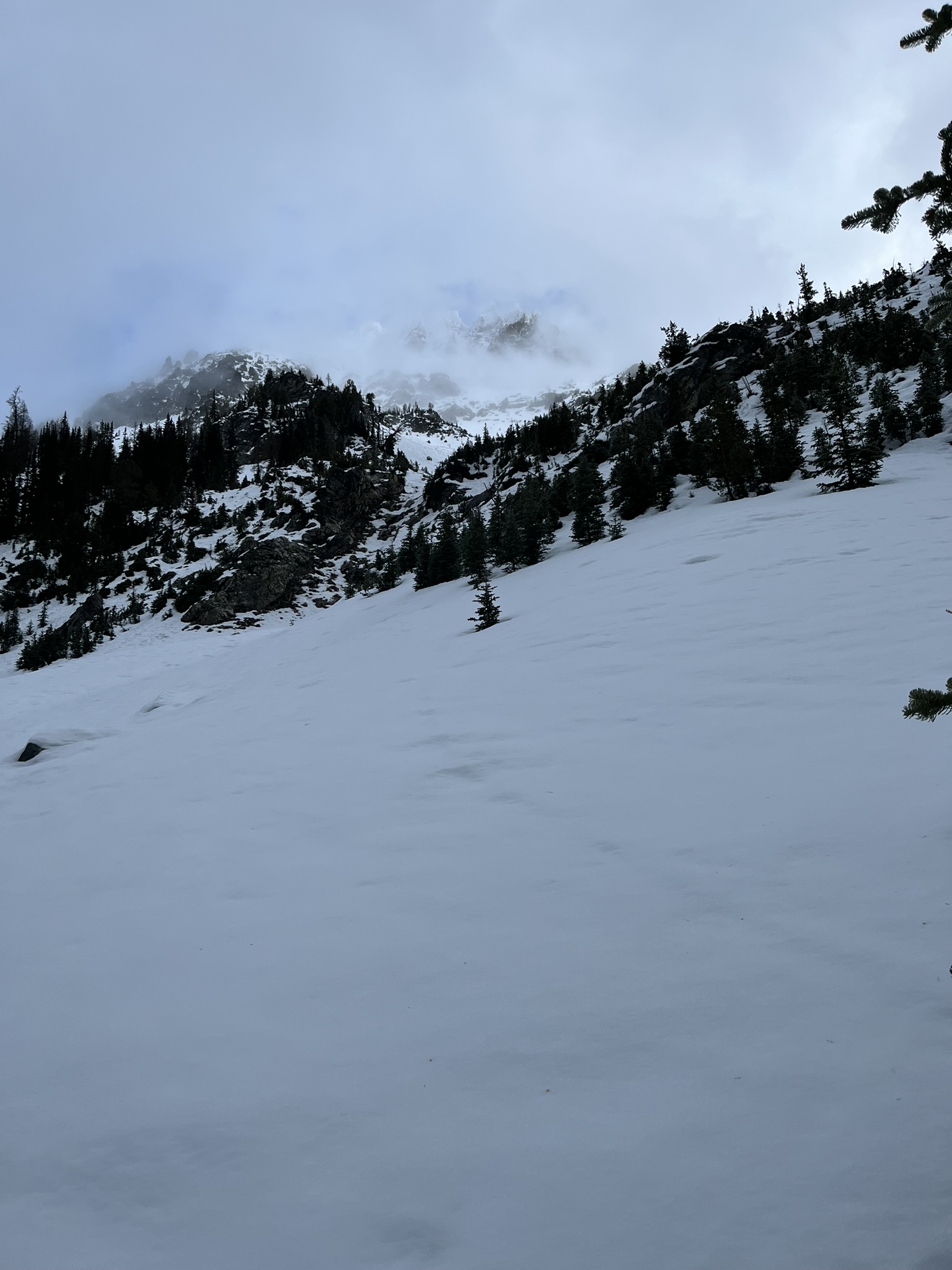
The mountain was up there. We could feel the terrain steepening, could see the rock bands and the avalanche paths between gaps in the cloud. But we couldn't see the full picture. Couldn't assess the upper snowpack. Couldn't read the avalanche terrain the way you need to before committing to a line at nine thousand feet.
My human stood at the edge of camp and stared up into the cloud for a long time. I sat beside him and waited. I know what that silence means — he's deciding.
He decided to go home.
The Retreat
We packed camp and headed down. The right call. The mountain would be there next month, next year. We'd come back with a weather window and clear lines of sight and the confidence that comes from being able to see what you're about to ride.

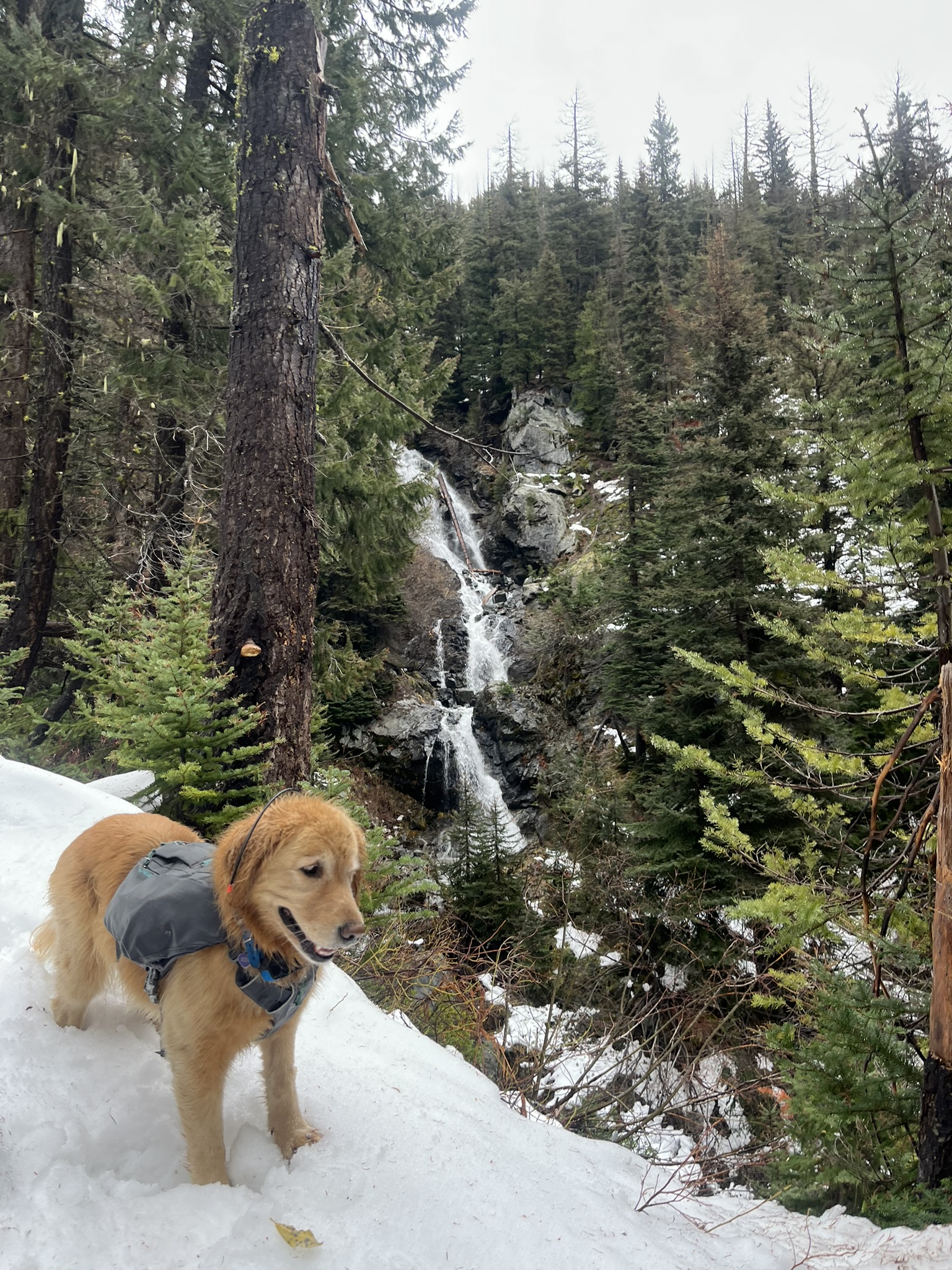
The descent through the forest was quiet. I found the cougar tracks again — same direction, same trail. We were still sharing it. A waterfall appeared through the trees, cascading over rock into a pool of dark water.
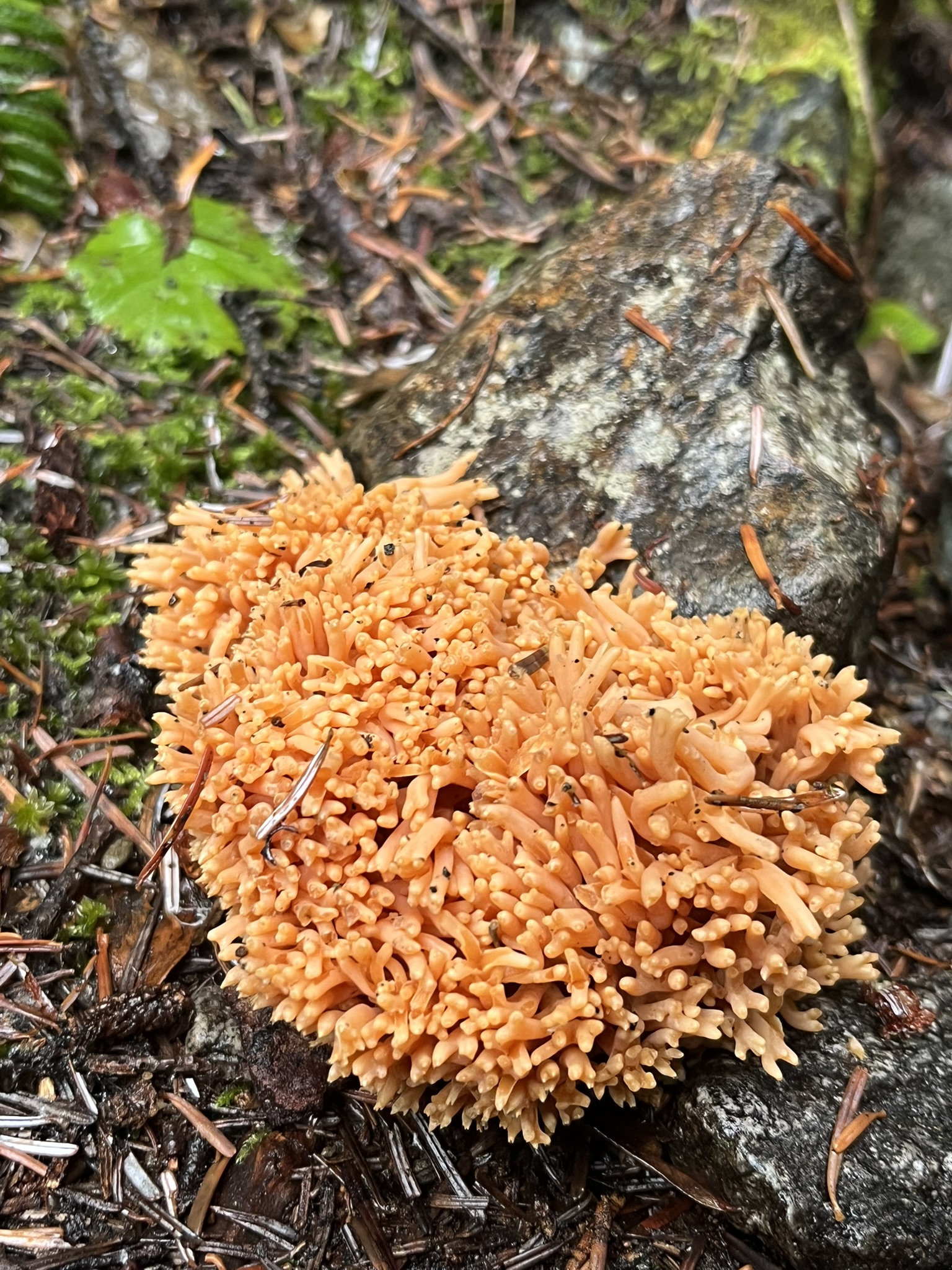
Near the trailhead, at the edge of the snow where the ground turned to dirt and duff, a coral mushroom grew beside a rock — bright orange against the grey and brown and white. The kind of thing you only notice when you're walking slowly and paying attention. When you're not rushing toward a summit.
Fifteen miles. Two days. Zero summit. Some trips the mountain says yes and you ride four thousand feet of powder. Some trips the mountain says wait. You learn to hear the difference. You always come home.