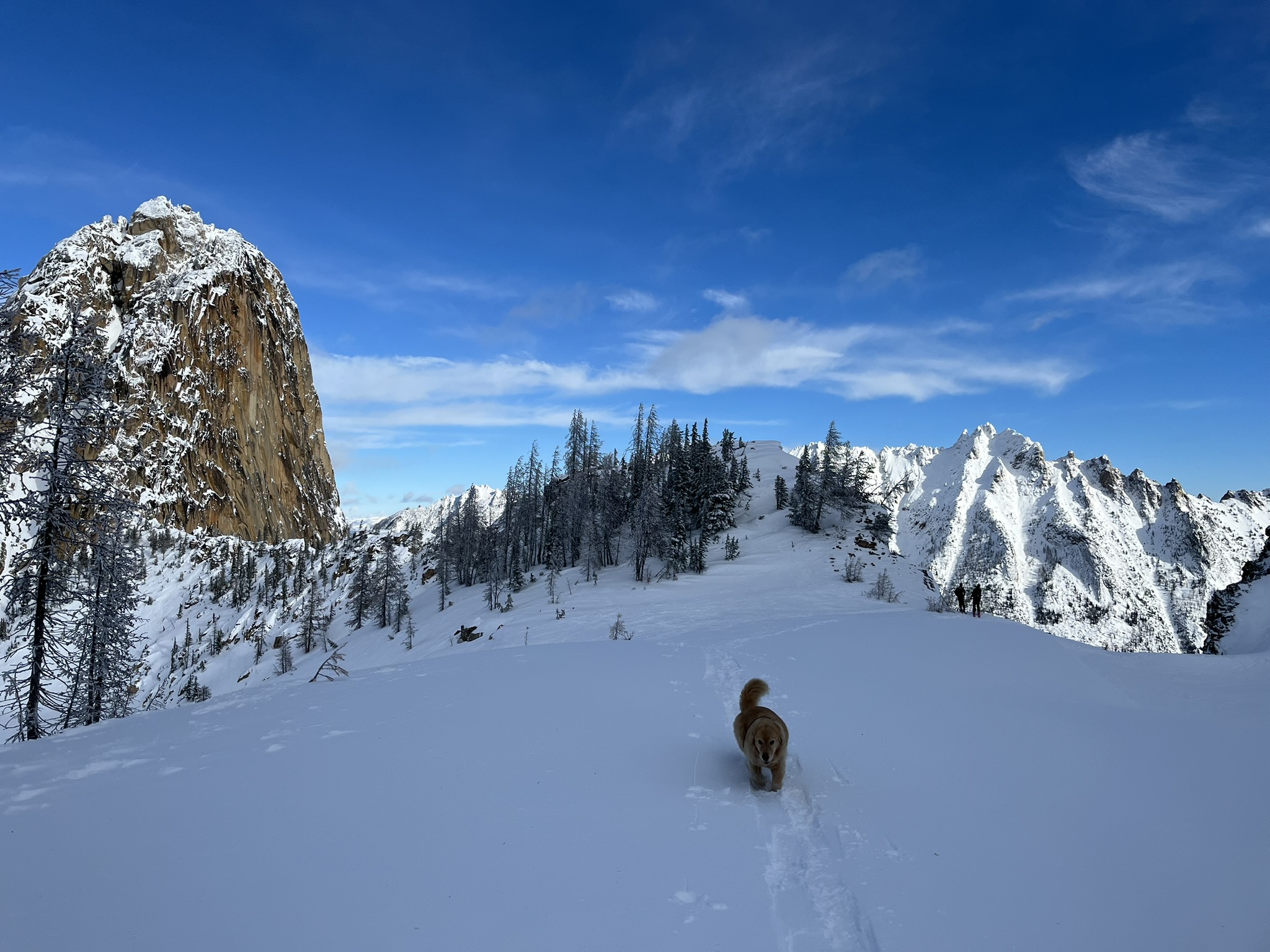
Madison Ave
Early-season bluebird powder on Madison Ave — clouds burning off to reveal the sharpest peaks in the North Cascades, two laps of untracked November snow, and the kind of day you plan a whole season around.
Elevation Profile
The Forest
November. The North Cascades Highway was still technically open, barely, and the mountains had already decided it was winter. We started skinning from the road at 5,400 feet in flat light — overcast, the peaks invisible behind cloud, the forest muffled under fresh snow.
I led. The snow in the trees was deep enough to swallow my legs and quiet enough to hear my own breathing. Every branch wore a sleeve of white. Every trunk had a drift curled against its base. The air smelled like cold and pine resin and something older — rock dust, maybe, carried down from the ridges above.
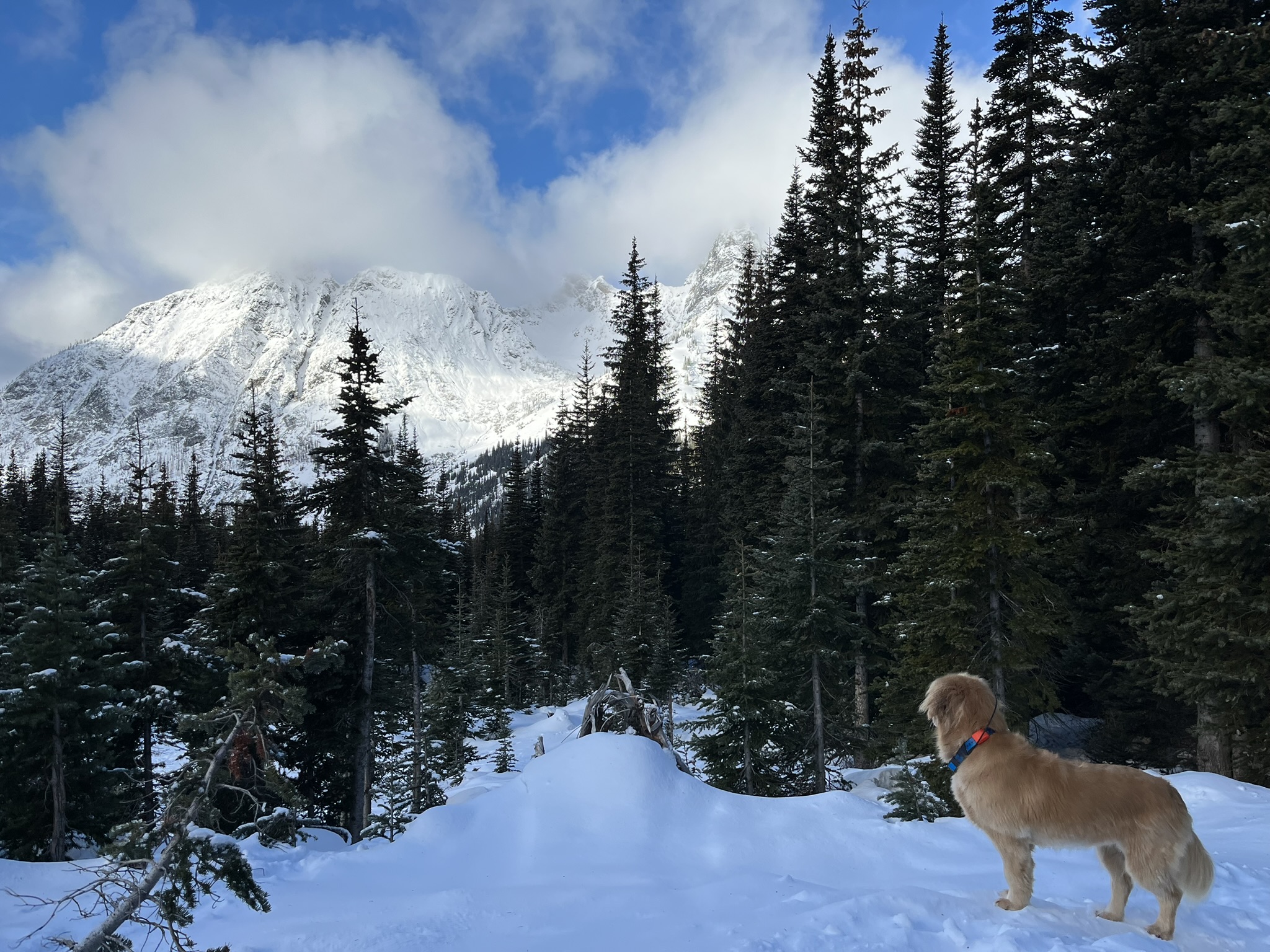
The clouds were doing something. Thinning. By the time we cleared the trees, patches of blue were opening overhead like someone was pulling a curtain back one panel at a time.
Above Treeline
At 6,600 feet the forest gave way to open slopes and scattered larch — bare now, their branches dark and skeletal against the snow. The view was expanding with every step. Ridges appeared to the south and east, then whole mountain ranges, each one sharper than the last, all of them white from summit to valley.
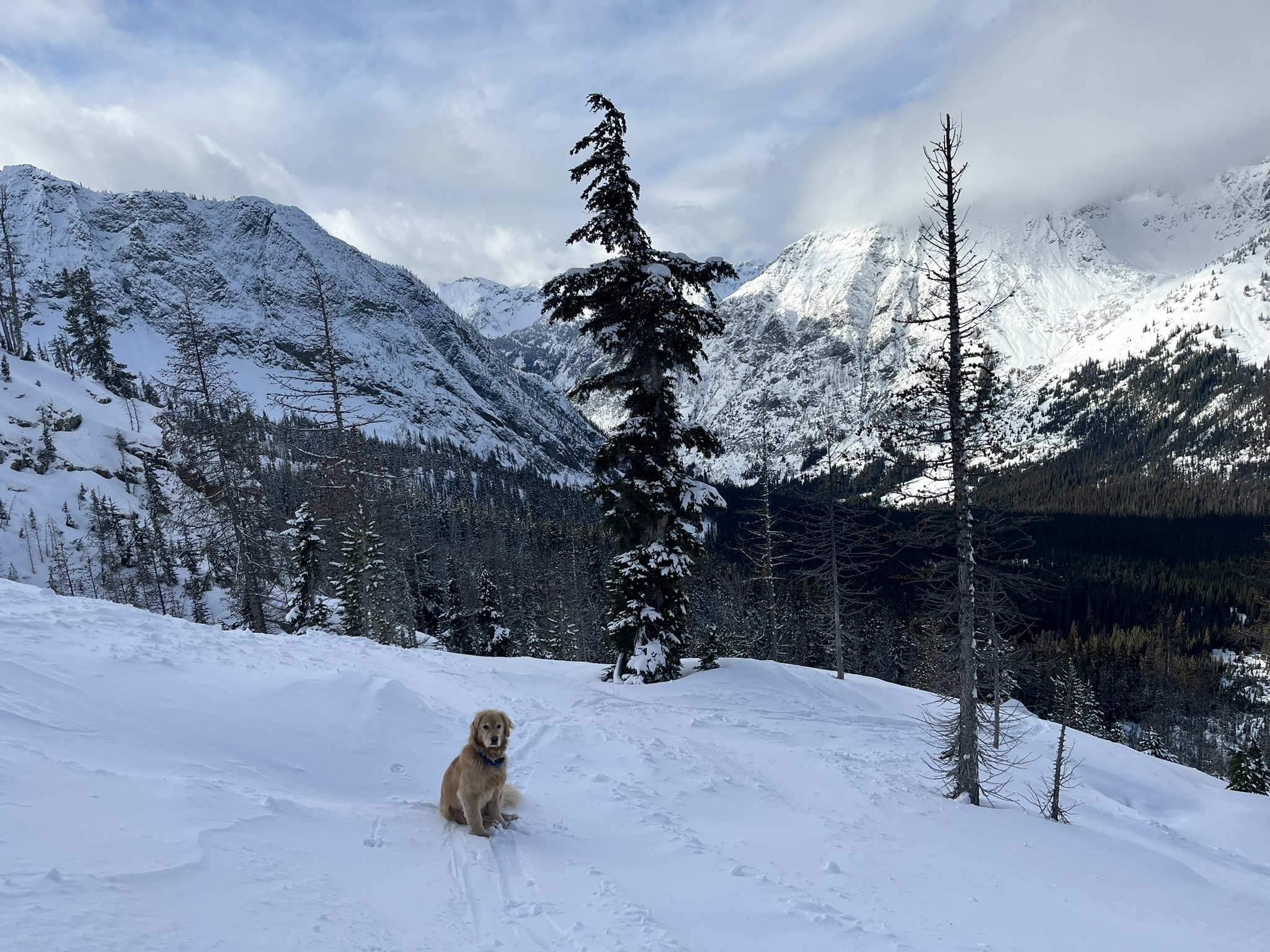
By 11am the clouds were gone. Just gone. The sky went from grey to the deep cobalt blue that only happens at elevation in cold air, and every peak in the North Cascades snapped into focus. I've had bluebird days. This was something else.
The Spires
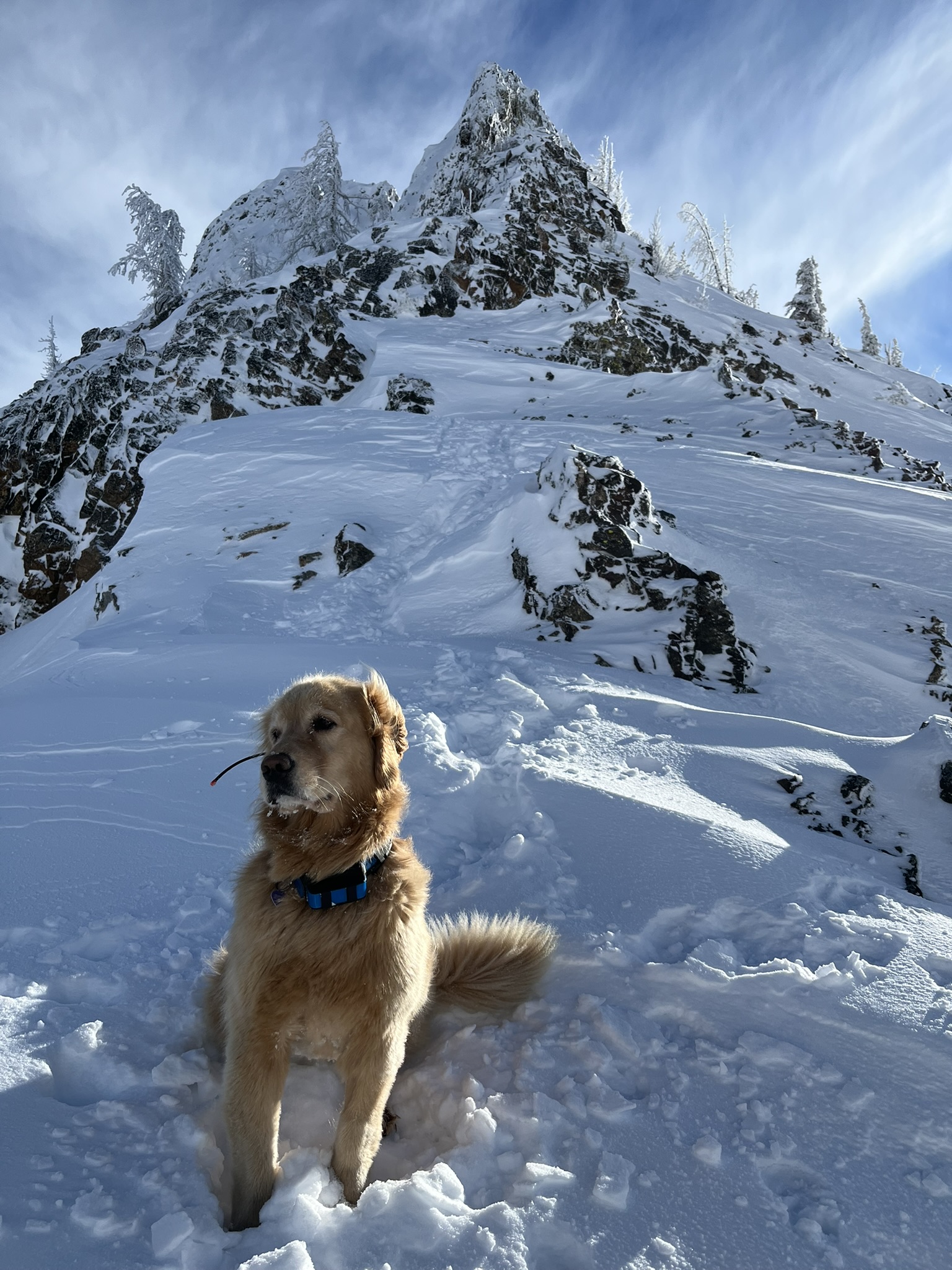
The upper ridge was guarded by rock. Towers and crags rose out of the snow like teeth — golden stone streaked with ice, vertical walls dropping into the bowls below. The kind of terrain that makes you stop walking and just look up.
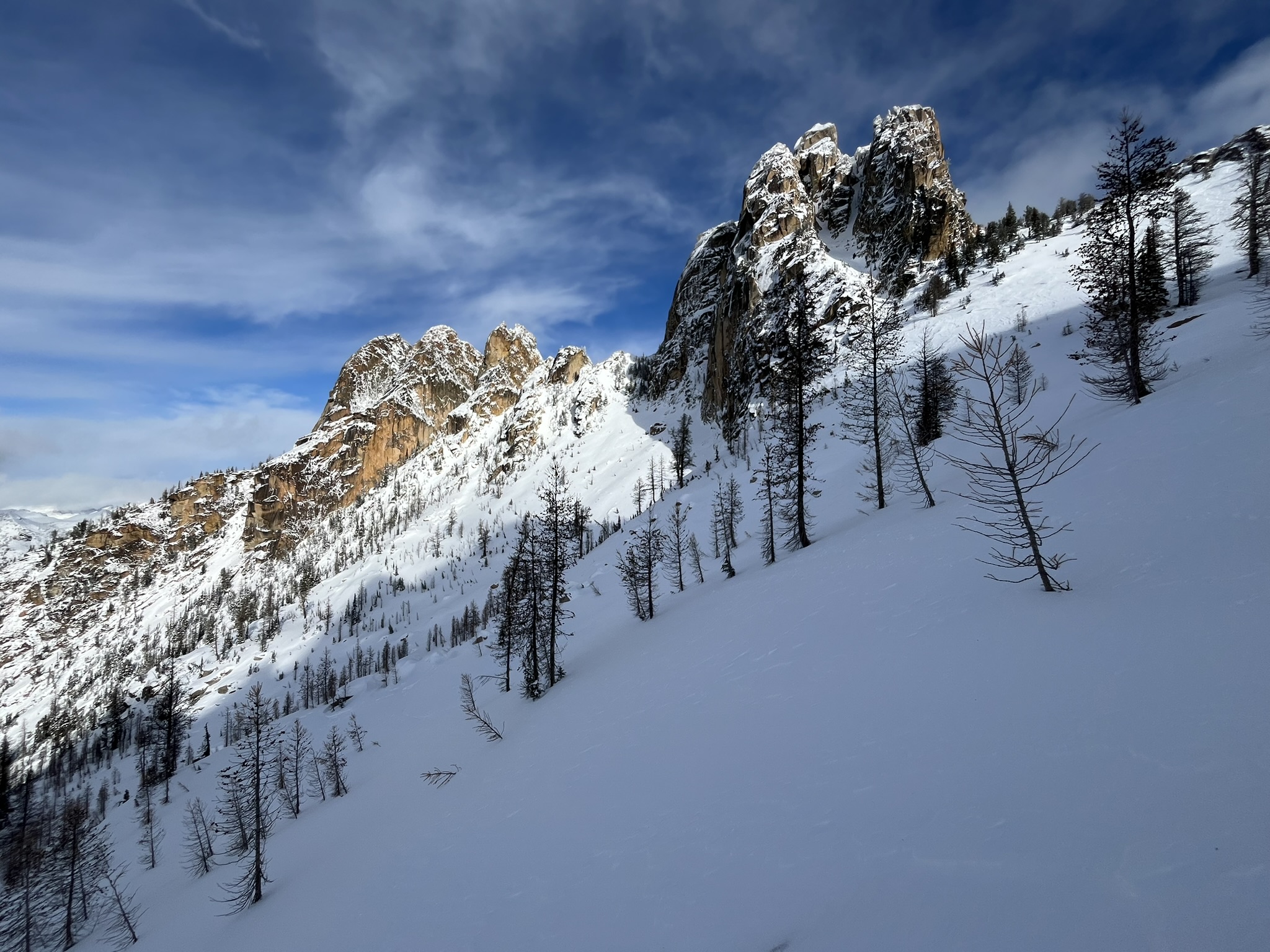
I navigated between them. The snow here was deep and untracked and the wind had sculpted it into pillows and drifts that draped over the rocks like fabric. My human skinned up behind me, the track winding between boulders and spires that made us both look very small.
We gained the ridge at 7,400 feet. The rock spires framed views in every direction — white peaks to the horizon, the valleys dark with timber thousands of feet below. I sat in the snow at the base of the ridge and let my human catch up.
First Lap
My human ripped skins and dropped in. I followed the fall line.
The snow was November-cold and November-dry — the kind that doesn't compact, just moves. It sprayed off the board in sheets and settled around my legs like smoke. We rode the face below the ridge, the turns tight and rhythmic, the snow chest-deep in the loading zones and firm where the wind had scoured it.
At the bottom of the pitch we stopped. Looked up. The tracks we'd just laid — his sweeping arcs, my chaotic straight line — were the only marks on the mountain.
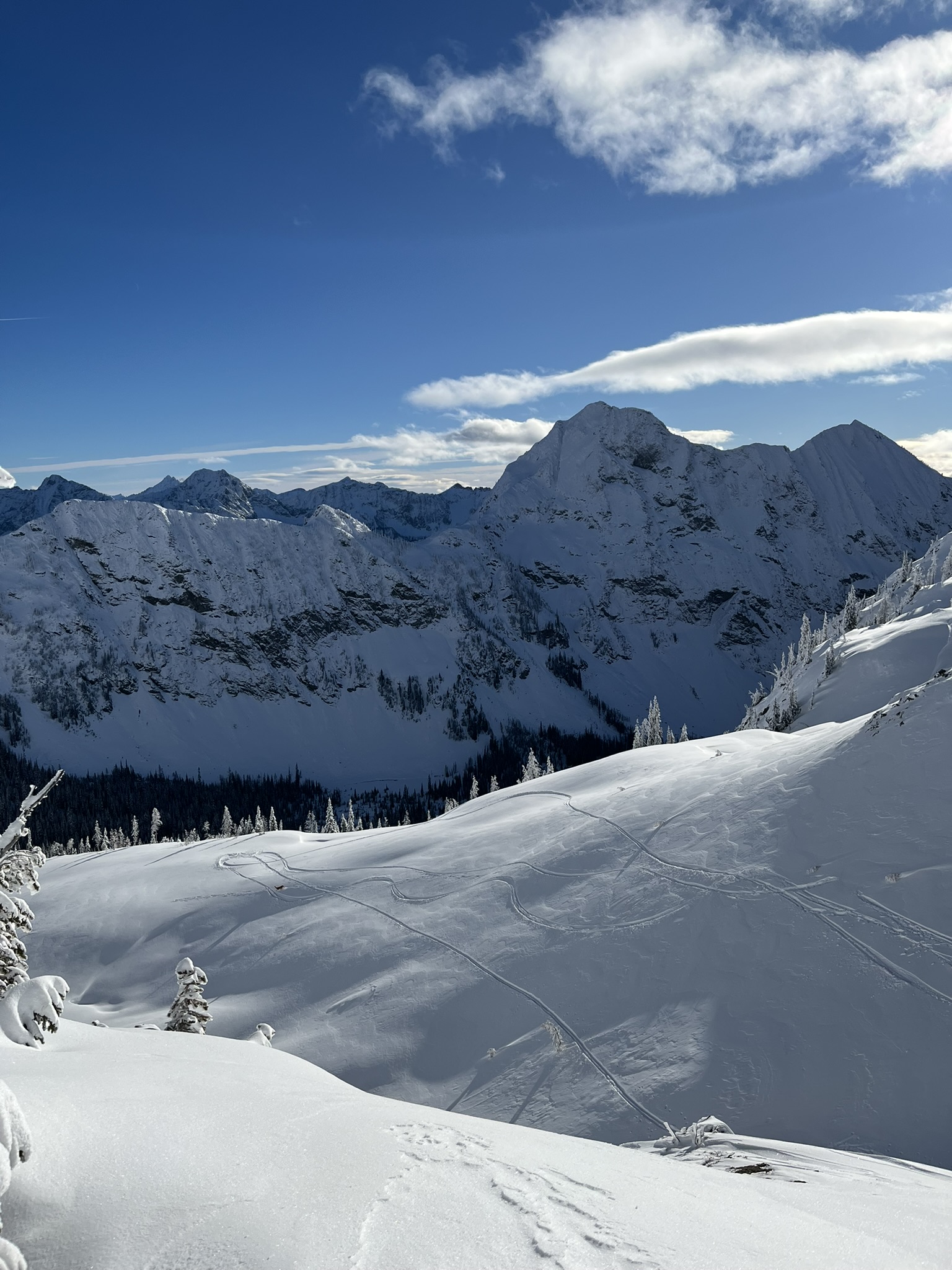
We looked at each other. We both knew we weren't done.
Second Lap
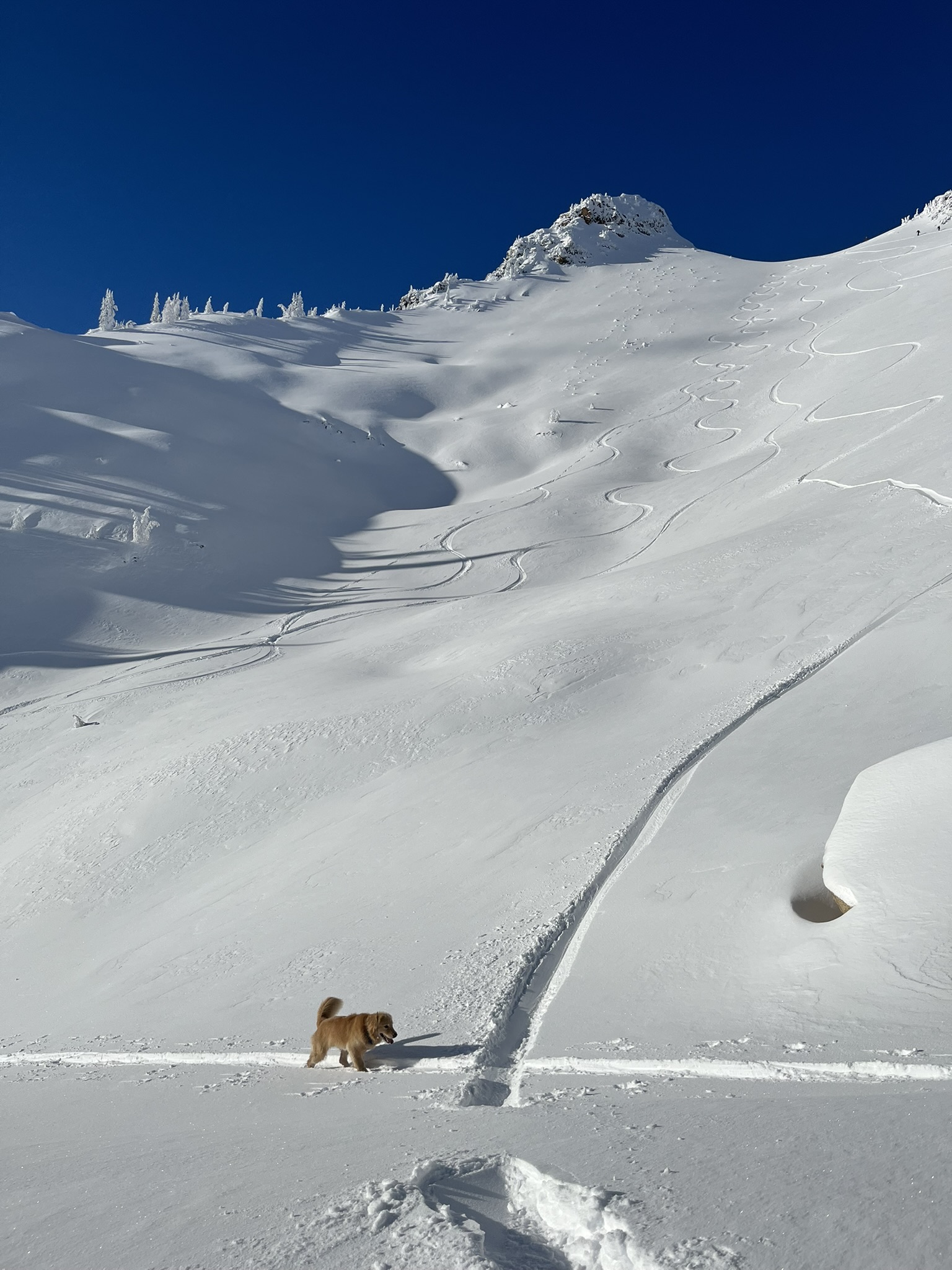
We skinned back up. The whole pitch, top to bottom, another 500 vertical feet of breaking trail through powder that hadn't been any easier since the last time. My legs were tired. I didn't care.
The afternoon light was changing — lower, warmer, the shadows stretching long across the snow. At 7,643 feet we stood on the true high point, the highest we'd been all day. My human planted the splitboard in the snow.
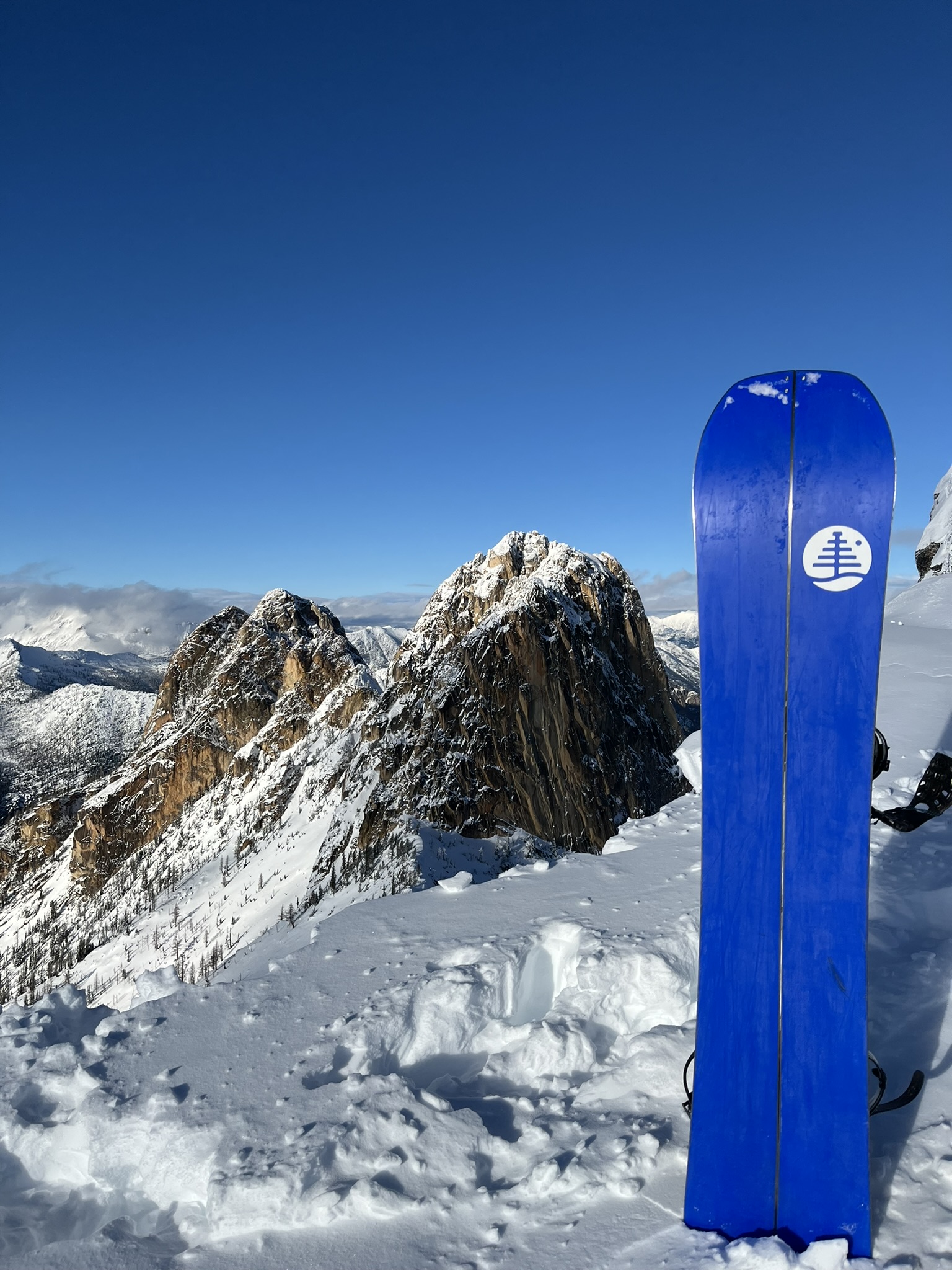
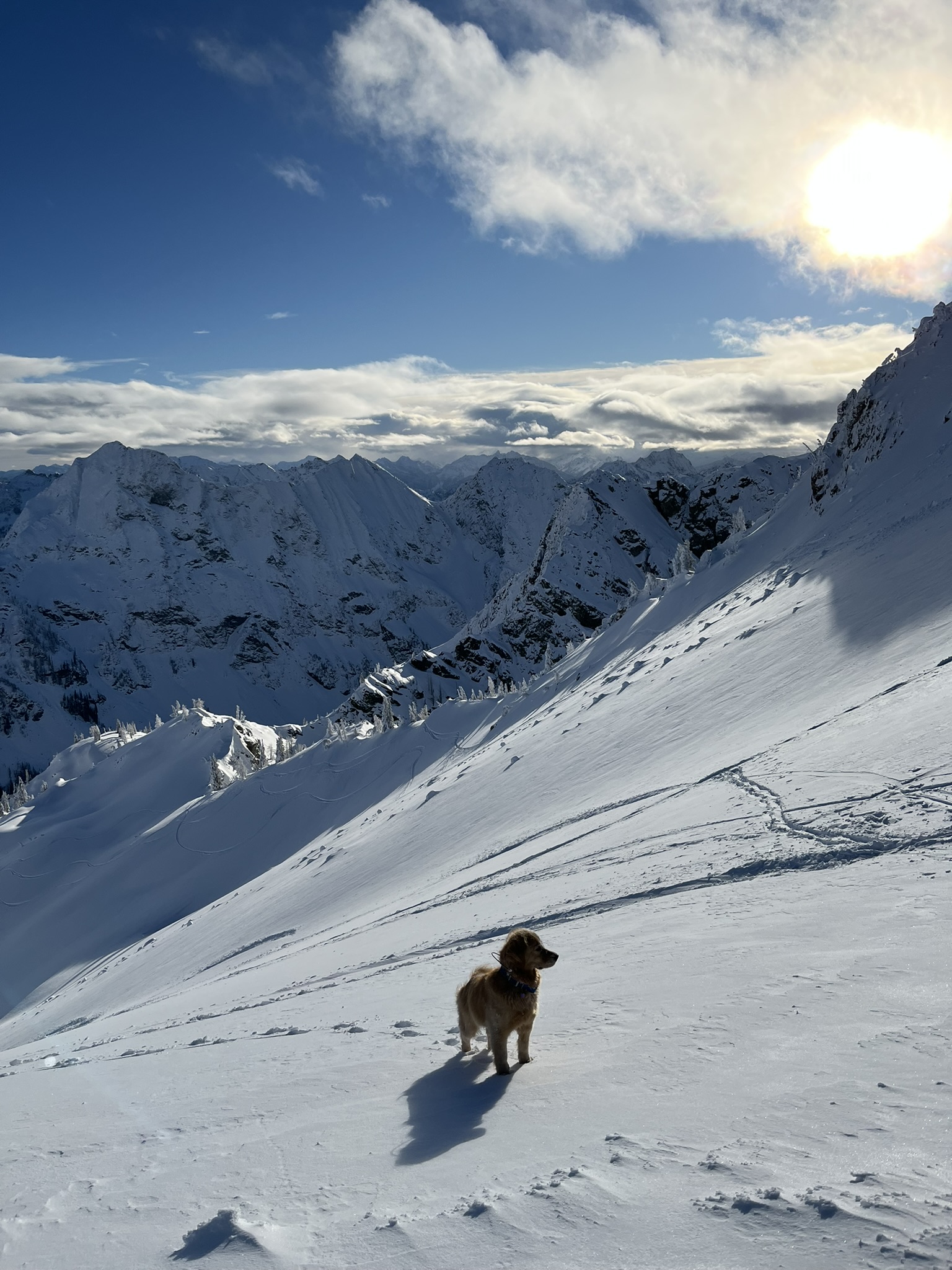
The sun was sliding toward the ridgeline. The peaks were turning gold. Every shadow on every mountain was blue-purple and sharp. I could see individual trees on ridges five miles away. The air was perfectly still.
The Last Run
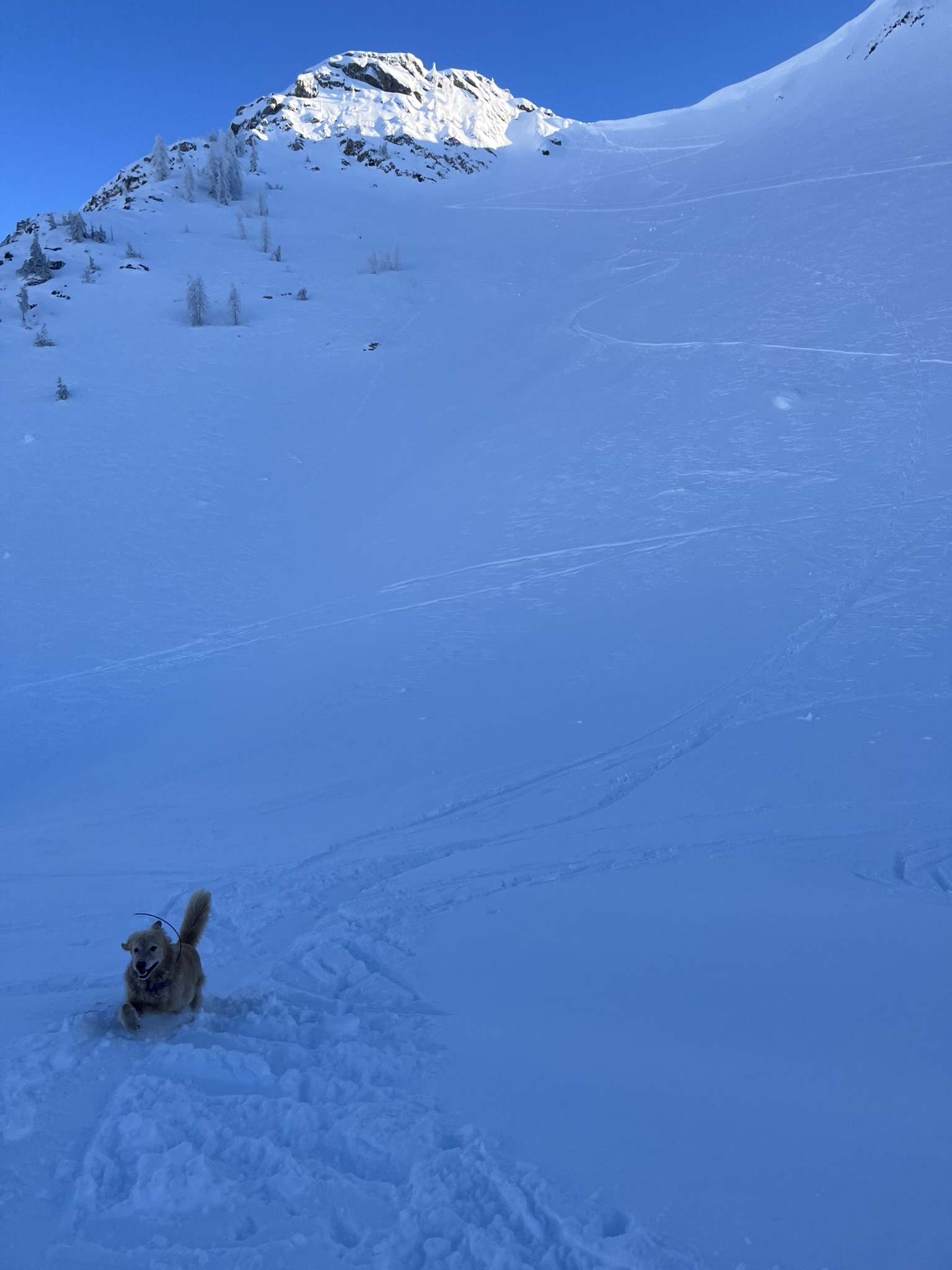
Then we dropped in again. The second run was even better — the snow had settled just enough through the afternoon to give it structure, but it was still deep, still cold, still absolutely untouched except for our tracks from three hours ago.
My human carved long GS turns down the open face. I ran straight down the middle of it, snow exploding around me with every stride, ears pinned back, mouth open. This is what November is for.
The Exit
Back through the trees. The forest was in full shadow now, the temperature dropping fast, the snow squeaking under my paws in that cold dry way that means single digits are coming. The valley opened up below us — dark timber, white peaks, the last light catching the summits while everything below was already in twilight.
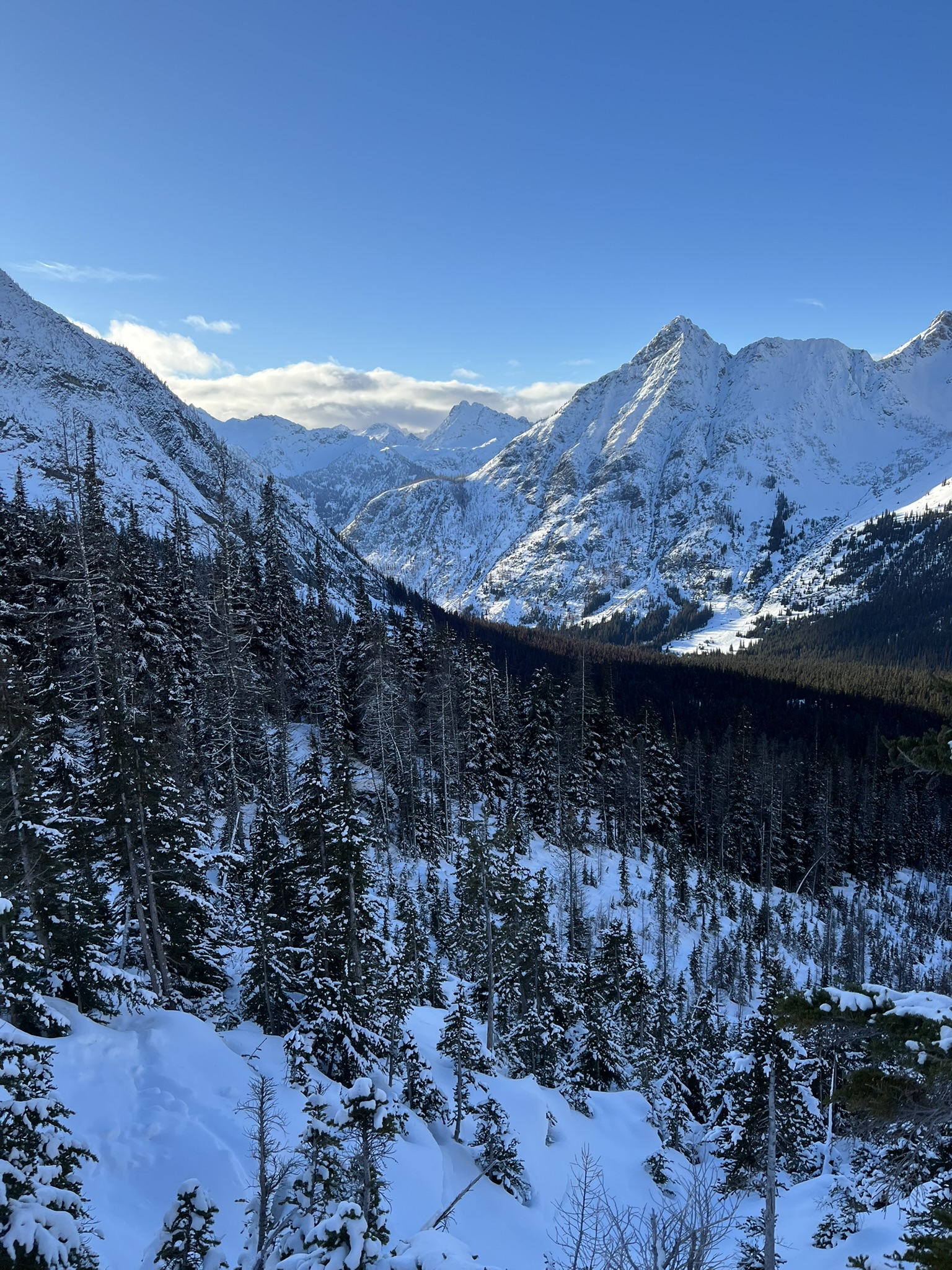
Five miles. Thirty-three hundred feet of climbing. Two full laps of untracked November powder on a bluebird day in the North Cascades. The kind of day where you drive home in the dark and the whole car smells like cold snow and wet dog and you don't say anything because what would you even say.
I slept the whole way home. My paws twitched. I was still running.