Lyall Glacier
A long day into the Lyall Glacier basin in full winter overcast — skinning through cloud, breaking above the inversion to see the whole North Cascades, then dropping back into the fog for 2,000 feet of untracked powder.
Elevation Profile
Into the Cloud
The day after Cutthroat. My legs were tired from yesterday's 4,300 feet of climbing. My human's were too, though he wouldn't say it. We started from Rainy Pass in the dark, the headlamp cutting a tunnel through falling snow that had already covered our tracks from the drive in.
By the time the forest brightened enough to see without light, we were in the cloud. Not above it, not approaching it — in it. The world reduced to fifty feet of visibility, every tree a grey shape, every ridge a suggestion. I navigated by nose. The snow smelled different up here than it had yesterday — wetter, denser, the air thick with moisture.
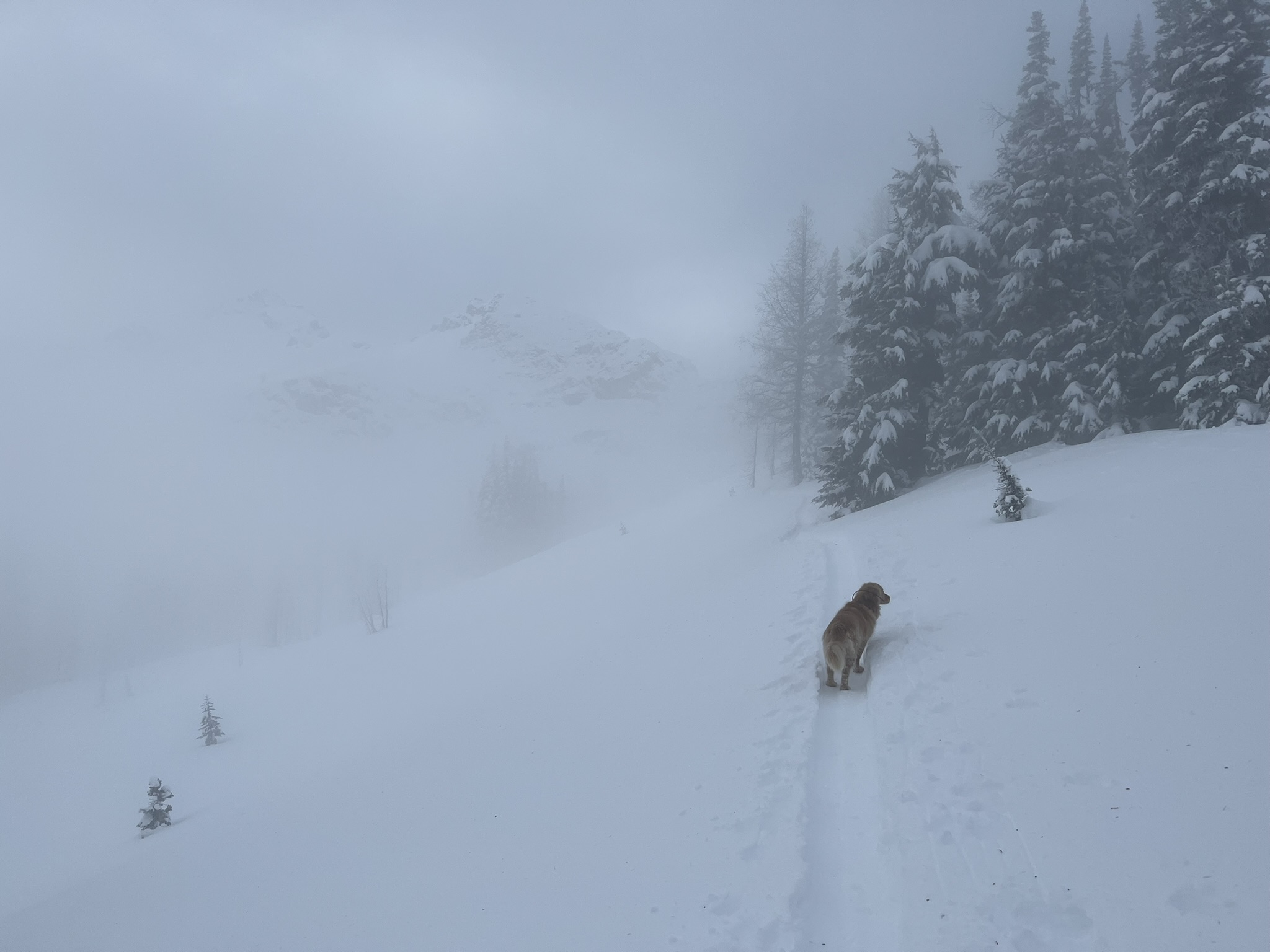
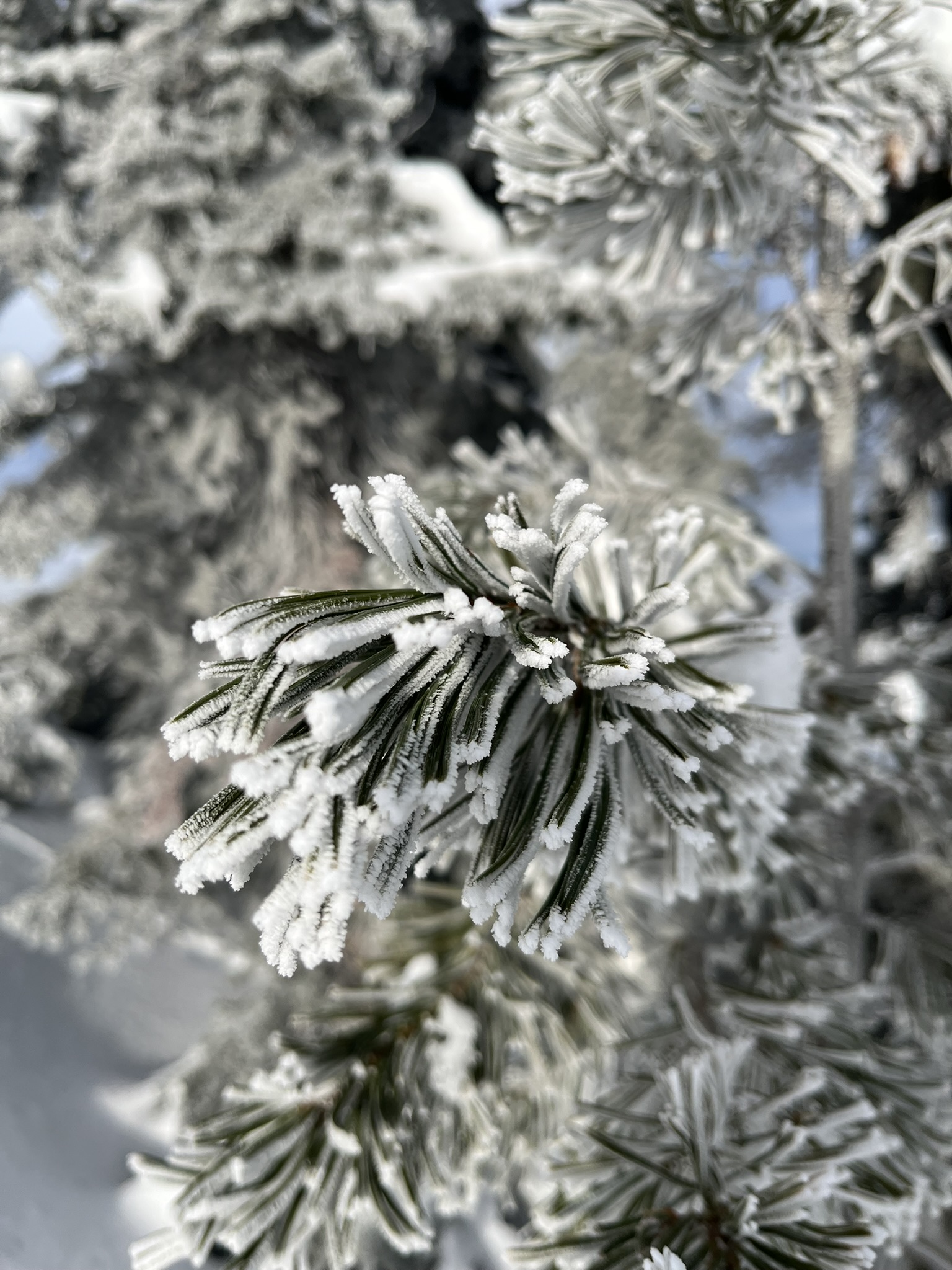
The rime was building on everything. Every branch, every needle, every exposed surface wore a coat of ice crystals that grew as we climbed. I stopped to look at one — a subalpine fir branch transformed into something from another planet, every needle furred with frost.
Above the Inversion
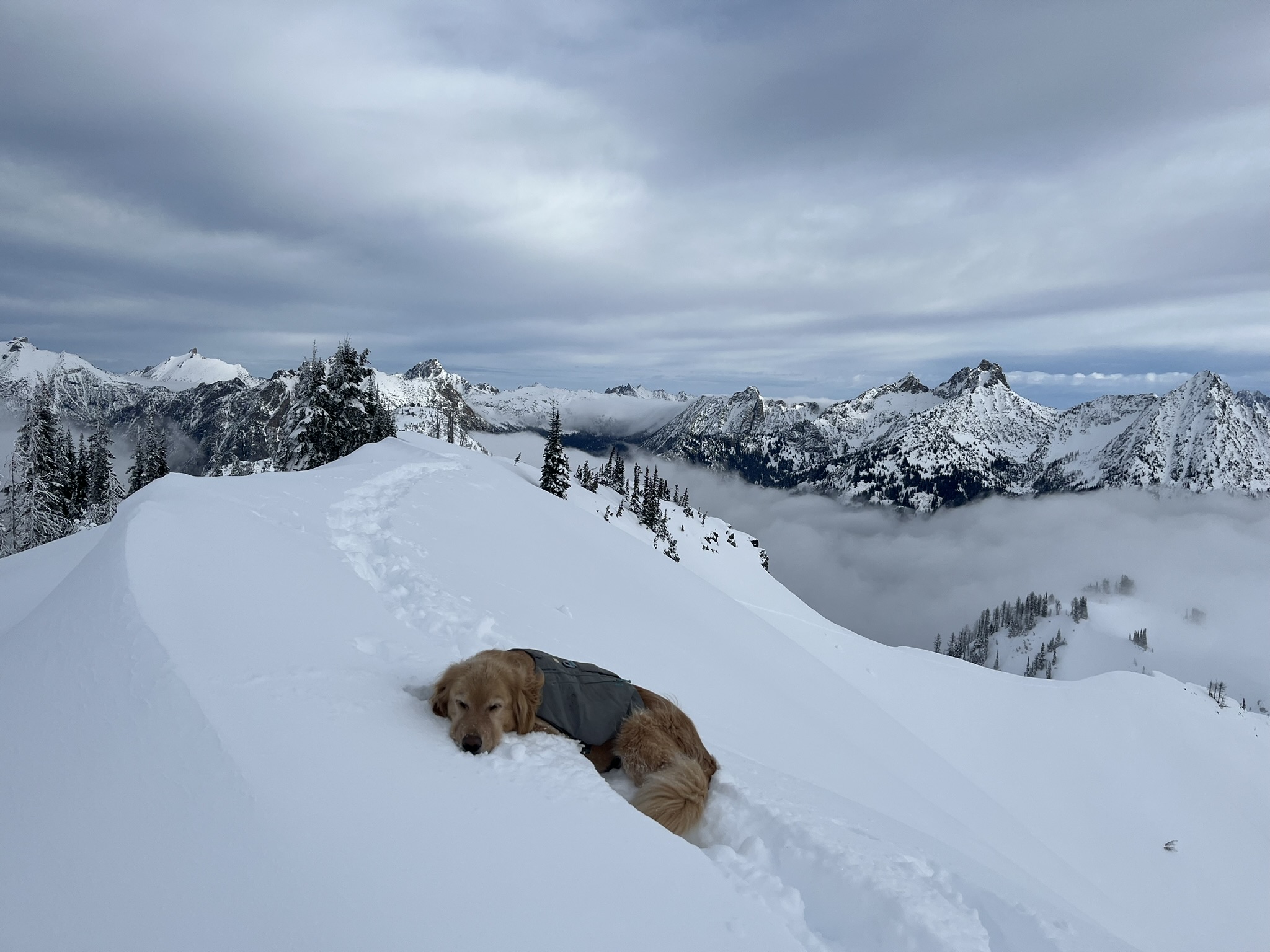
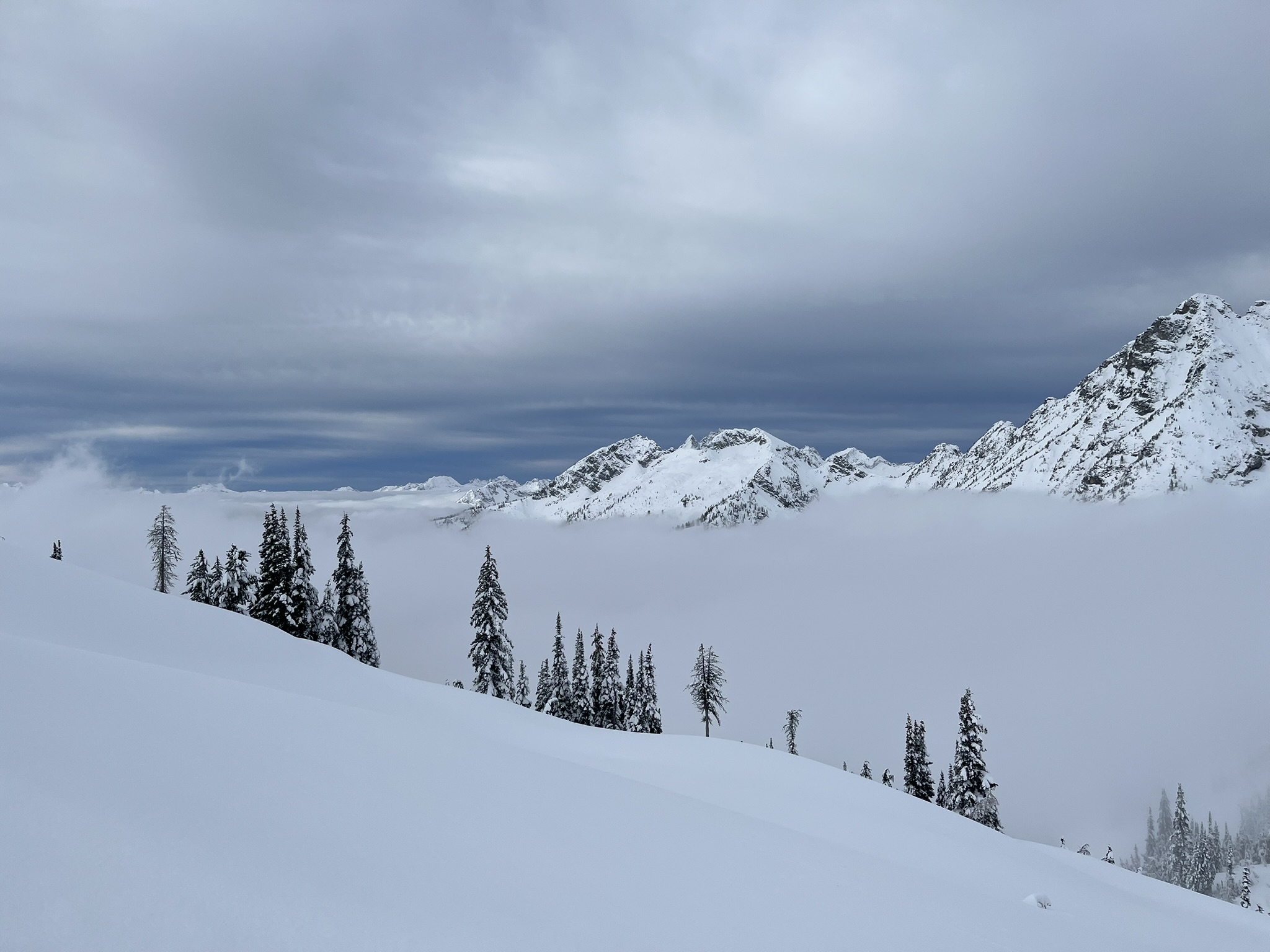
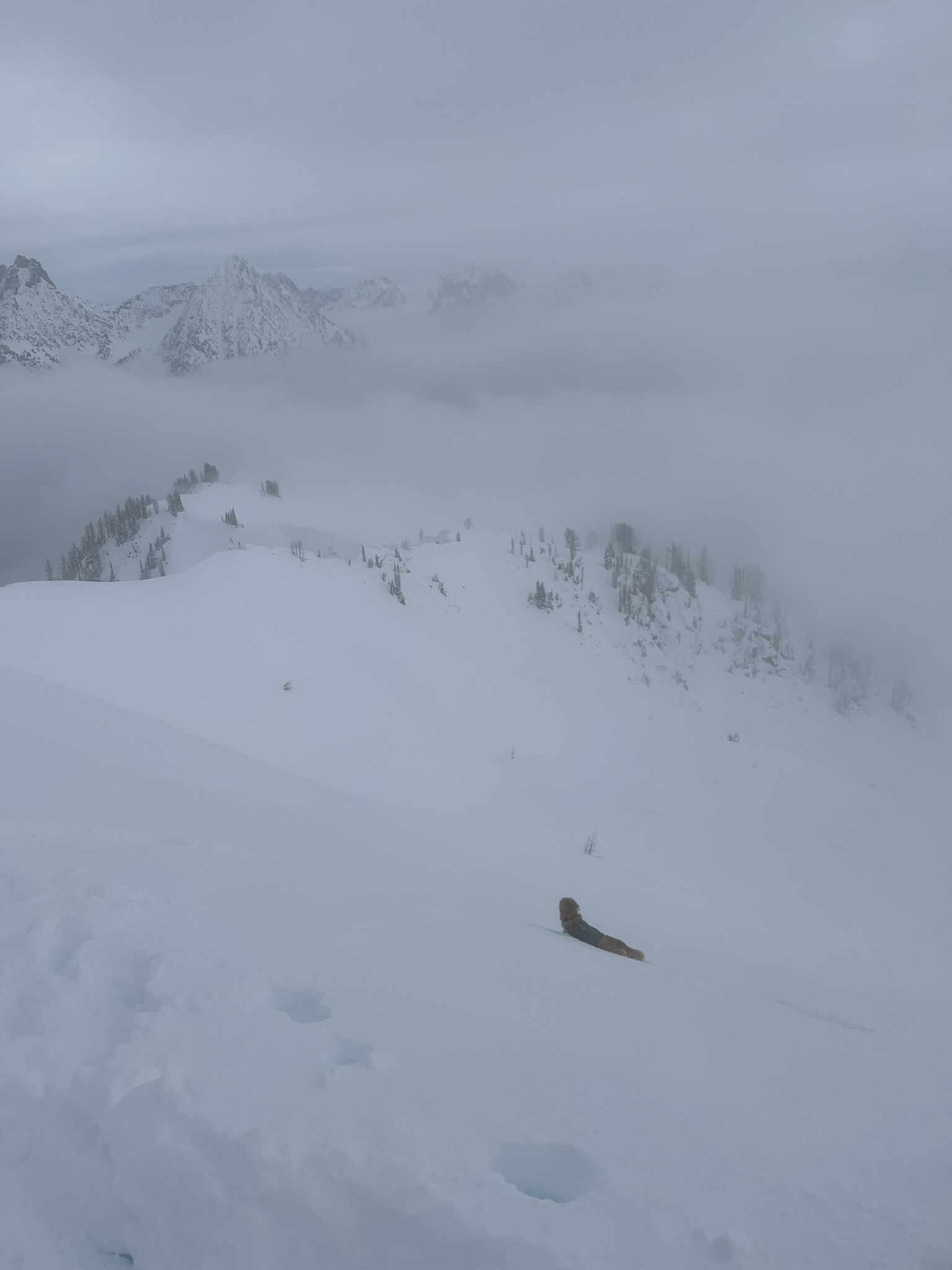
Then we broke through. At 6,500 feet the cloud ended like a ceiling and the world above it was a different place entirely. The overcast was below us now — a flat grey sea filling every valley, the peaks rising out of it like islands. The sky above was grey-white but the visibility was suddenly infinite.
I lay in the snow and looked at it. The whole North Cascades, the peaks I'd climbed all season, floating above a sea of cloud. The valleys were gone. The roads were gone. Just summits and ridges and snow and silence.
The Glacier Basin
We dropped off the ridge and traversed south into the Lyall Glacier basin. Below the ridge, the cloud swallowed us again — back into the grey, back into fifty-foot visibility, back into the quiet muffled world of fog and snow. The terrain steepened and narrowed. Rocky crags appeared above us, dark against the white.
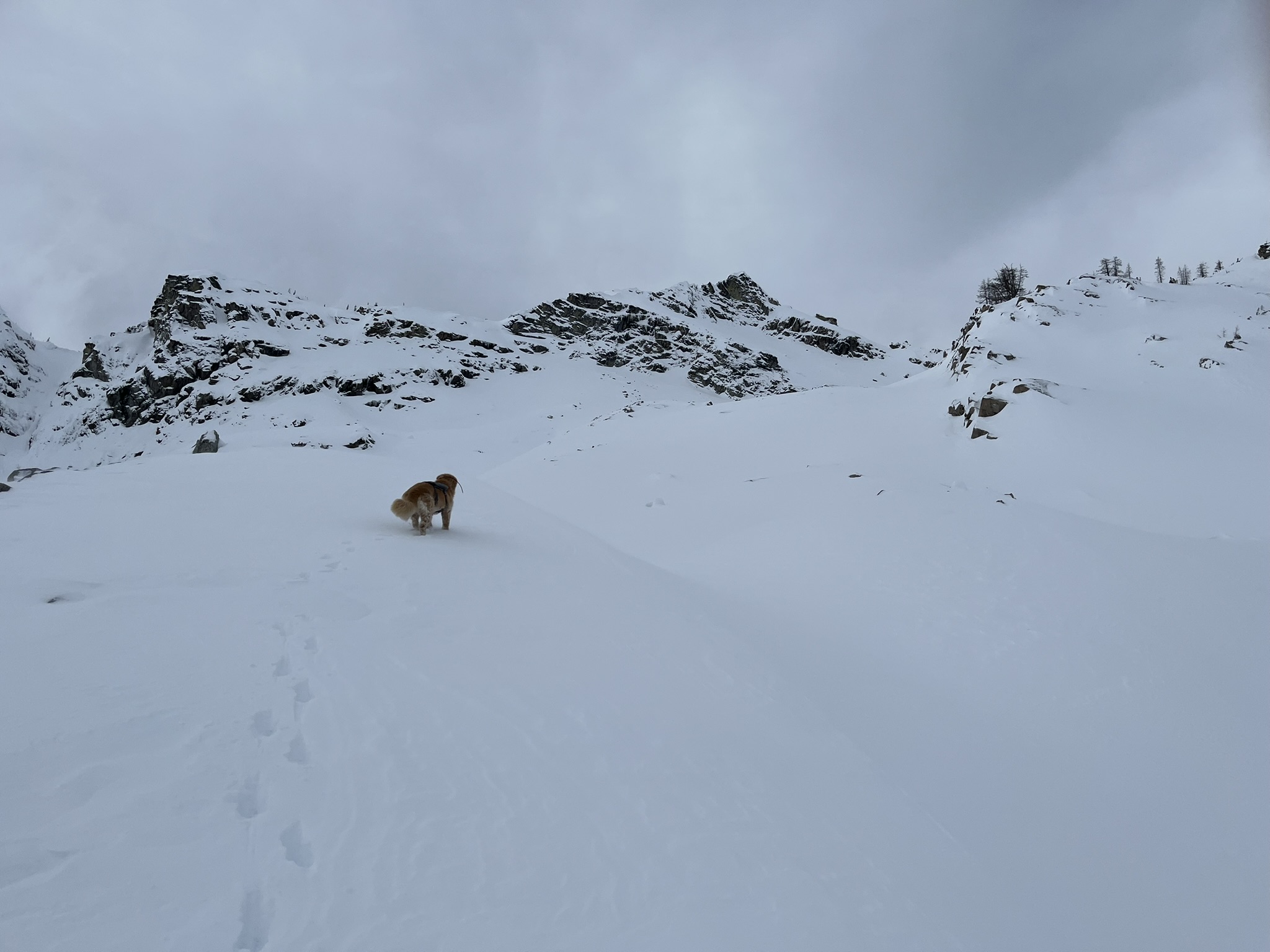
The basin was enormous. A wide glacial cirque ringed by walls of rock, the headwall rising steeply above us — dark faces striped with snow couloirs, the scale making everything feel very small. Nova included. She was a golden speck at the base of a mountain.
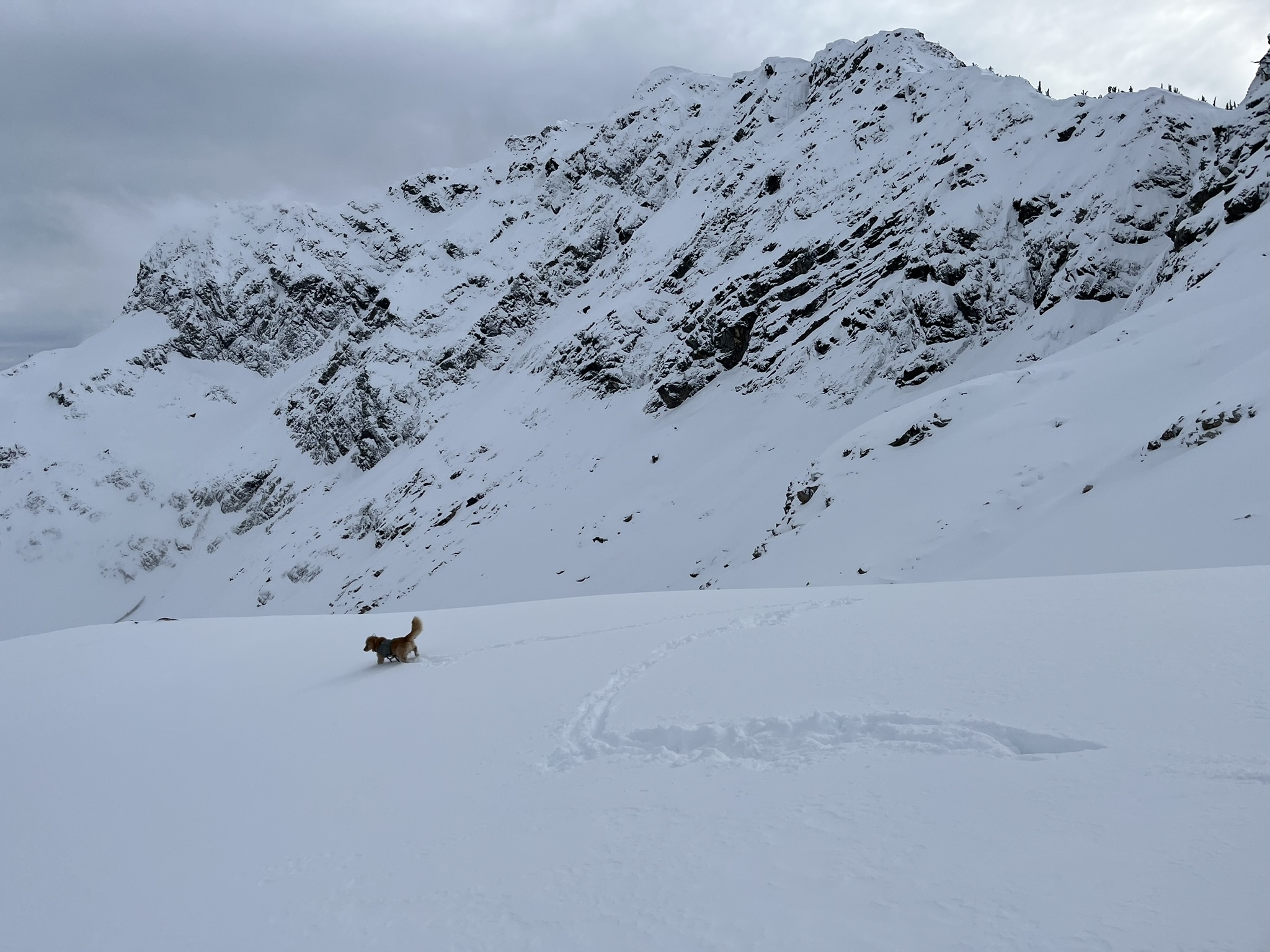
We climbed to 7,081 feet — the high point of the day, just below where the rock got too steep and the snow too thin on the exposed upper faces. My human studied the headwall. Lines for another day, maybe. With more visibility. With less fog.
The Descent
Then we dropped in. Two thousand feet of untracked powder from the upper basin to the valley floor. The cloud made it strange — no horizon, no depth perception, just snow falling away beneath us and the sense of speed without visual reference. My human rode by feel, making turns based on the angle under his board rather than what he could see ahead. I ran by nose and instinct, which is how I do most things anyway.
The snow was extraordinary. Cold, deep, and completely untouched — not a track in the basin except ours. Every turn threw up a wave of powder that hung in the still air and settled slowly. In the fog it looked like smoke.
The Exit
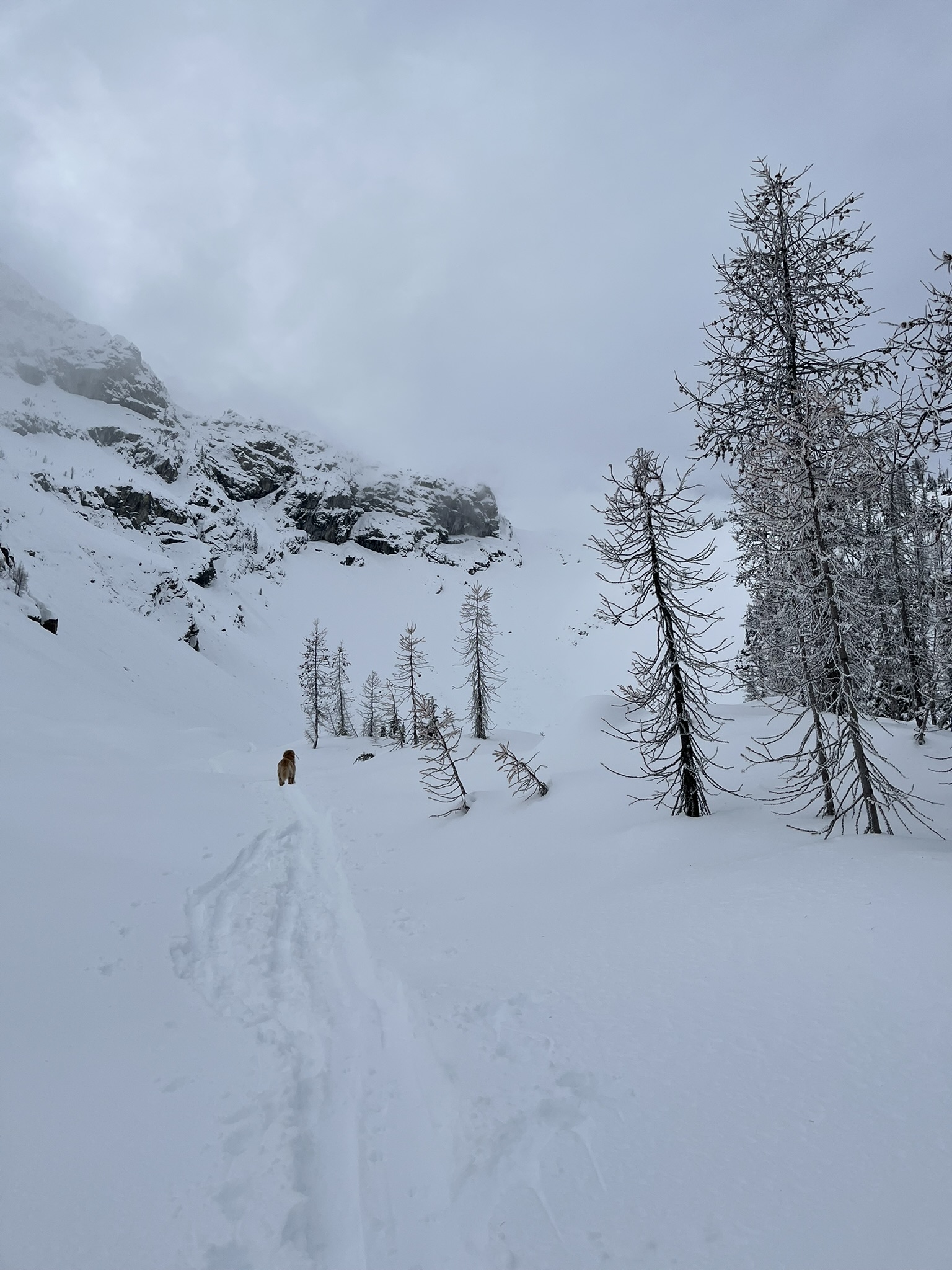
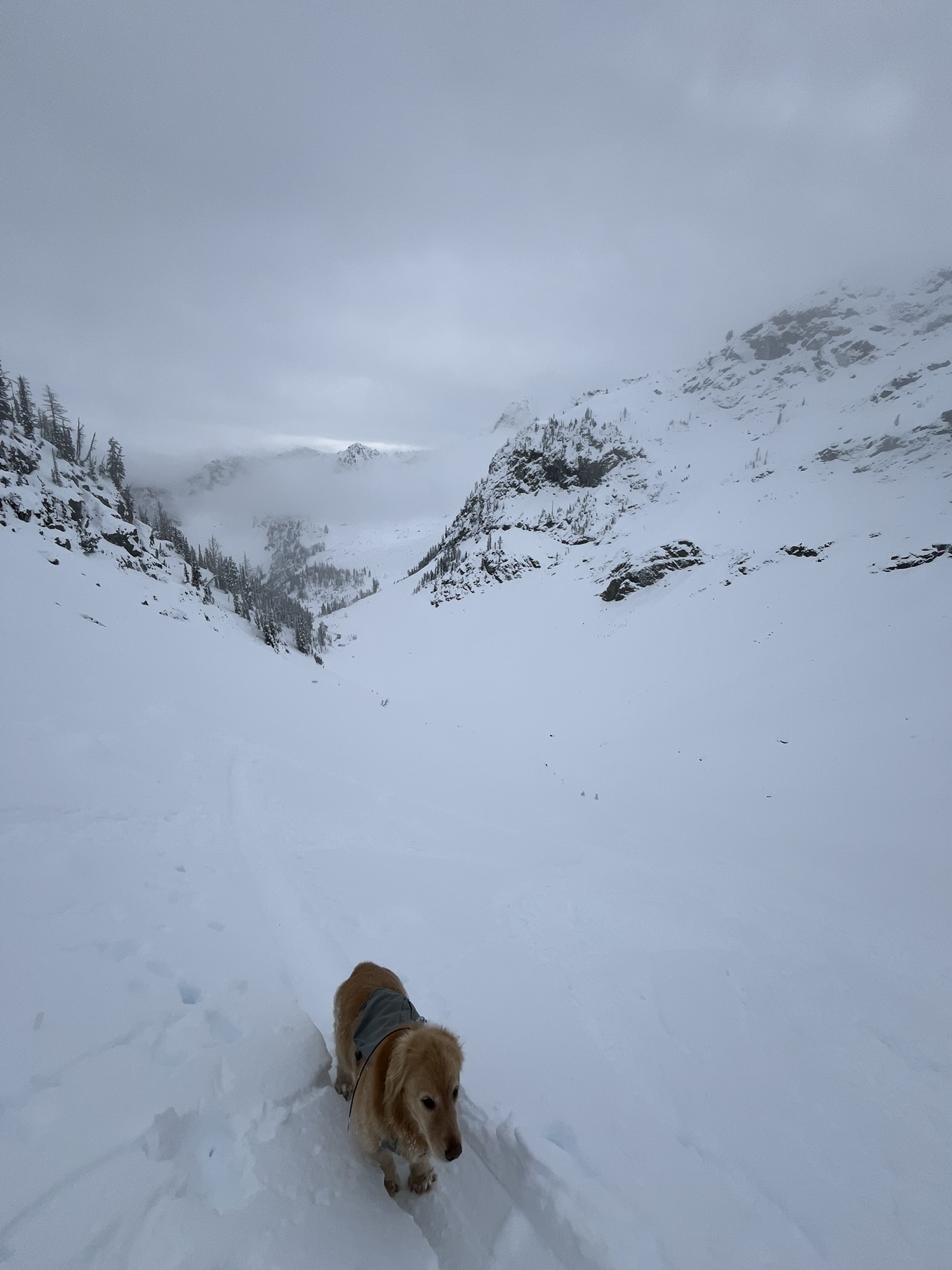
Back through the forest. Back to the car. Nine and a half miles, forty-three hundred feet of gain in two days' worth of legs. The fog never lifted. We never needed it to.
Some days the mountains give you bluebird sky and sharp horizons and you can see for fifty miles. Some days they give you cloud and rime and a world reduced to what's directly in front of you. Both days have something. This one had powder that nobody else would ever touch, in a basin that nobody else would ever see that way, on a morning where the only tracks in the entire drainage belonged to a dog and her human.
That's enough.