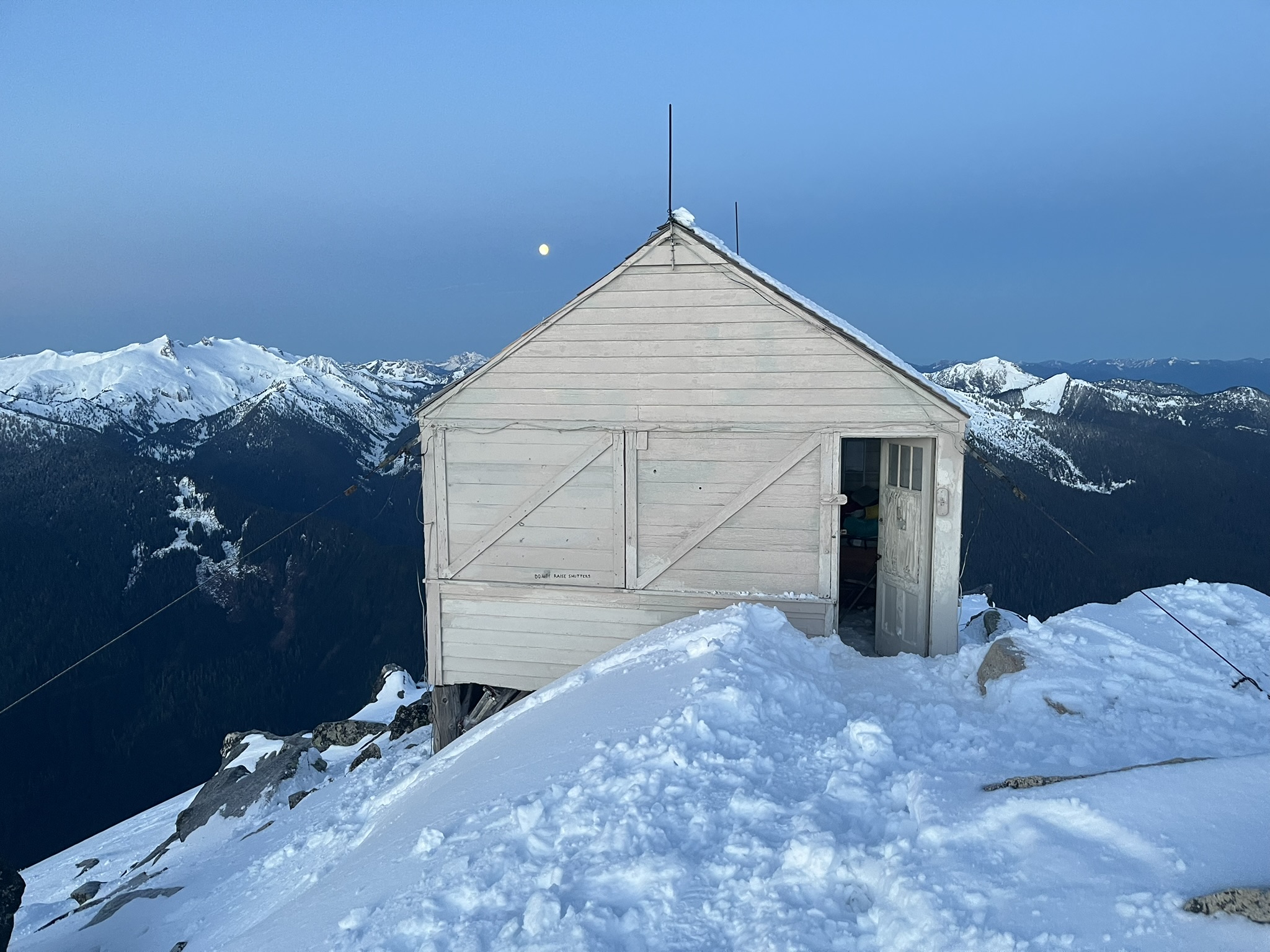
Hidden Lakes Lookout
An overnight splitboard mission to the historic Hidden Lakes Lookout — skinning through a whiteout, sleeping in a fire lookout at 6,890 feet, then waking to the most perfect sunrise in the North Cascades.
Elevation Profile
The Road
Friday morning, April. My human had the car packed before dawn — splitboard, overnight gear, my pack, enough food for two days. The drive to Cascade River Road took us deep into the North Cascades, the valley narrowing until the pavement ended and a white sign on a mossy tree said what we already knew: ROAD CLOSED.
We parked, shouldered packs, and started walking.
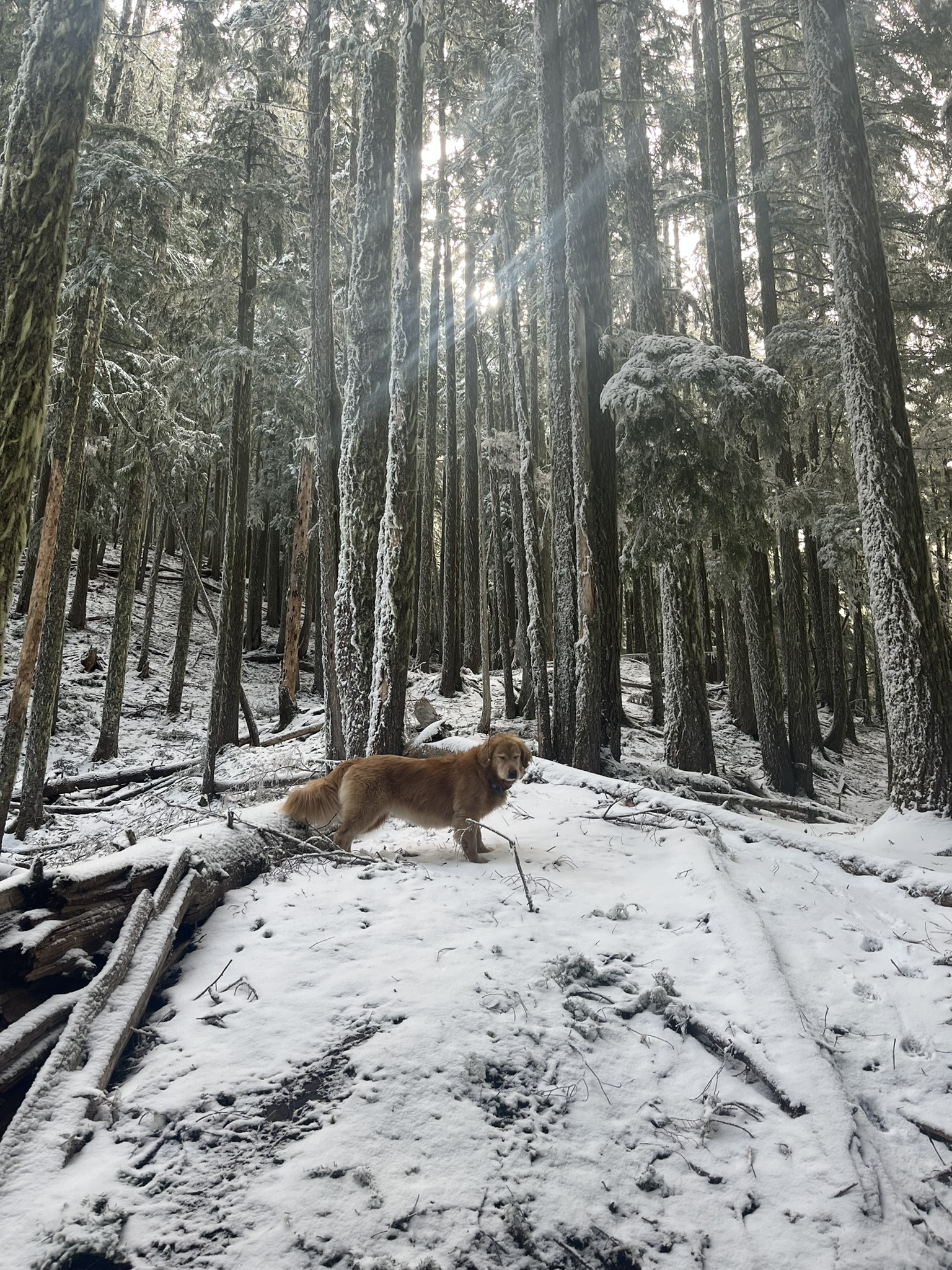
The first stretch was just road under snow, nothing technical. I ranged ahead, nose working the wet ground, picking up the scent of elk and the faint mineral tang of snowmelt. The forest was dense and dripping — old growth, the trunks wide enough to hide behind. Light snow had fallen overnight and everything was dusted white.
Into the Snow
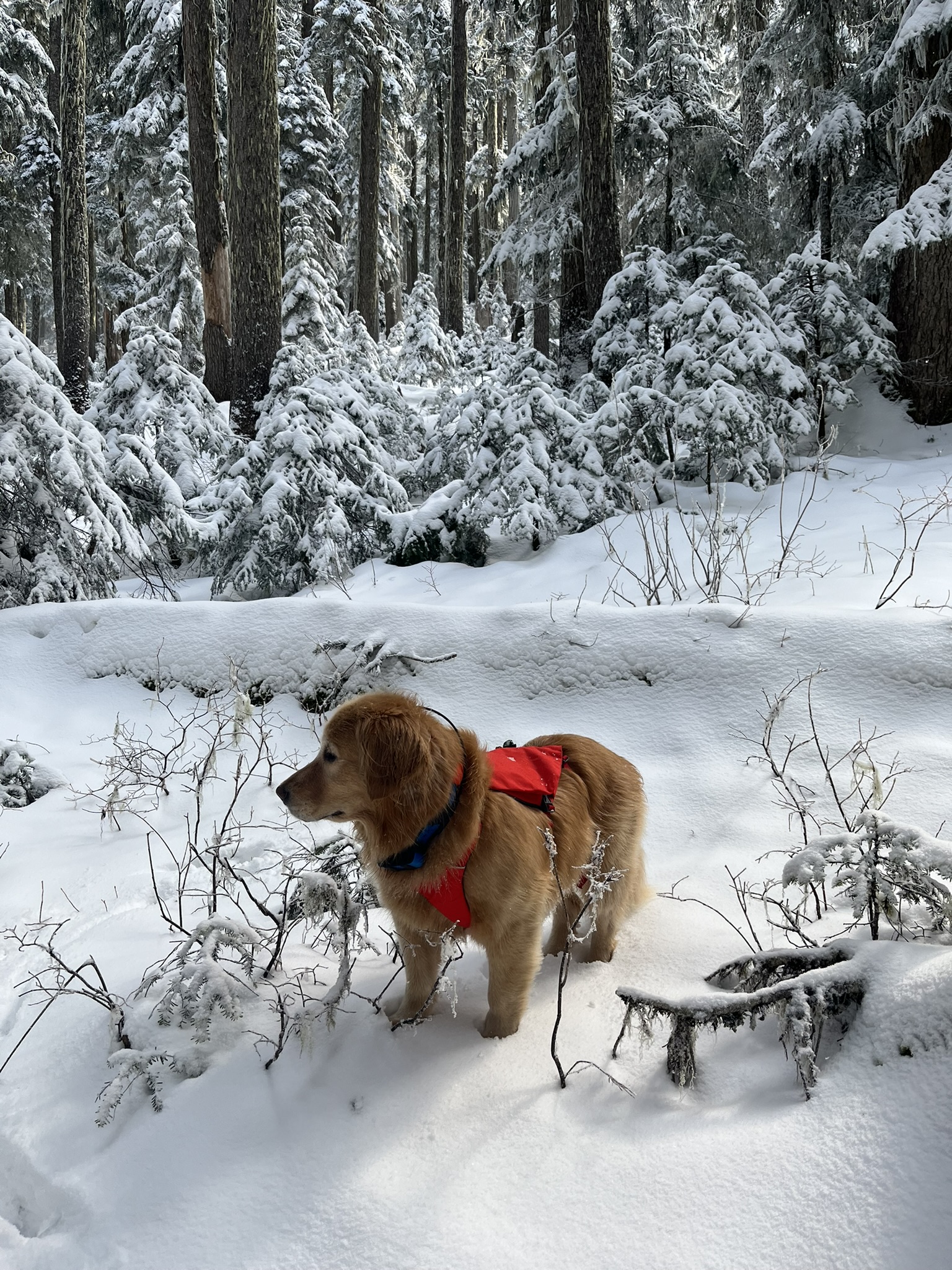
By 4,000 feet the snow was deep and continuous. My human clicked into the splitboard and started skinning. I broke trail, which is my preferred arrangement. The forest here was heavy with snow — every branch loaded, every bough sagging. Quiet in the way only a snowbound forest can be quiet.
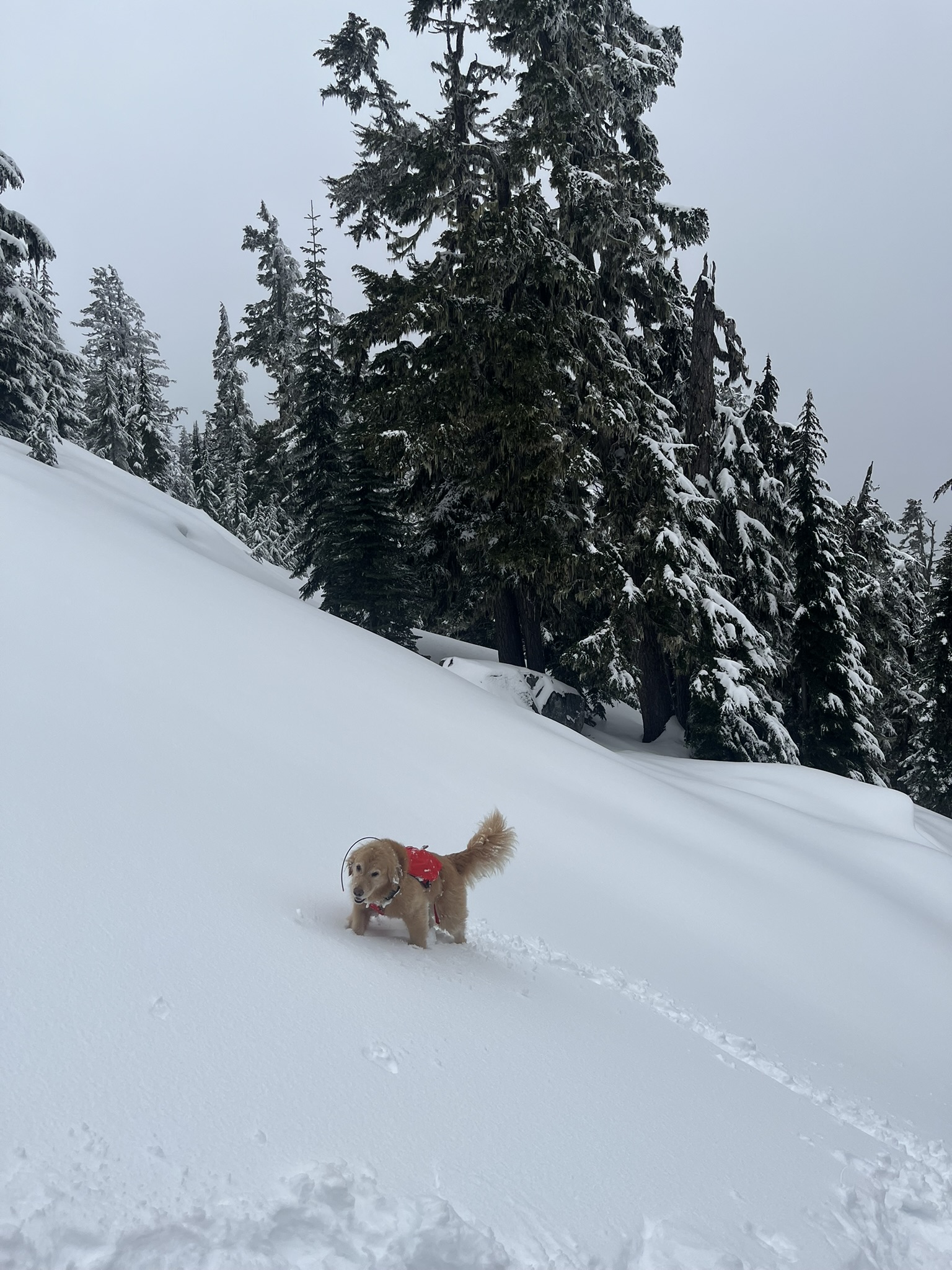
The grade steepened. By noon we were above 5,000 feet and the trees were thinning. I could feel the temperature dropping as we climbed — it had been 35 at the trailhead but up here the air had a bite to it. Overcast pressed down from above. Visibility was shrinking.
The Whiteout
Above treeline, the world went white. Snow and sky merged into a single plane. I could see maybe fifty feet in any direction. My human navigated by GPS and instinct. I navigated by nose — even in a whiteout, the ridge has a smell. Rock and ice and the dry electric scent of altitude.
We crossed a broad alpine saddle, the snow wind-packed and firm underfoot. A rock cairn and a wooden post materialized out of the fog — trail markers buried to their necks. Good to know we were on route.
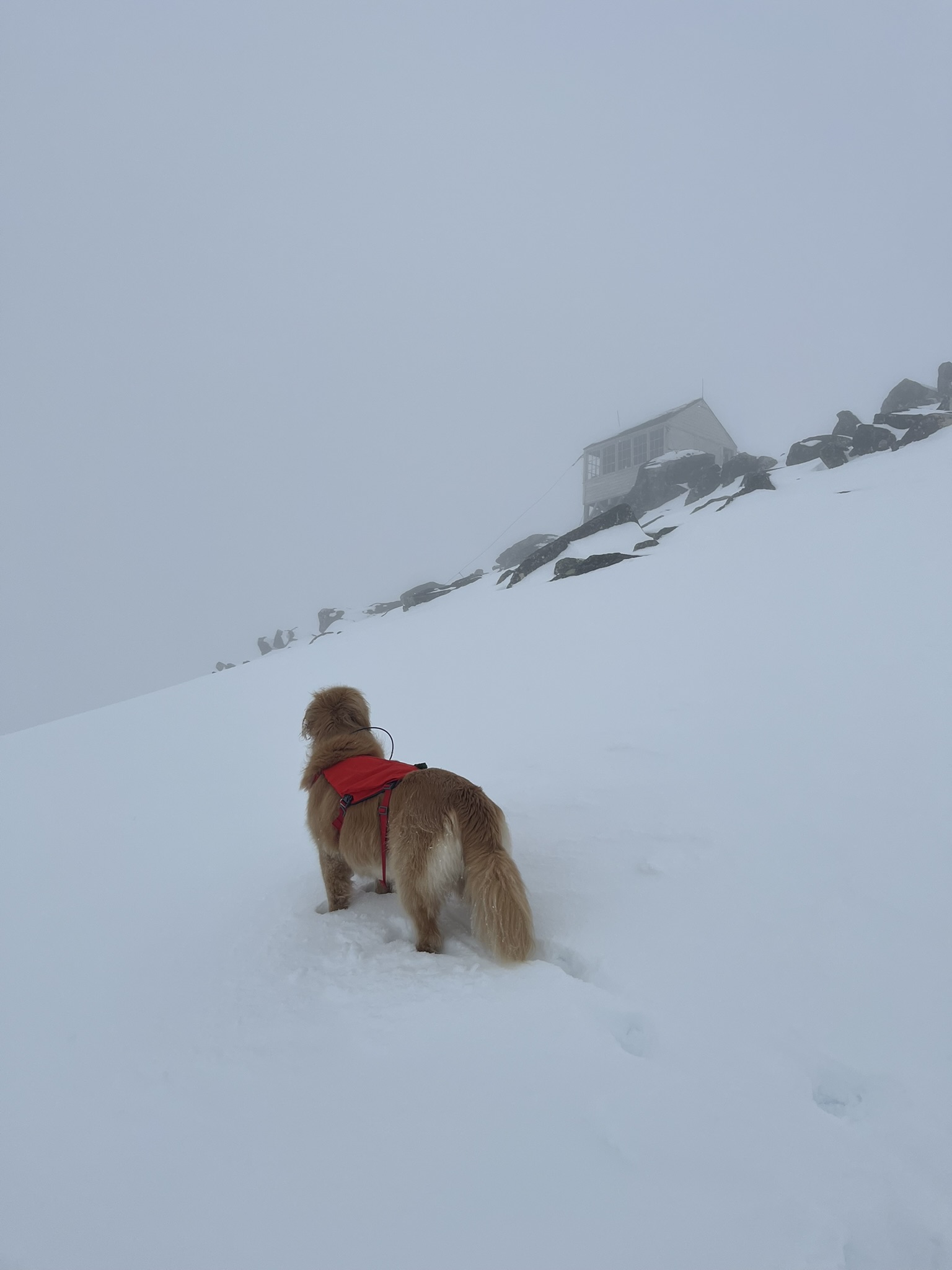
Then I saw it. A shape in the fog — angular, man-made, perched on rocks above us. The lookout.
The Lookout
Hidden Lakes Lookout sits at 6,890 feet on a rocky point with drop-offs on three sides. In summer it's one of the most famous fire lookouts in Washington. In April, buried in snow and wrapped in cloud, it looked like the last outpost before the end of the world.
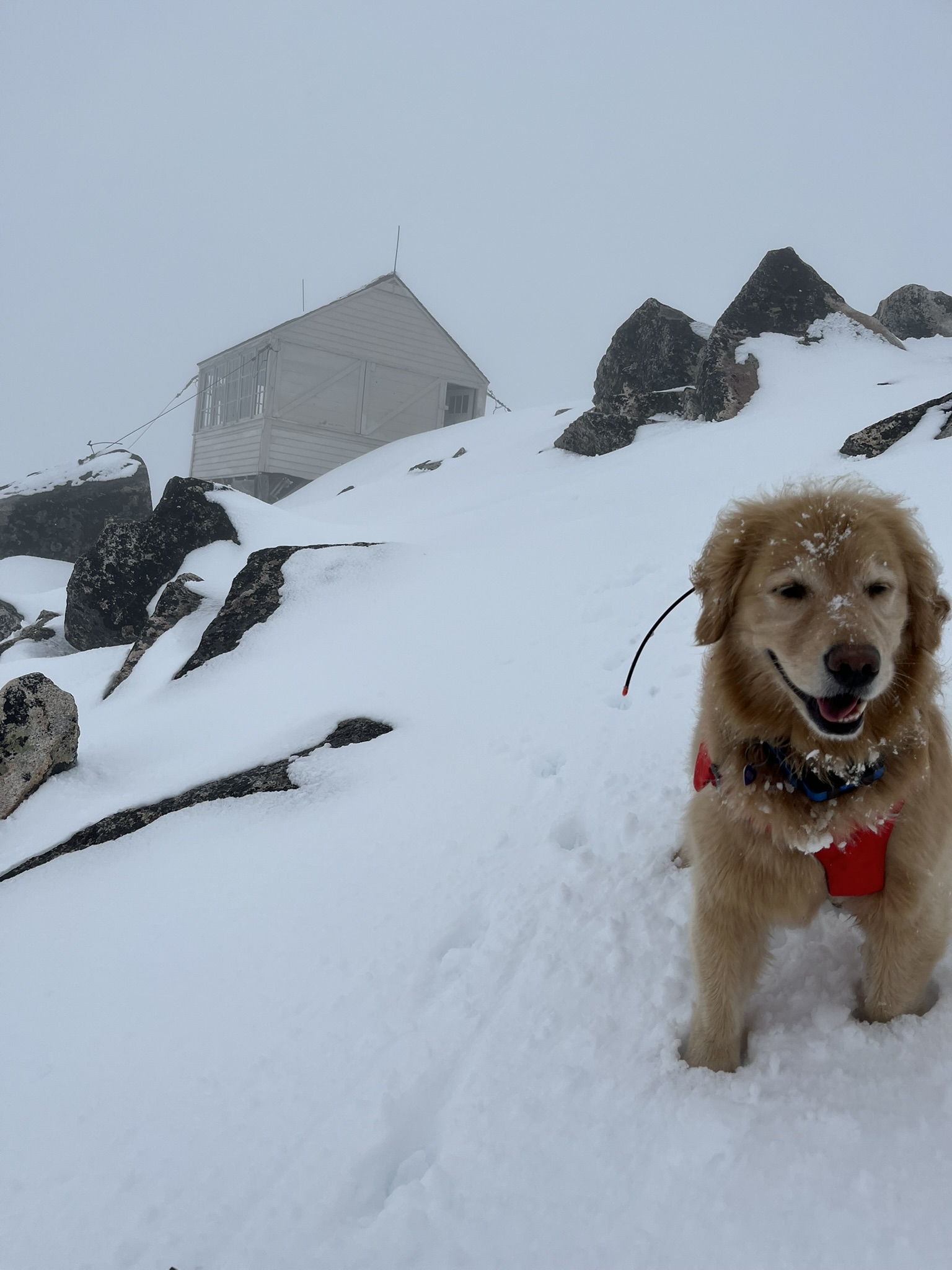
We dug out the door and pushed inside. The lookout was cold but dry — a wooden bed frame, a counter with an old stove, frosted windows on every wall. My human rolled out the sleeping bag. I claimed the bed.
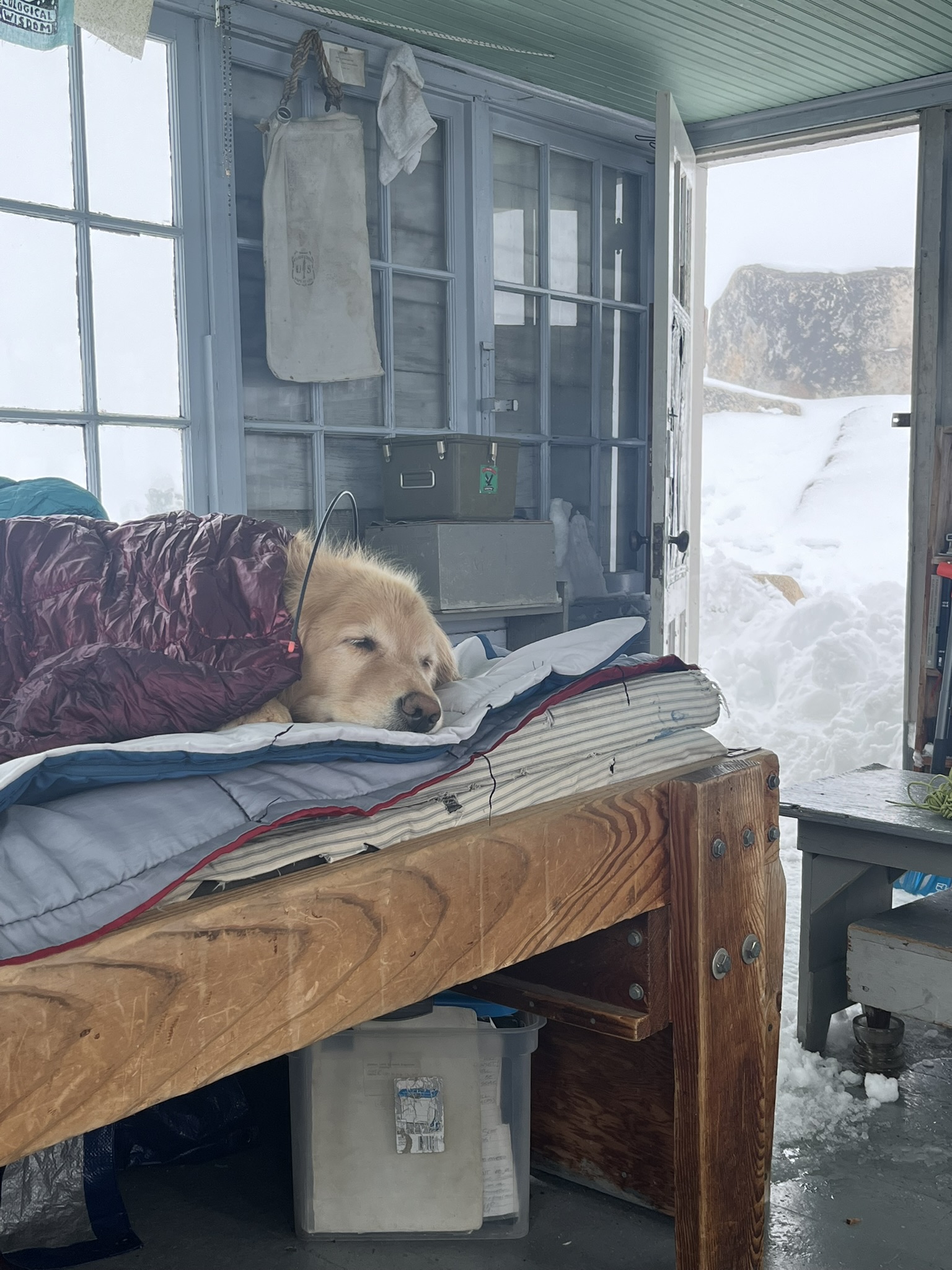
Within twenty minutes I was out. Six hours of climbing through deep snow at altitude — even I have limits. My human made dinner on the stove while I dozed.
The Clearing
I woke to silence. Not the silence of cloud — the silence of space. I could feel it before I opened my eyes. The air had changed. Colder, drier, infinitely still.
My human was at the door. I joined him.
The clouds were gone. Every single one. The sky was deep blue-black, stars still visible, and the mountains — the mountains were everywhere. Ridgelines I couldn't see an hour ago now stretched in every direction, white and sharp against the darkening sky. The whole North Cascades, laid out like a map made of ice.
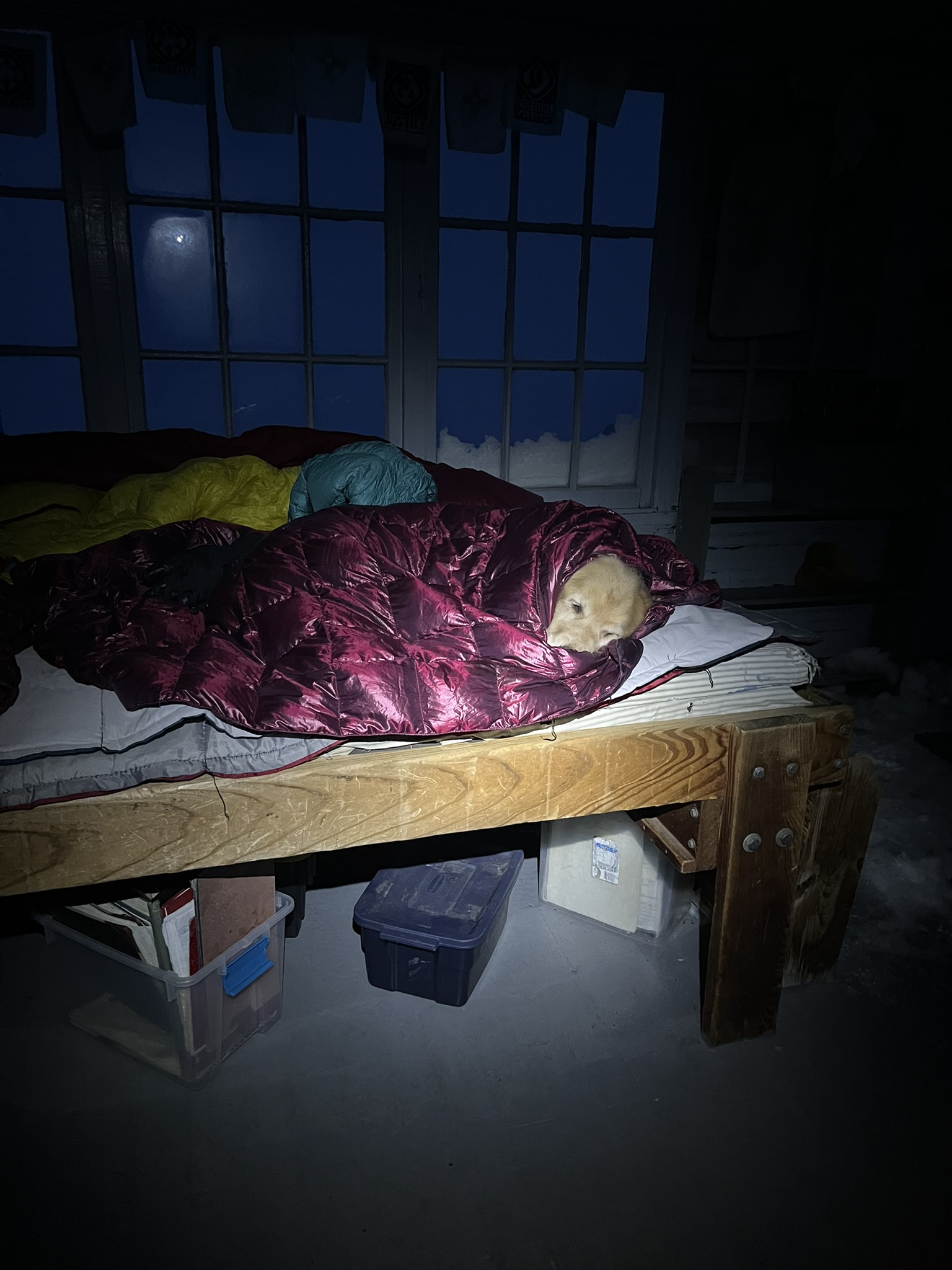
We watched the light die. Then we went back inside.
Sunrise
I woke to cold. Real cold — 10 degrees, the kind where your breath freezes to your fur. But the windows were glowing.
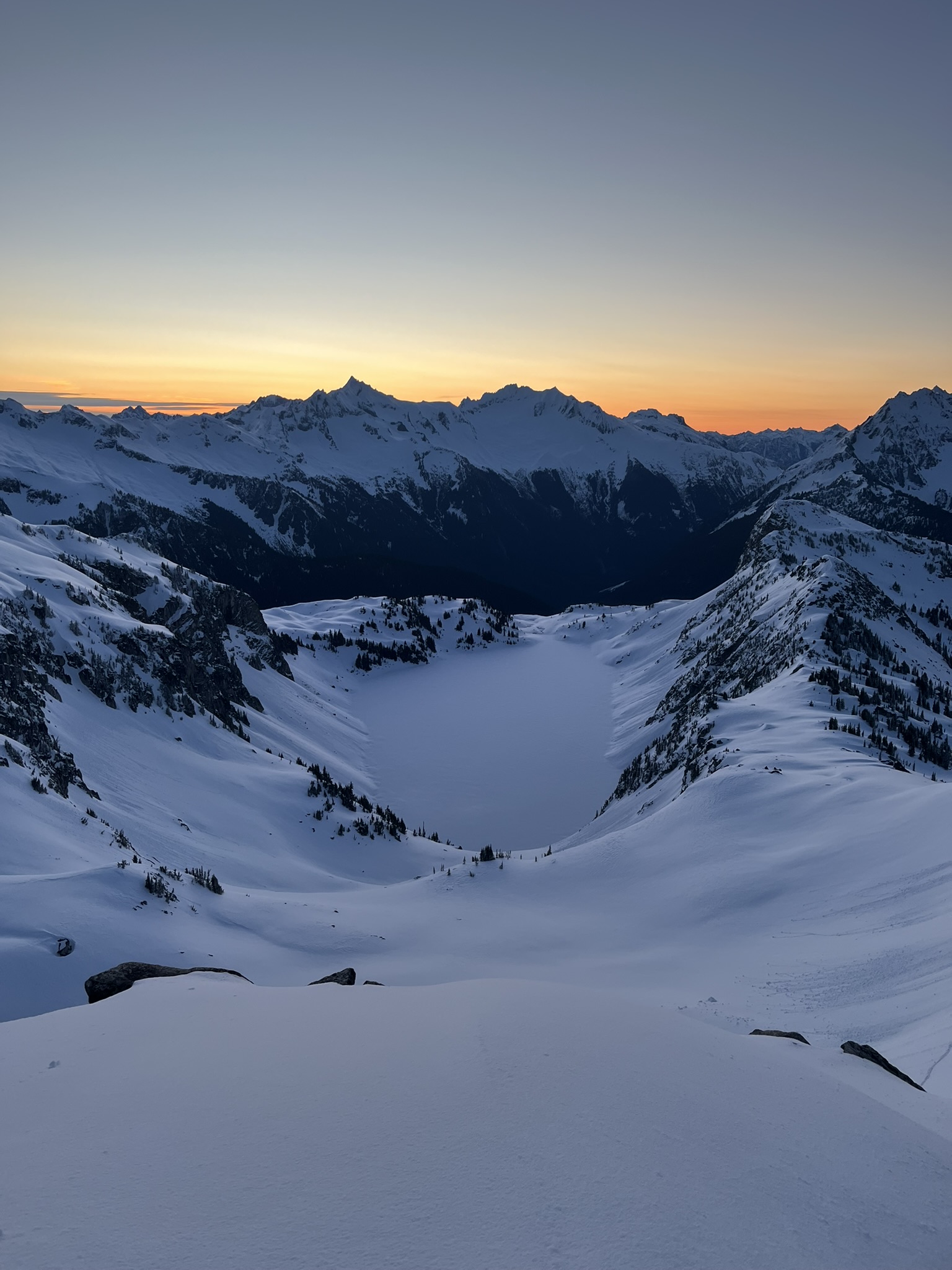
We stepped outside and the world was on fire. Not literally — the sunrise. Orange and pink and gold spreading across the horizon, the peaks catching light one by one from east to west. Below us, the Hidden Lakes basin was a perfect white bowl, the frozen lakes invisible under feet of snow, ringed by walls of rock and ice.
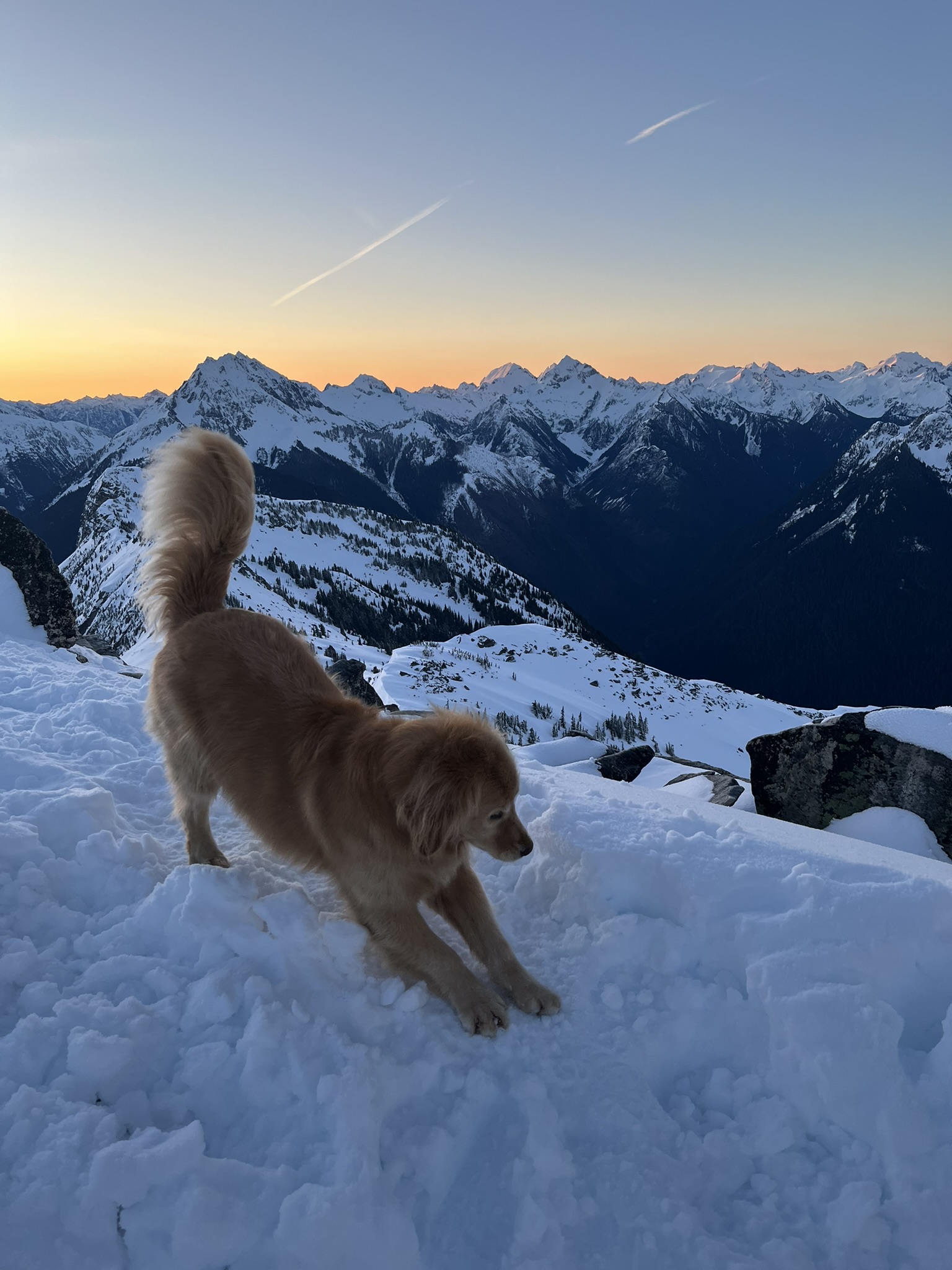
I couldn't sit still. I did the thing where my front end goes down and my back end stays up and my tail goes and I just — I had to move. The mountains deserved it.
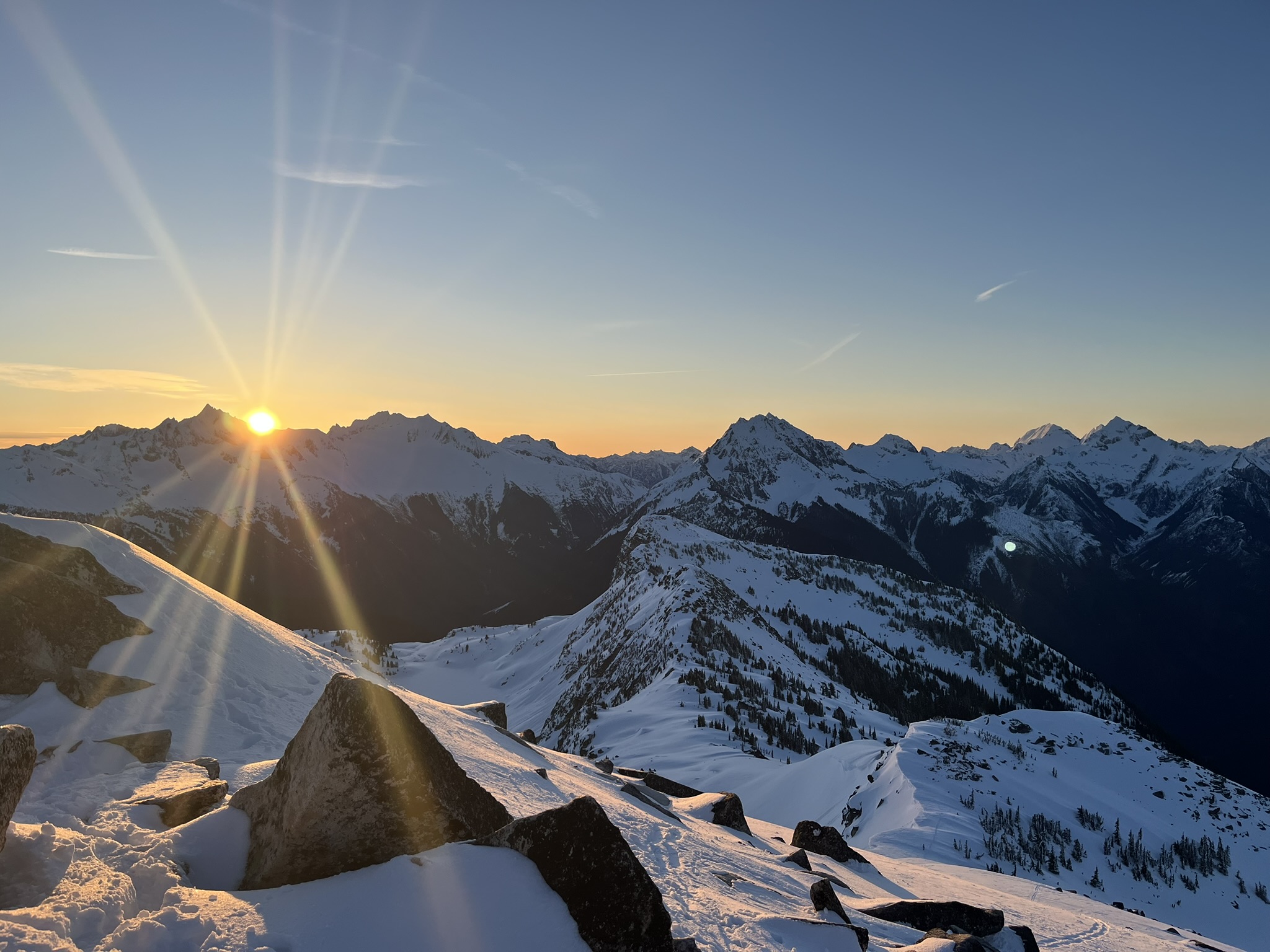
The sun crested the ridge and sent long shadows across the snow. Every peak had a name and I didn't need to know any of them to understand what I was looking at. This was the best morning of my life. Again.
The Ridge
We packed up the lookout — swept the floor, closed the shutters, left it how we found it. Then we headed out along the ridge.
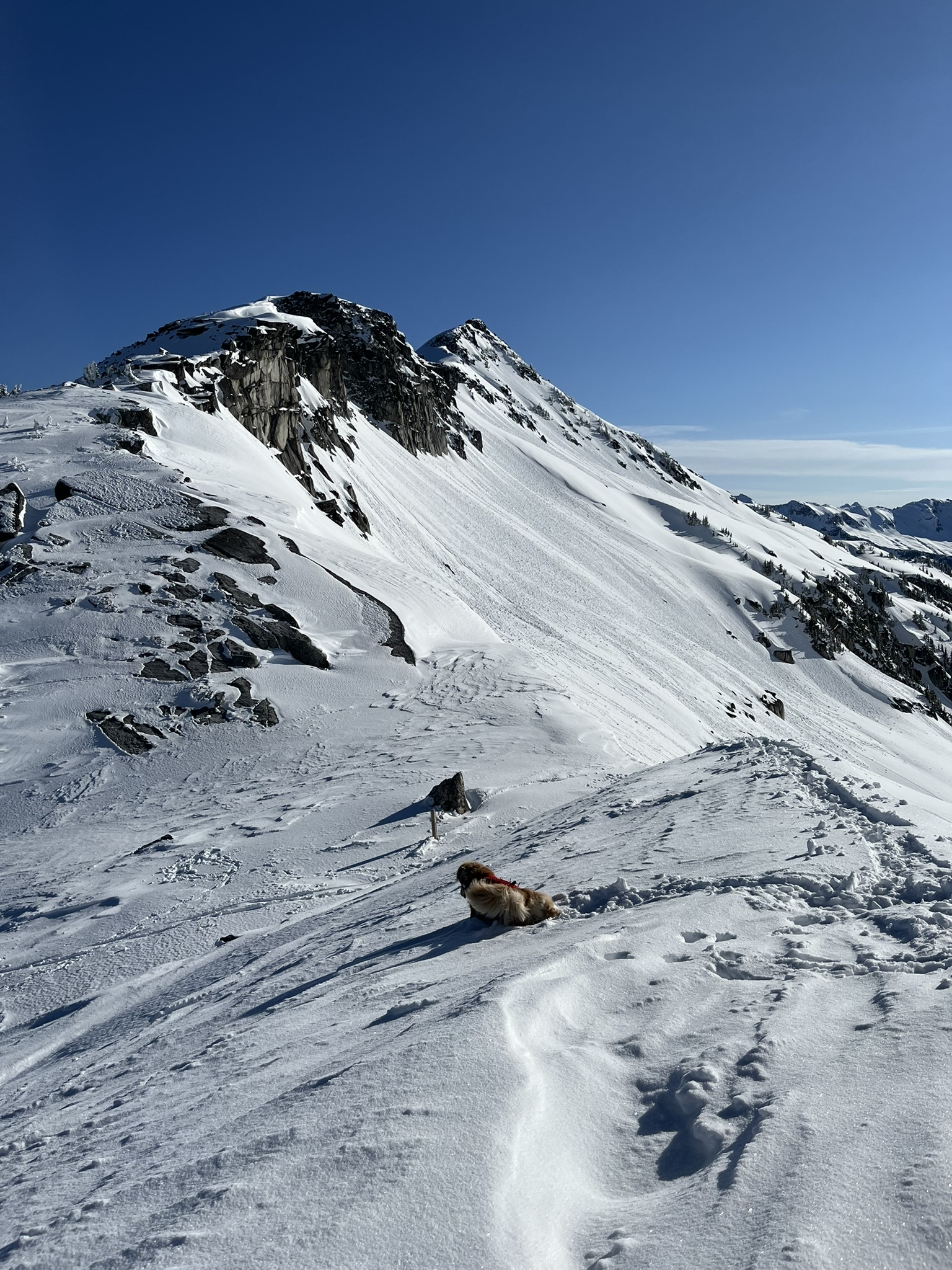
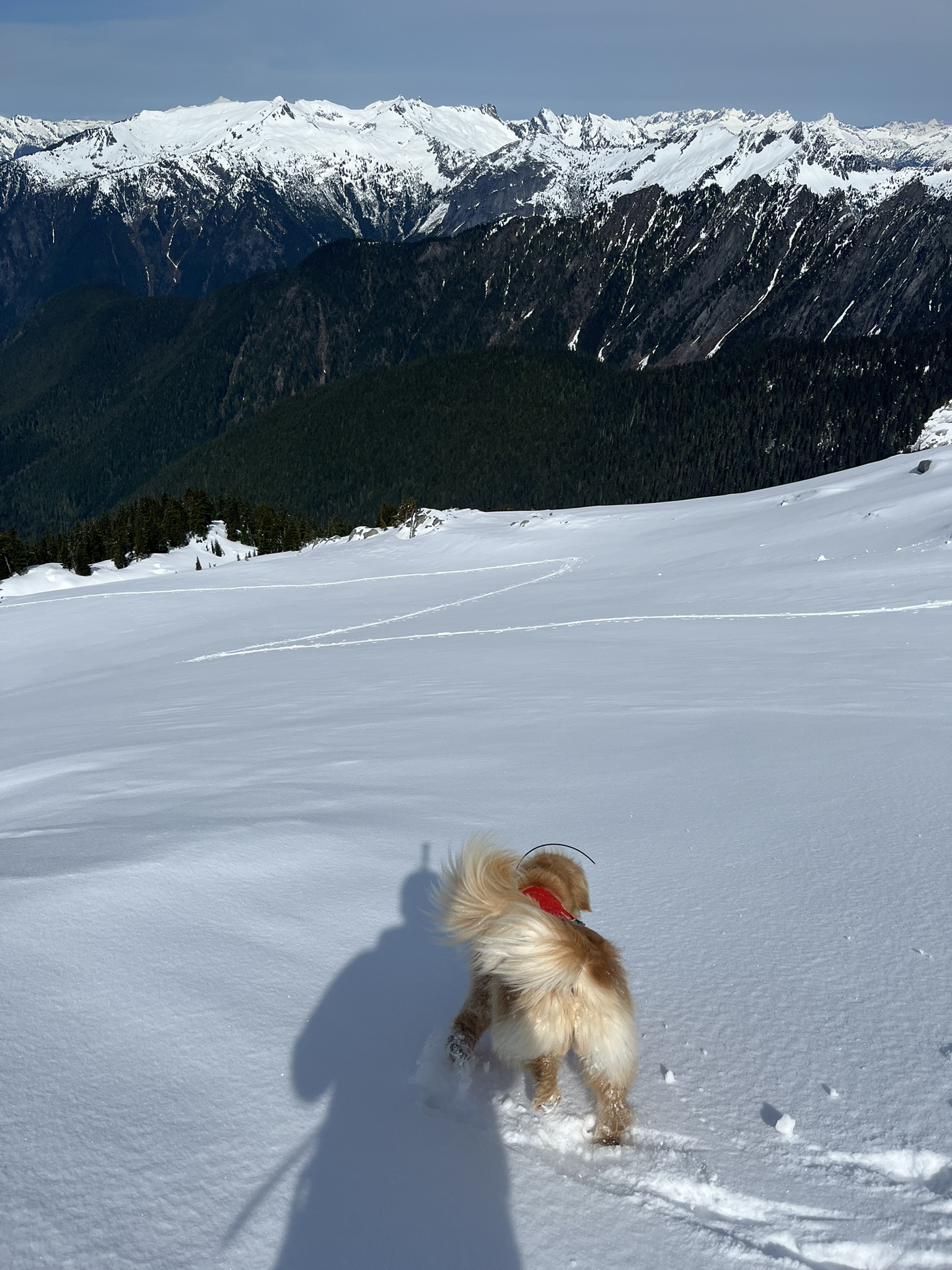
Day 2 was a different mountain. Bluebird sky, not a cloud anywhere, the snow firm and fast under my paws. We traversed east along the ridge, the terrain opening into broad bowls and steep faces that my human was already eyeing for the descent.
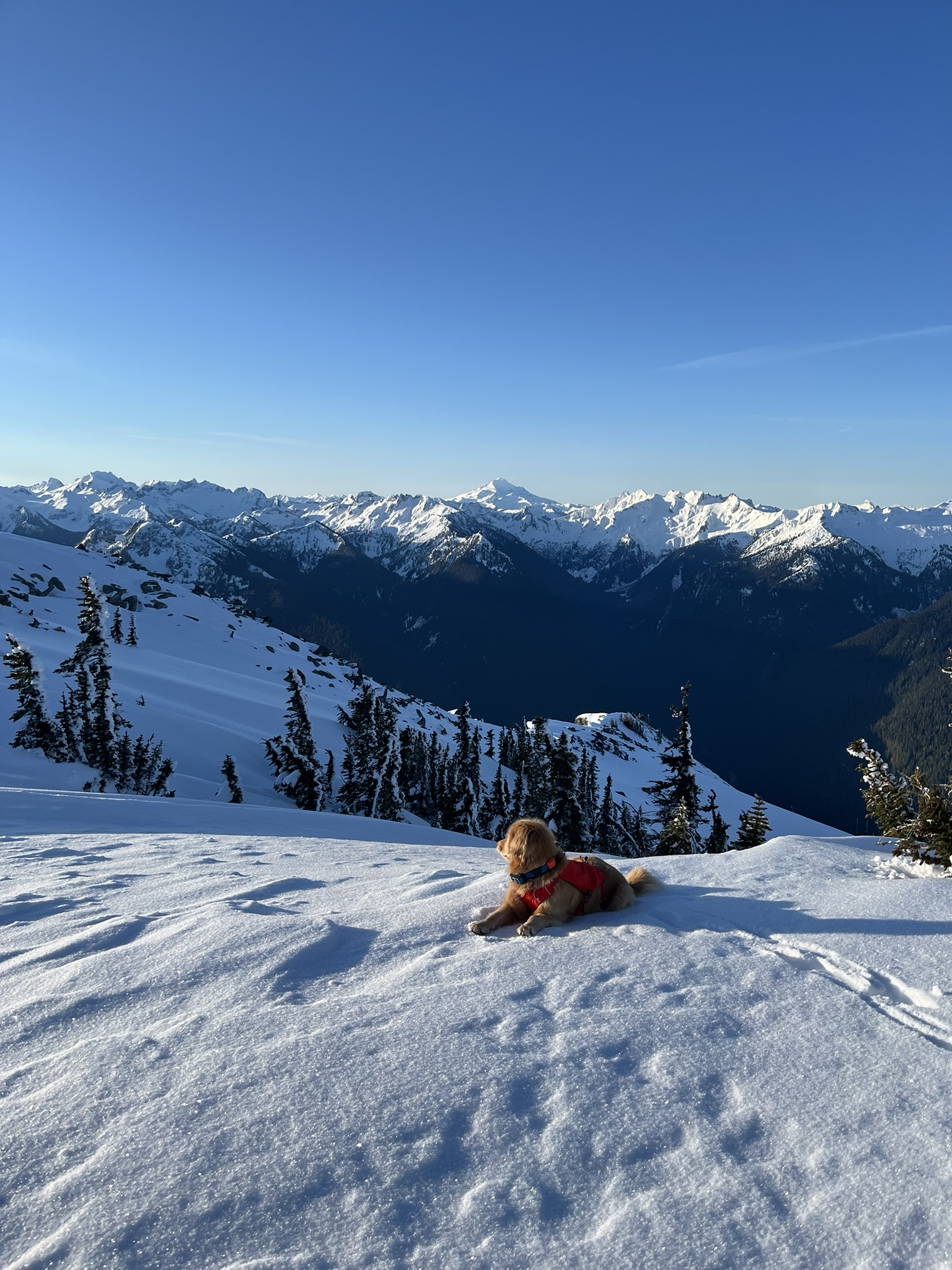
The snow here was beautiful — wind-sculpted into ridges and waves, the surface catching morning light in a way that made every slope look like it was breathing. Cornices hung from the ridgeline above us, curling and heavy.
The High Point
We kept climbing. Past the lookout's elevation, past the bowls, up a final push to a summit east of the lookout at 7,098 feet — the true high point of the trip. The 360-degree view from here was staggering. Every direction was mountains. The Cascade River valley dropped away thousands of feet below. Distant peaks I'd only ever seen from other distant peaks were suddenly close and sharp.
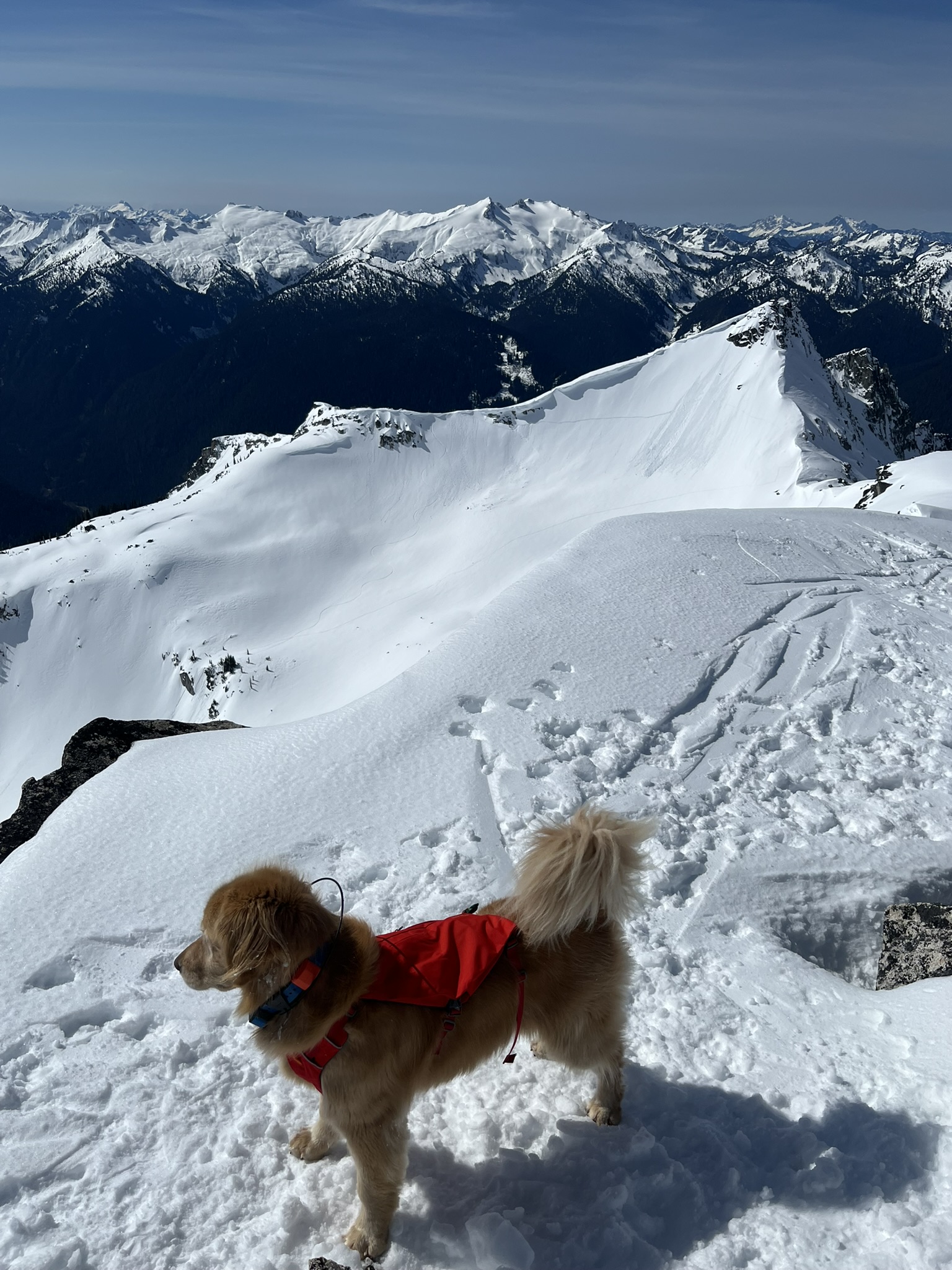
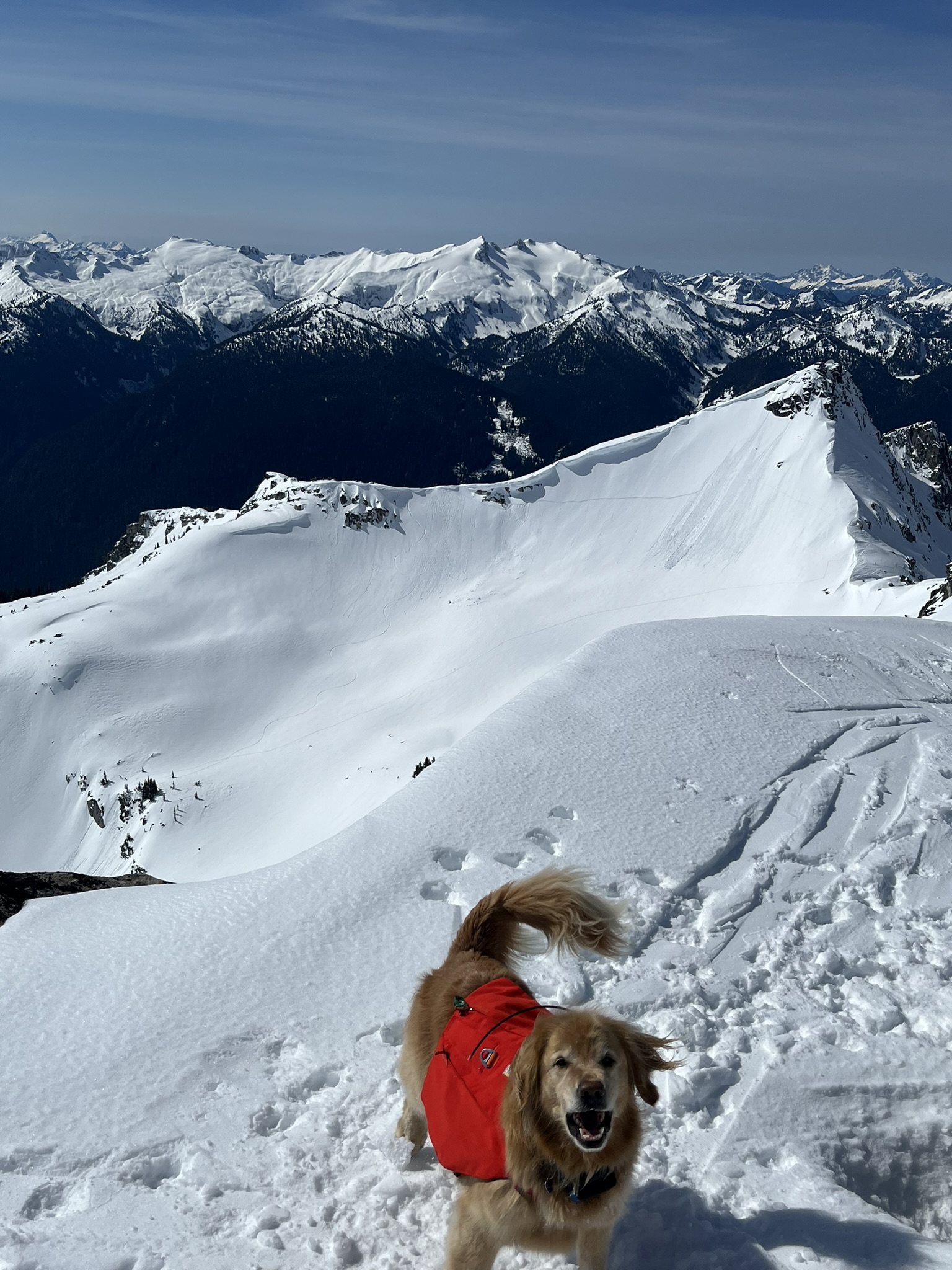
I sat on the summit and absorbed it. Wind in my fur, sun on my face, the smell of snow and granite and nothing else. My human took pictures. I took it in.
The Descent
My human ripped skins and clicked into ride mode. The descent was everything the climb promised — 4,000 vertical feet of corn snow, the surface softened perfectly by the morning sun. He made turns down the open faces while I ran alongside, both of us dropping fast through terrain that had taken hours to climb.
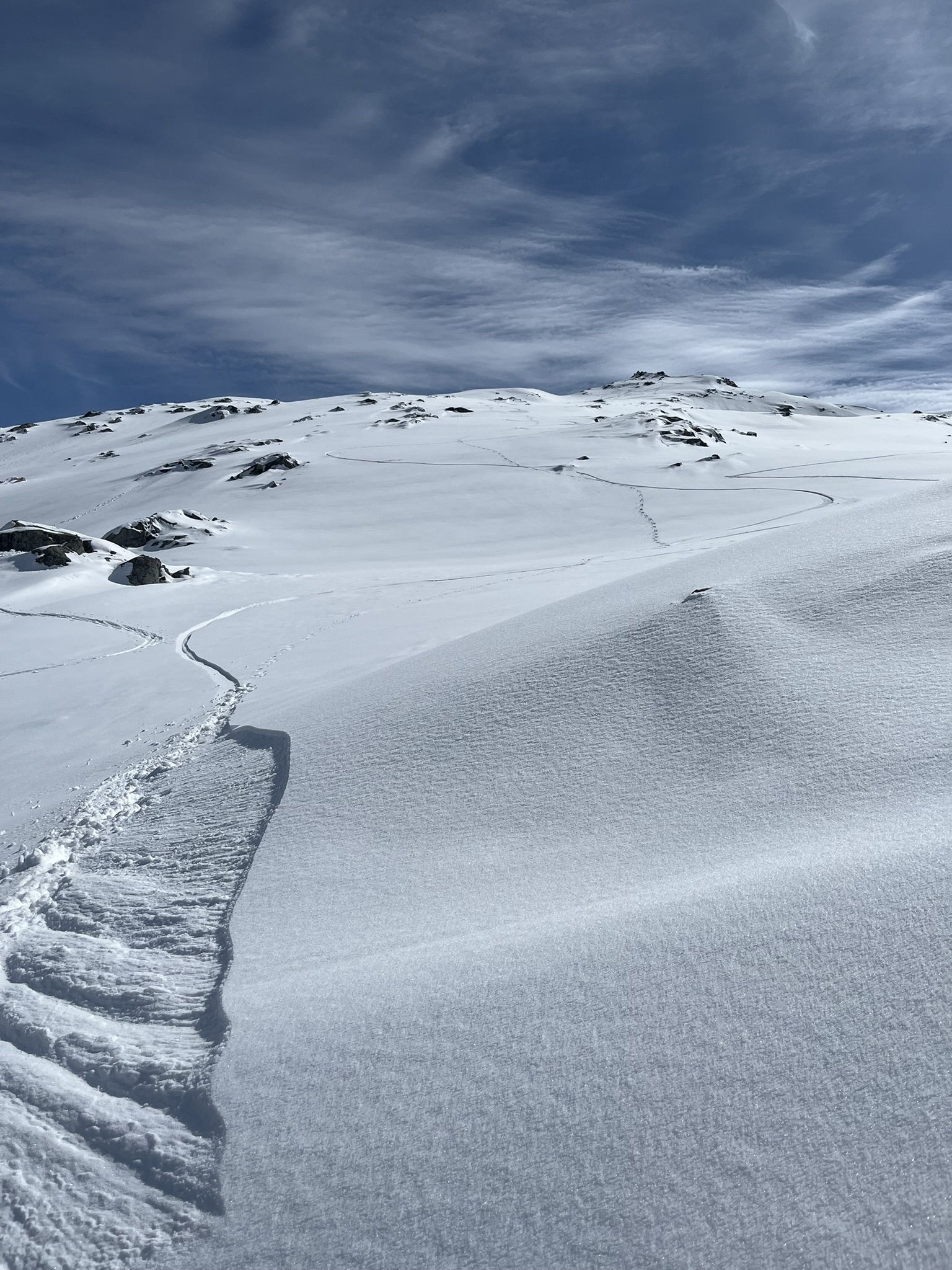
Back through the forest, back down the road, back to the car by mid-afternoon. Seventeen miles, two days, one fire lookout, one sunrise I'll carry in my bones.
I slept the whole drive home. Obviously.