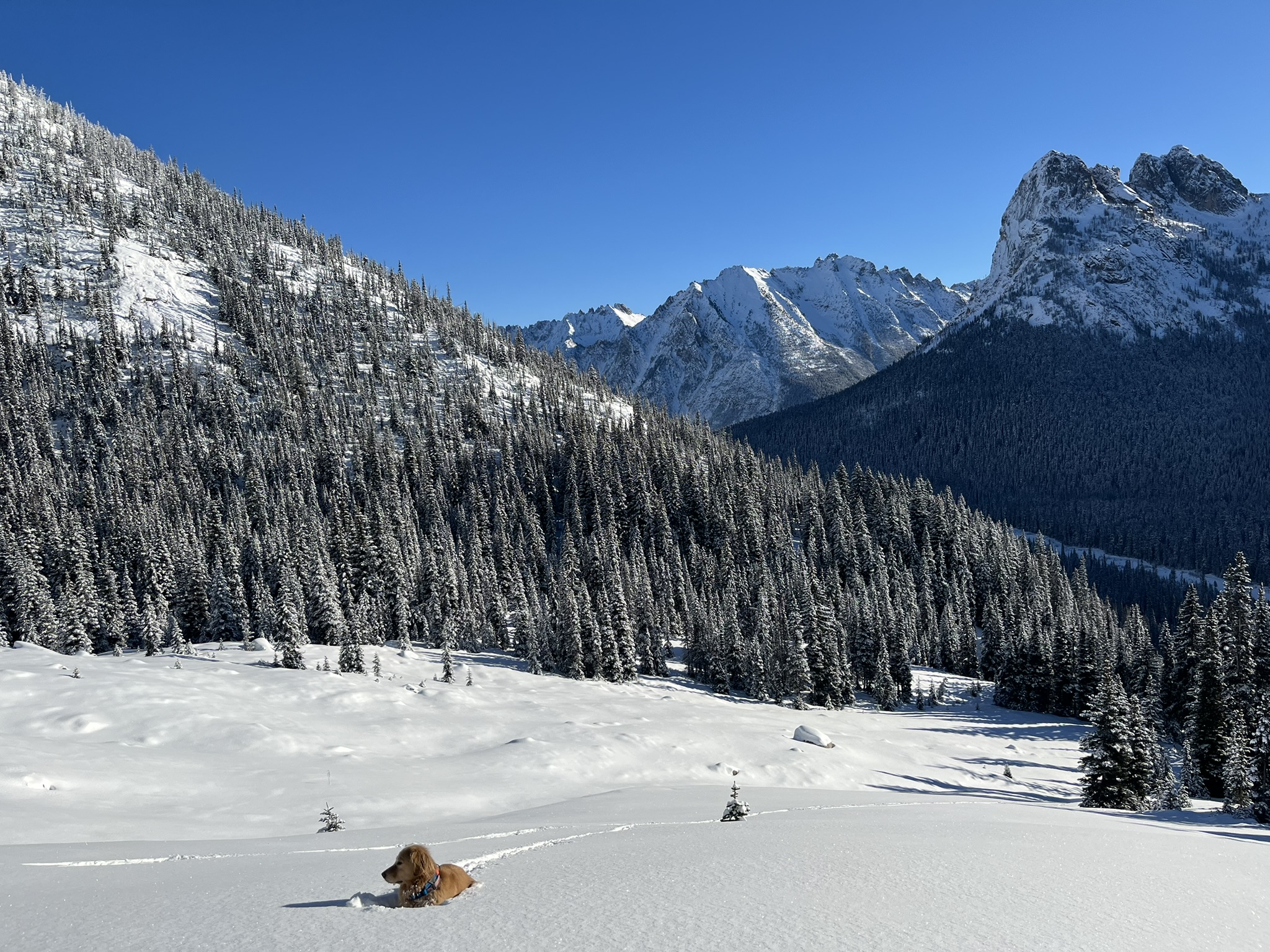
Cutthroat South Drainage
A cold, clear Friday after Thanksgiving — 4,300 feet of climbing into the south drainage of Cutthroat Peak, steep alpine terrain, and a POV descent through untracked powder below the headwall.
Elevation Profile
The Approach
The day after Thanksgiving. Most people were sleeping off pie. We were skinning at first light.
The trailhead sat at 5,200 feet and the air was single digits, the kind of cold that freezes your nose hair and makes every breath feel like swallowing glass. My paws broke through a thin crust into powder beneath. The forest was dark and still — early-season snow burying everything, the trees shouldering it in silence.
Two and a half hours through timber. No photos from this stretch because there was nothing to photograph except snow and trees and my own breathing, and because my human's hands were on poles and my paws were busy breaking trail. The forest just went and went, the grade gradual at first, then steepening as the drainage narrowed.
The Basin
We broke out of the trees into a wide basin at 6,000 feet and the world opened up. The drainage spread before us — a broad snowfield ringed by forested slopes, rock buttresses rising on the far side, and beyond them the jagged skyline of the North Cascades in full winter armor.
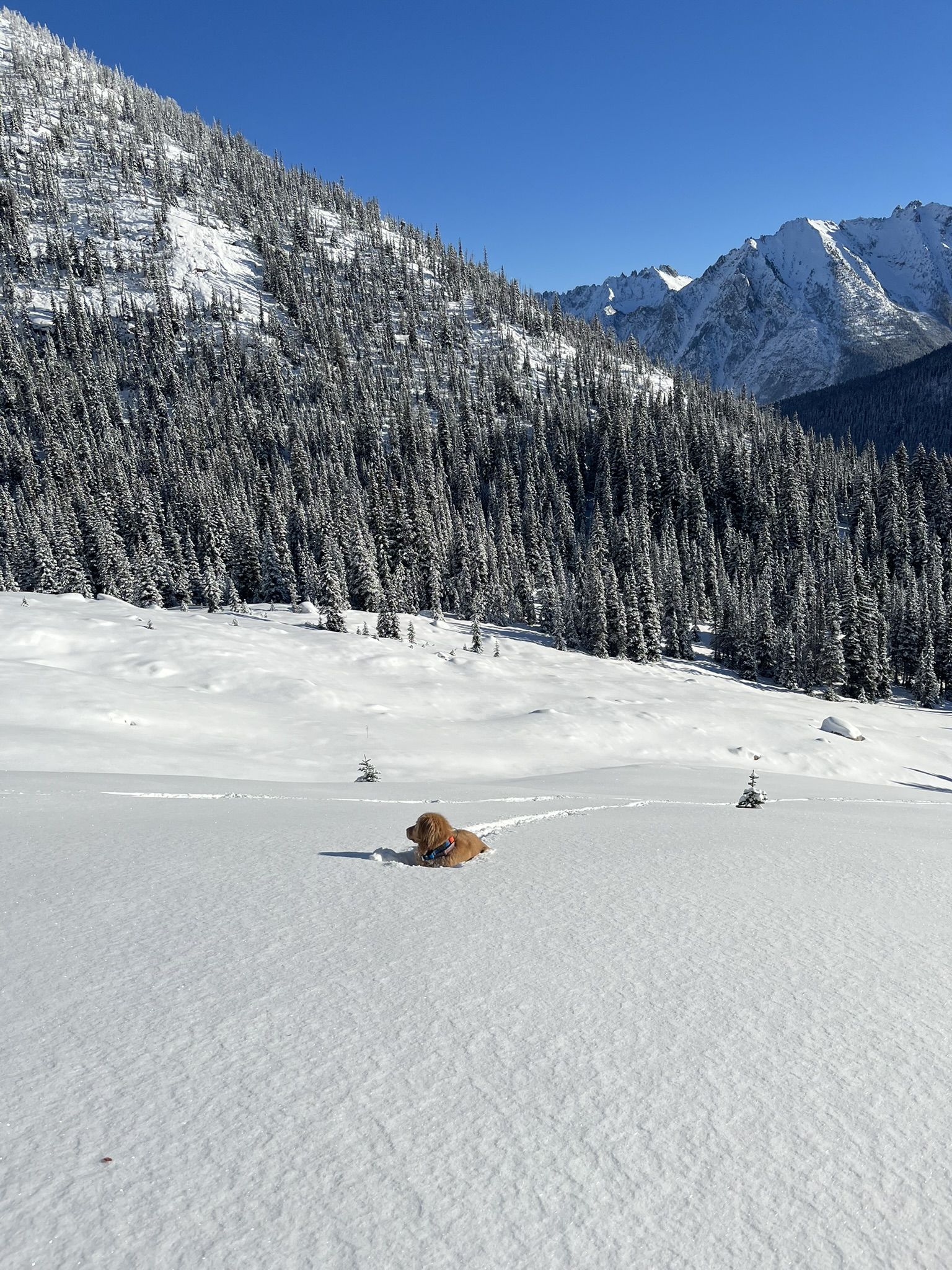
The sky was clear. Not partly clear, not clearing — clear. That deep November blue that means the air has no moisture left in it, just cold and altitude and light. The peaks above the basin were sharp enough to cut paper.
I lay down in the snow and let the sun hit my fur. It was still only 12 degrees at this elevation but the sun felt warm on my face. My human ate something. I sniffed the snow. It smelled like granite and cold water and nothing else.
The Headwall
Above the basin, the terrain changed. The drainage steepened and narrowed, funneling us toward a headwall of rock and snow. Cliff bands appeared overhead — dark rock plastered with rime, gendarmes standing like sentries along the ridgeline.
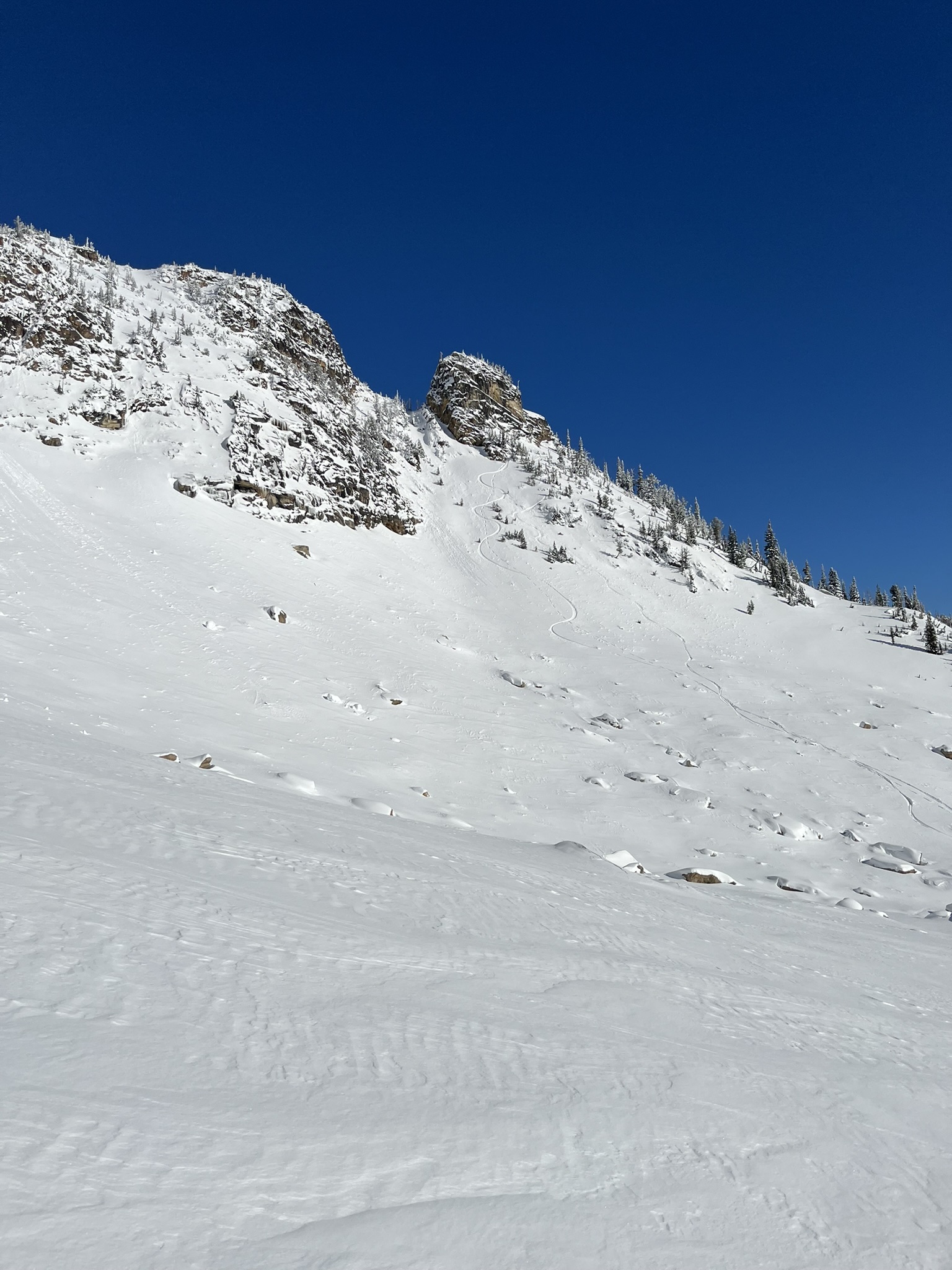
The snow surface up here was different — wind-affected, firm in places, with deep pockets where the loading had built pillows against every rock feature. My human switched from skinning to bootpacking. I switched from trotting to postholing. Neither of us complained.
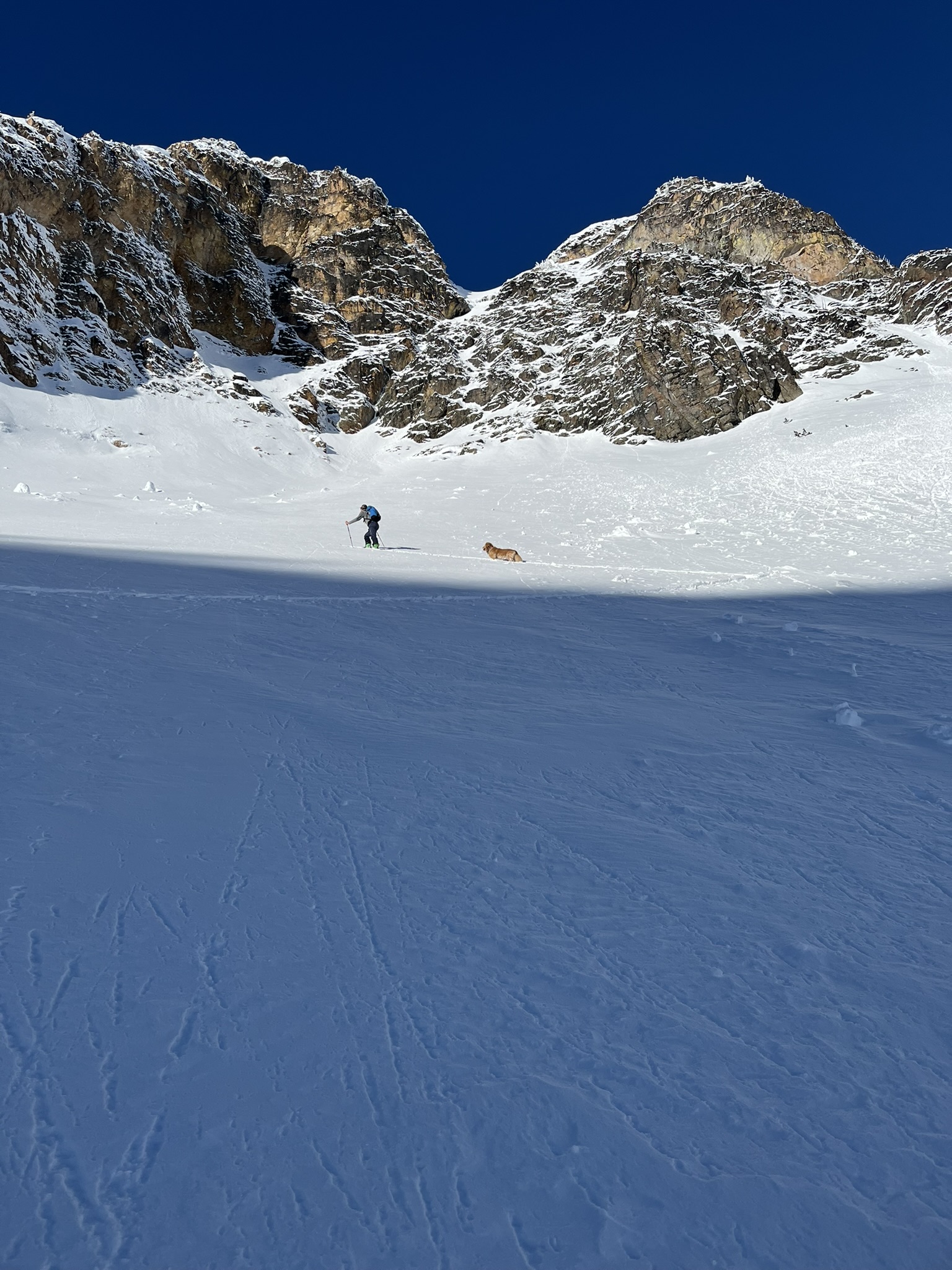
At 7,000 feet we were directly below the headwall. The rock walls pinched in on both sides, framing a steep snow apron that climbed another few hundred feet to the ridge. My human kicked steps. I followed in his bootpack.
The Descent
We topped out at 7,270 feet. The ridge was too rocky and wind-scoured to go higher without unnecessary exposure. My human ripped skins, assembled the board, and looked down the drainage we'd just climbed. Forty-three hundred vertical feet of snow falling away below us. The basin, the forest, the valley — all of it compressed into a single line of white.
He dropped in.
I dropped in after him.
The upper headwall was steep and responsive — firm snow that held an edge, with pockets of cold smoke in the lee of every rock feature. My human made short radius turns through the choke point between the cliff bands, then opened it up as the drainage widened. I ran the fall line, snow spraying up around my chest, the rocks overhead getting smaller and smaller.
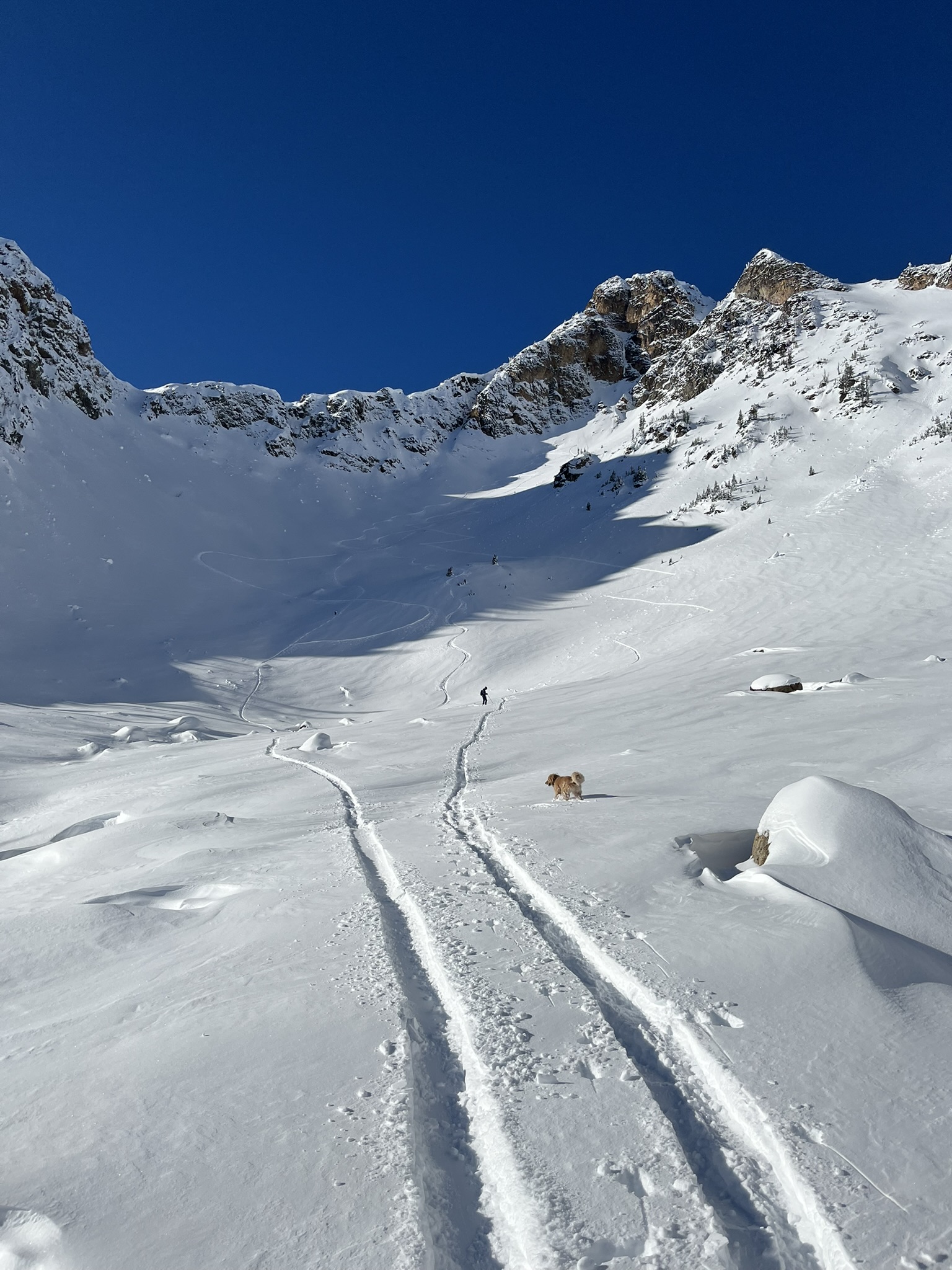
The lower drainage was perfect. Wide enough for real turns, steep enough to keep speed, and the snow — November powder, cold and dry and bottomless — held all the way to the basin floor. Twenty-one hundred vertical feet of unbroken descent in maybe four minutes.
Then the forest. Then the road. Then the car, where the heater ran on high and the windows fogged and I fell asleep before we left the parking lot.
Forty-three hundred feet of climbing for a single run. The math never works out on paper. It always works out on snow.