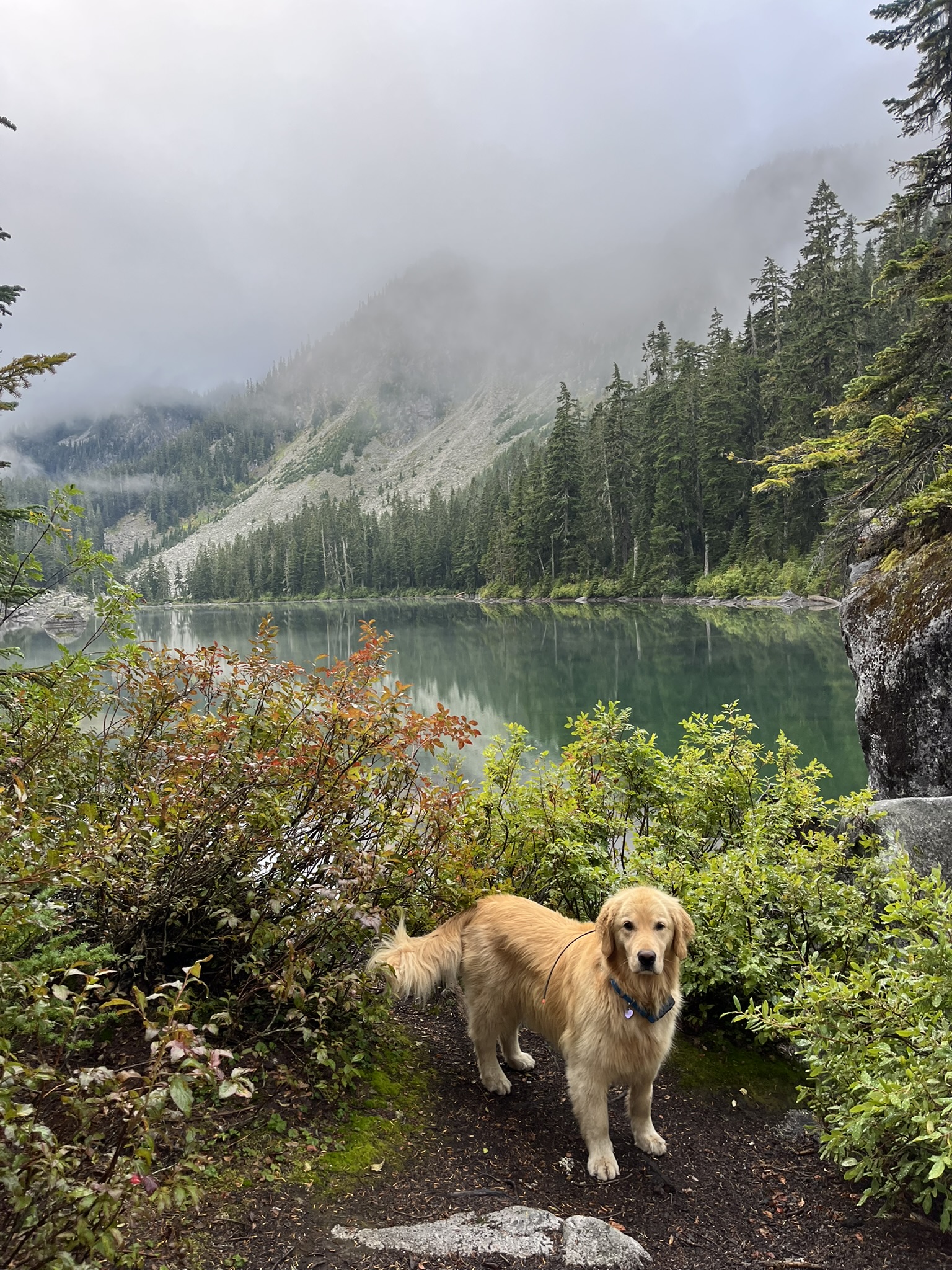
Square Loop
A two-day loop through the Alpine Lakes Wilderness — Melakwa Lake to the flanks of Kaleetan Peak, down to Snow Lake, east through alpine meadows, north along the Pacific Crest Trail past Mirror Lake, and back over the ridgeline. Thirty-nine miles and ten thousand feet of gain. Most of it off-trail.
Elevation Profile
Friday Evening — Melakwa Lake
We left Denny Creek Trailhead at 6 PM on a Friday in mid-September. Overcast sky, 58 degrees, the faint hum of I-90 fading behind us within the first quarter mile. The plan: a two-day loop through the Alpine Lakes Wilderness. Thirty-nine miles. Ten thousand feet of gain. Mostly off-trail. My human had the route in his head and I had four good legs and a nose that was already picking up wet granite, cedar bark, and the first faint sweetness of subalpine fir.
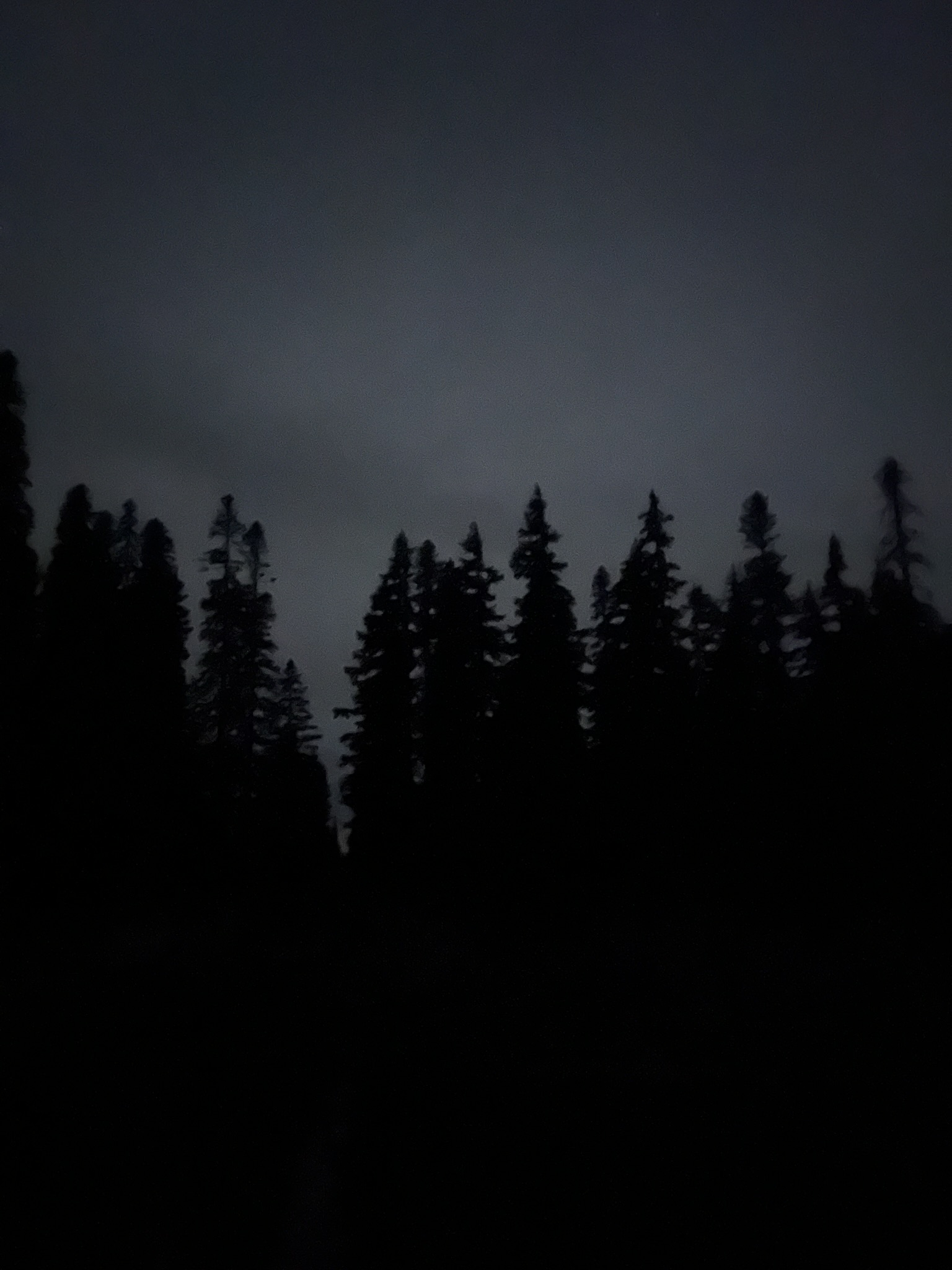
The Denny Creek trail climbed through old growth — switchbacks over slick root and stone, creek water rushing somewhere below. By the time we reached Melakwa Lake it was nearly dark. The trees were silhouettes against a gray sky, the last light draining from behind them.
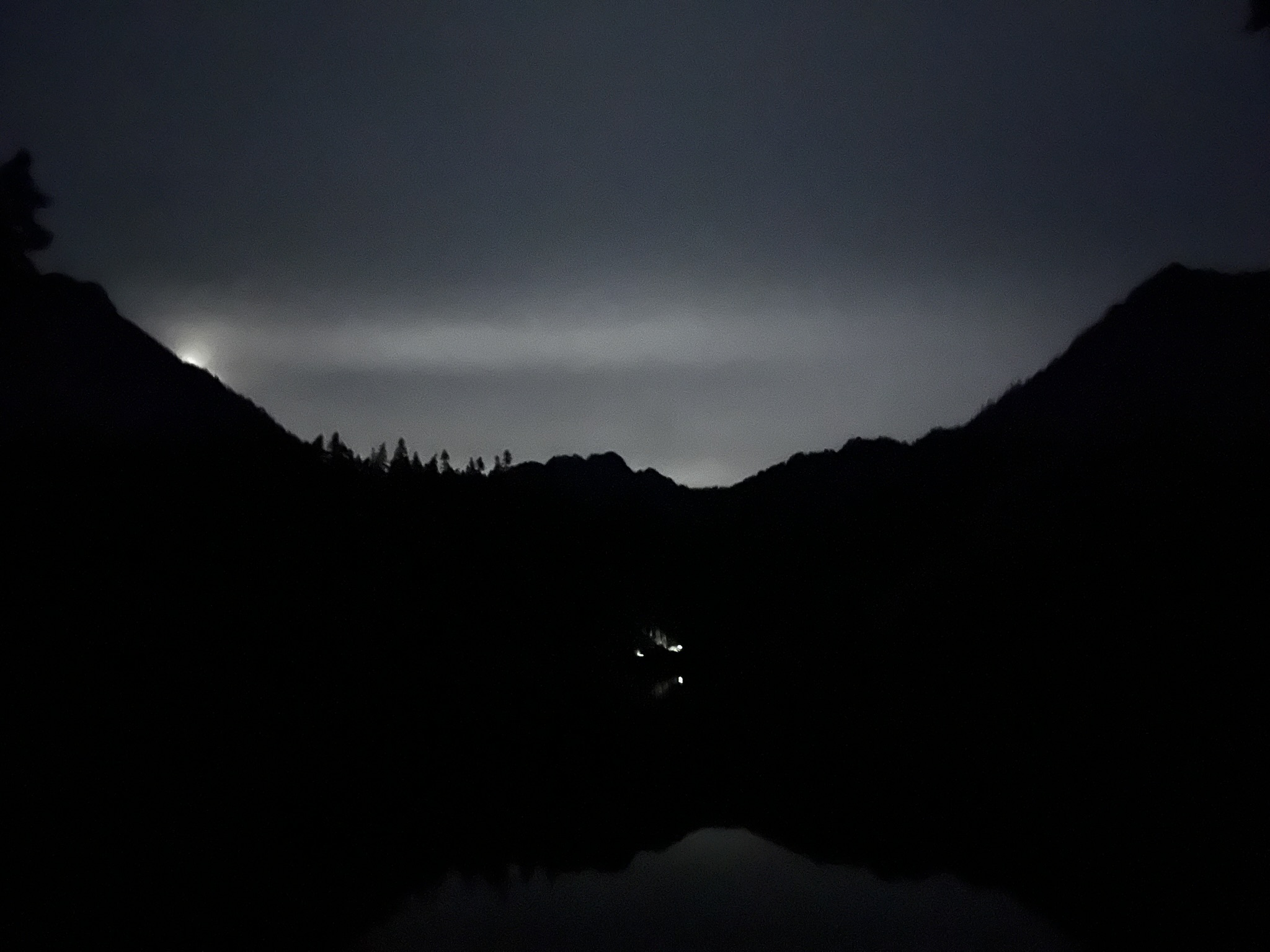
I stood at the lakeshore and stared. The lake was still and black, mountain ridges just visible as darker shapes above the waterline. A faint glow sat behind the peaks — the last of the evening — and a single headlamp reflected off the water from across the basin. The air smelled like cold water and wet stone and the particular stillness that only comes when you're the only thing moving.
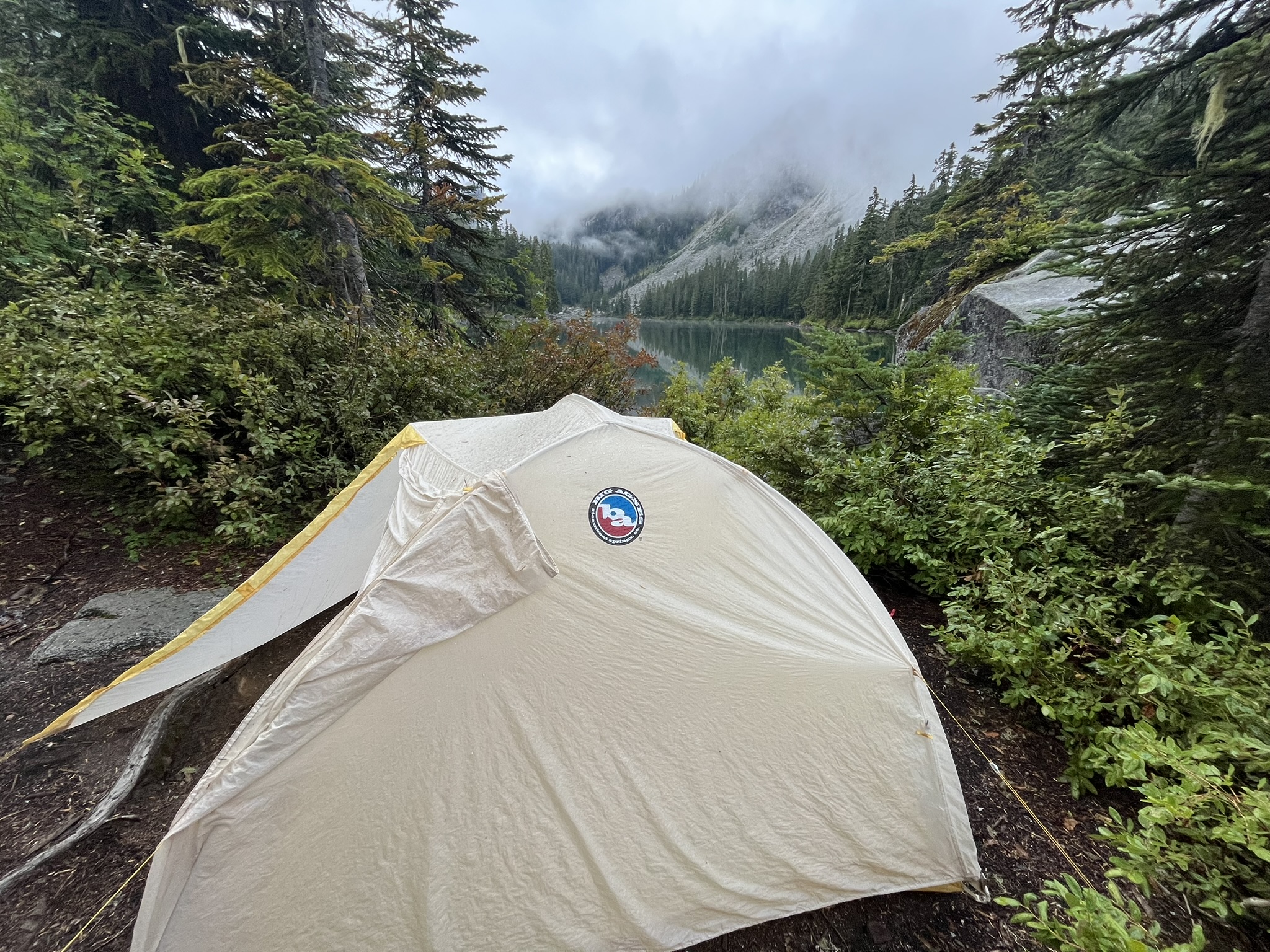
We set up camp in the trees above the lake. Drizzle started around 8 PM — light enough to hear on the fly but not enough to soak anything. I curled up and listened to the rain on nylon and the silence underneath it.
Saturday Morning — Melakwa
Morning came gray. The tent sat among subalpine fir at the edge of Melakwa Lake, the water a deep teal beneath clouds that pressed down against the ridgeline. Fog hung in the cirque above. The air was cold and thick with moisture and the kind of quiet that means nobody else is up yet.
I walked down to the water. Melakwa Lake in September is something. The water was a saturated green-blue, unnaturally vivid against the gray sky and the dark conifers ringing the shore. Early fall color was starting — patches of red and orange in the huckleberry bushes along the bank. The mountains disappeared into cloud above the treeline. I stood at the edge and smelled the lake — cold, mineral, faintly vegetal. Clean in a way that only high-altitude water manages.
Toward Kaleetan Peak
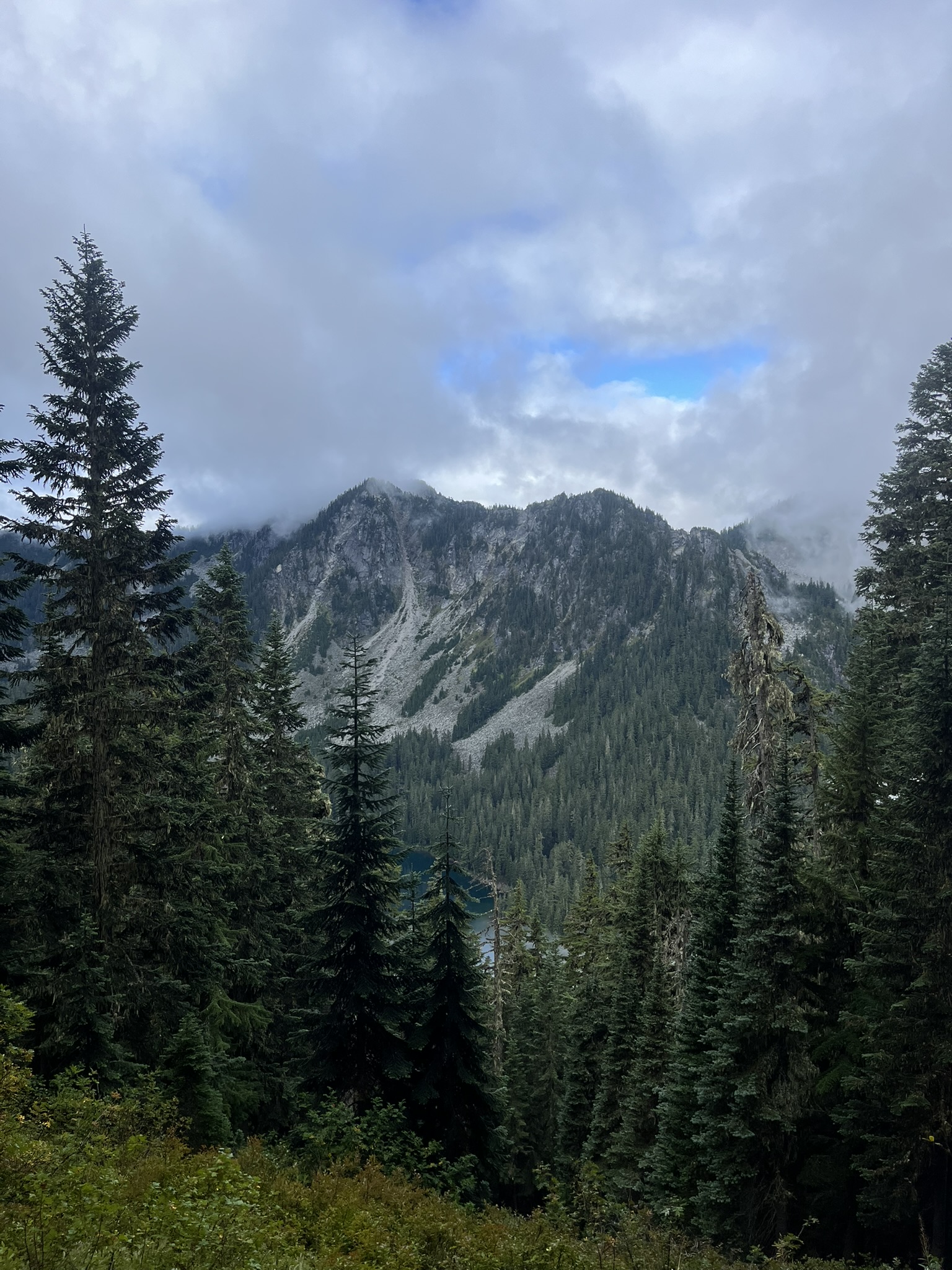
We left Melakwa climbing southeast, off-trail by the time we cleared the lake basin. The forest thinned as we gained elevation and the clouds began to lift. Through gaps in the conifers, a massive rocky peak appeared — granite walls rising above forested slopes, clouds wrapping its upper half. The scale of it settled in slowly. We were headed up there.
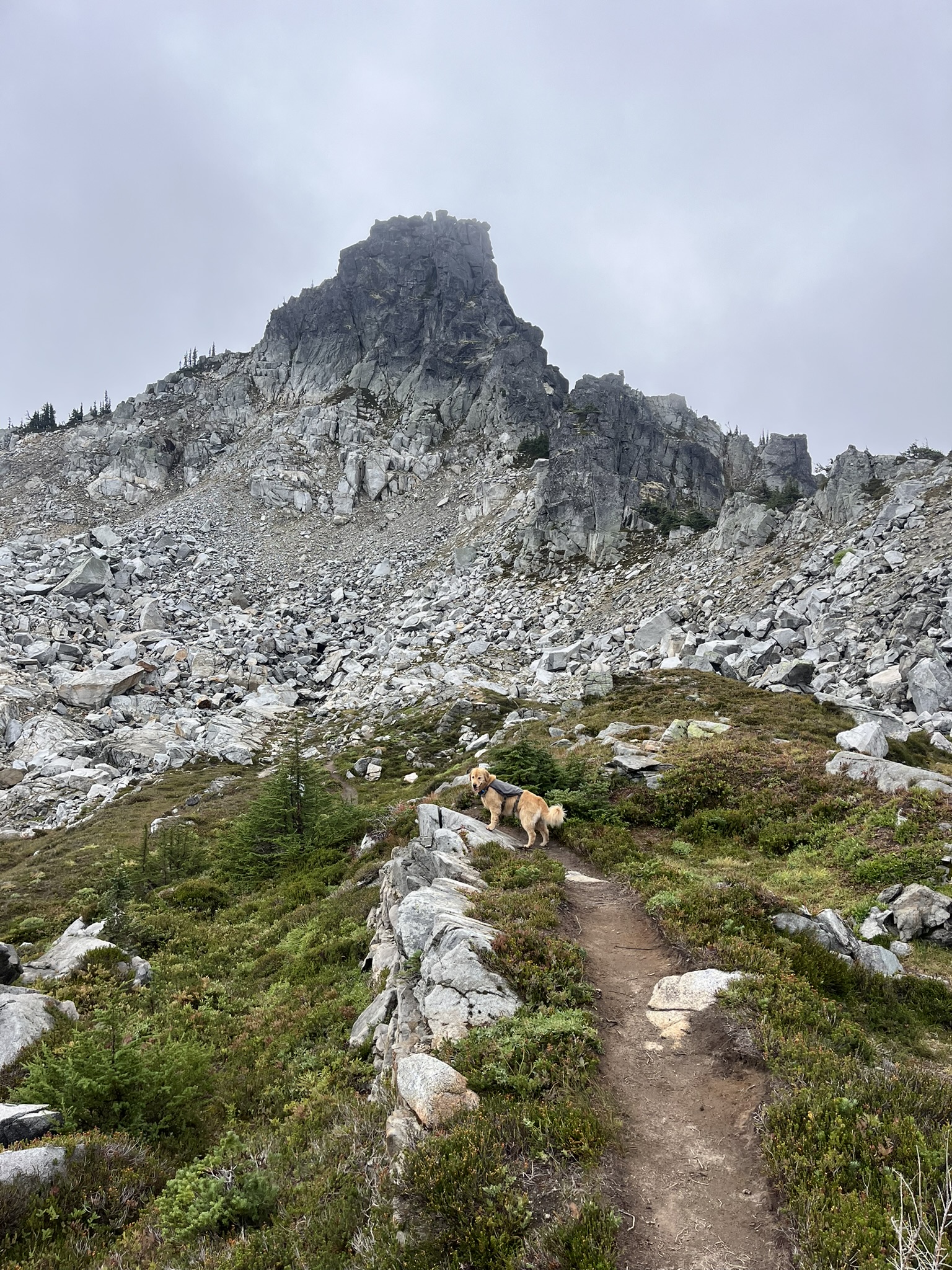
The route turned to talus and heather as we climbed above treeline. I picked my way up a narrow boot path through a field of light-gray boulders, the summit block of Kaleetan Peak looming above — a jagged granite tower rising from a rubble slope, dark and imposing against the overcast sky. The air was thinner up here and colder and I could smell rock dust and the faint mineral sharpness of lichen. The drizzle had stopped. The clouds were moving fast.
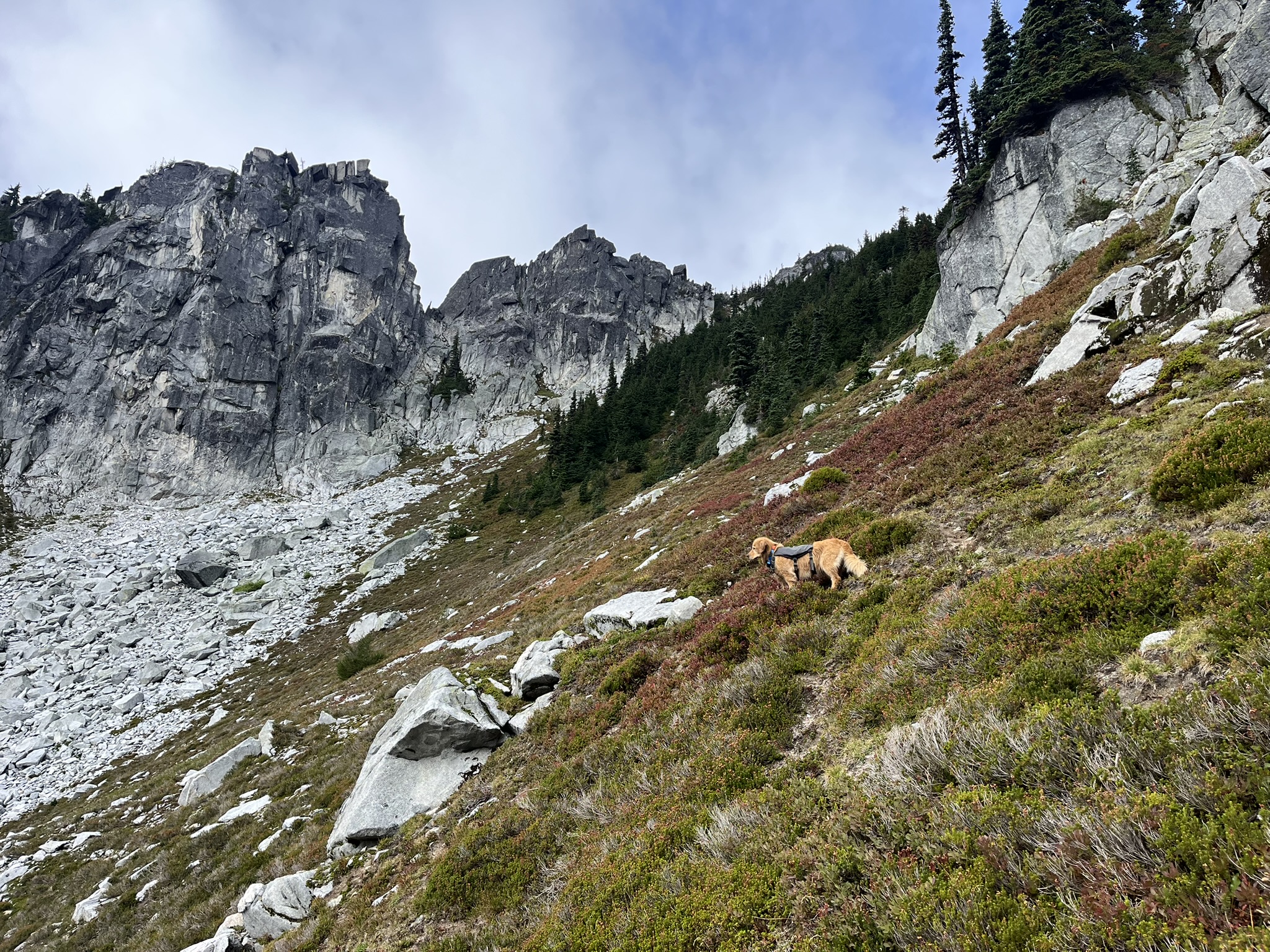
We traversed below the summit, contouring across a steep heather slope with granite cliffs overhead. The exposure was real — nothing but air below my right side and vertical rock above my left. The heather was turning red and brown, the first sign of fall this high. Patches of white granite broke through the vegetation. I moved carefully, reading the ground with each step, smelling the rock face for moisture that would mean slick holds.
Snow Lake
The traverse brought us to the top of a massive boulder field — light-gray granite blocks piled like a collapsed building, stretching down to the shore of a lake I hadn't seen from above. Snow Lake. It was enormous. The water was a milky turquoise, the color of glacier flour, ringed by forested mountains with clouds sitting heavy on their summits. The exposed shoreline was wide and pale, the waterline drawn down from its high mark. I could smell the lake from the boulder field — cold water, silt, something metallic.
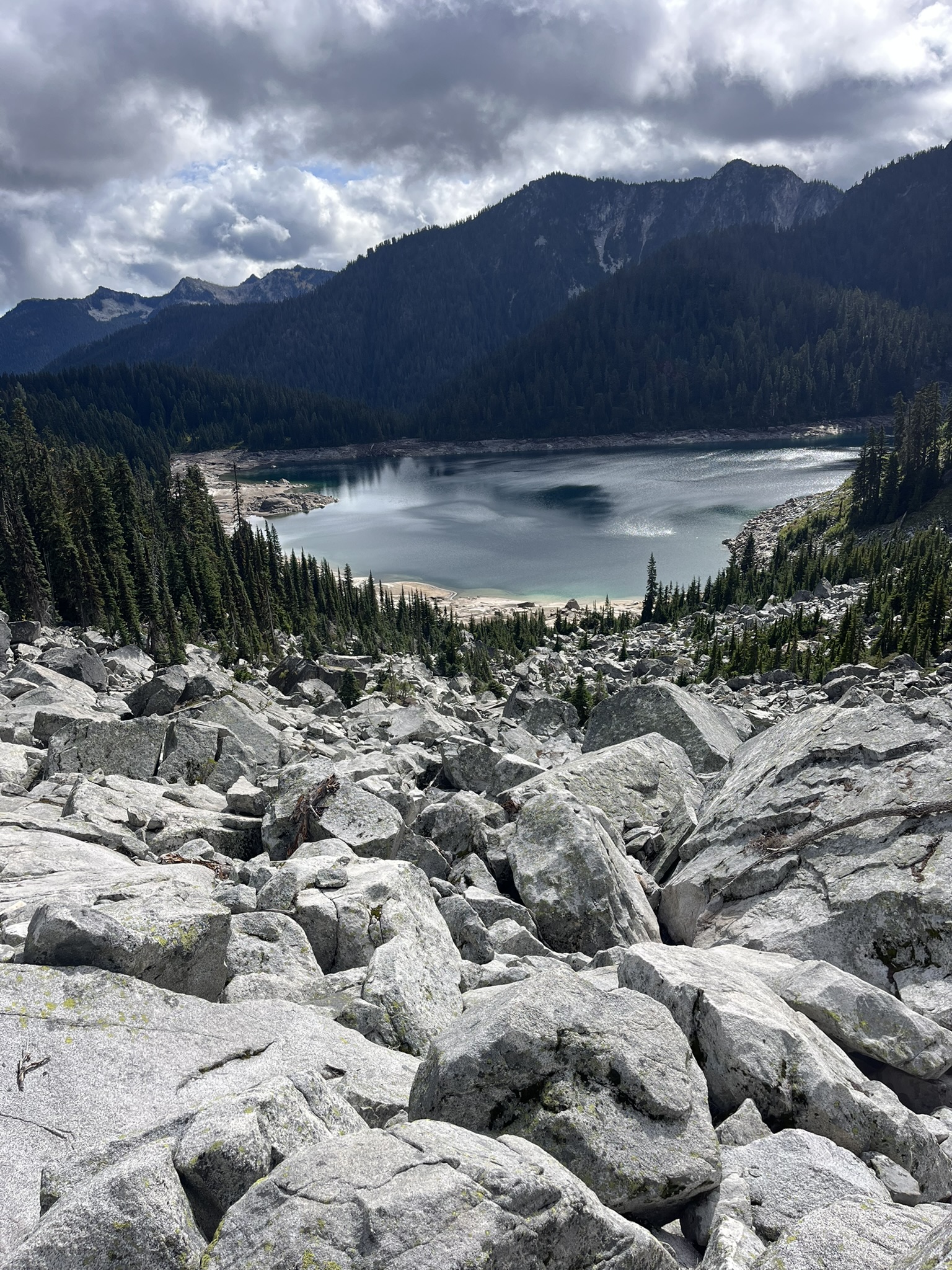
We picked our way down through the boulders — slow, deliberate, every step tested. The lake grew larger with each switchback through the talus. At the bottom I walked out onto the exposed lakebed. The ground was smooth silt and sand, bleached driftwood scattered everywhere, the water flat and still and that impossible turquoise. The mountain across the lake rose dark against a sky that was trying to turn blue.
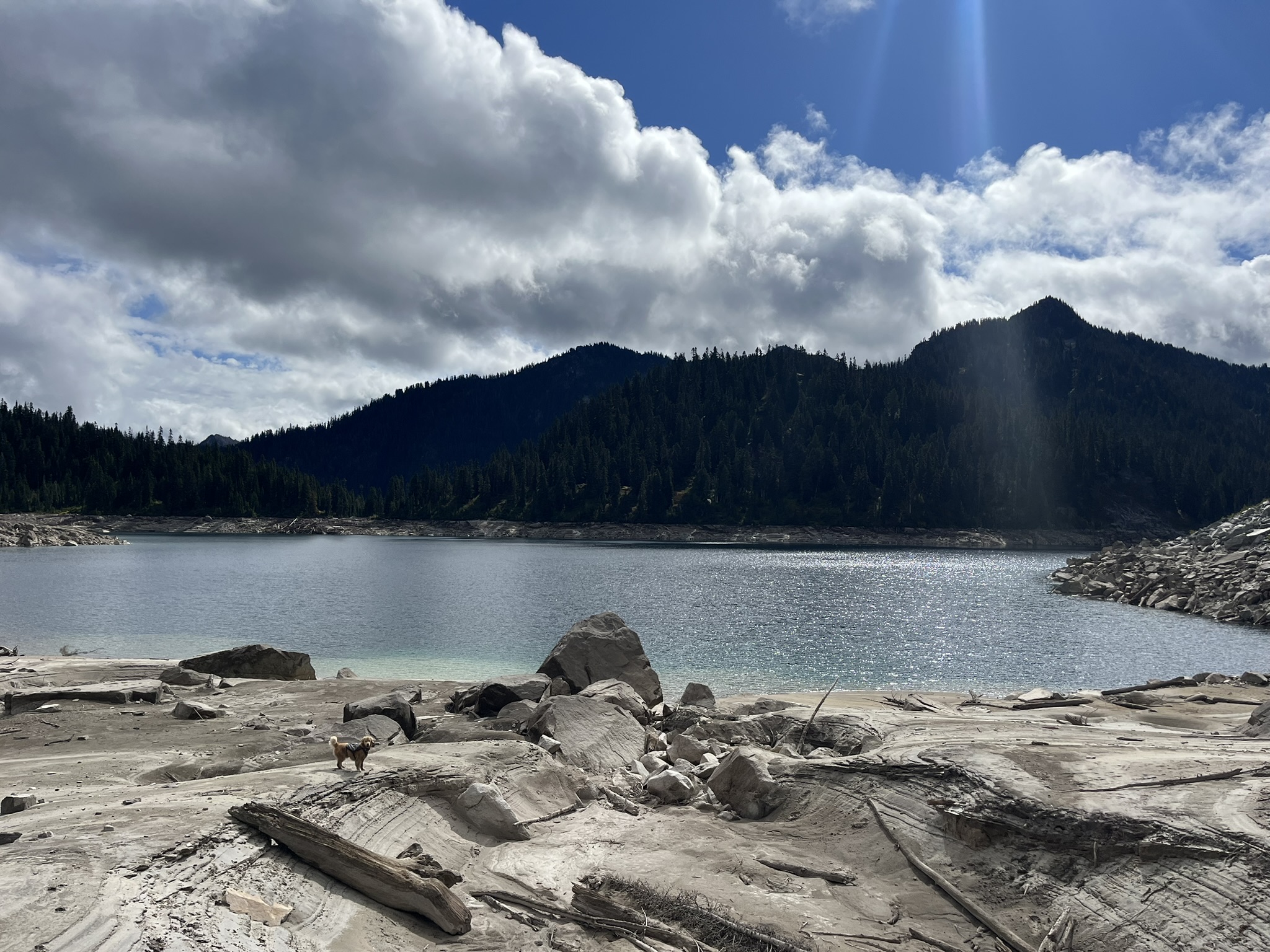
I walked the shoreline. The sand had the pattern of dried lake bottom — concentric swirl marks where the water had retreated. The lake stretched east, ringed by steep forested slopes and rocky ridgelines. Blue sky was winning against the clouds now. The sun came through and turned the water electric.
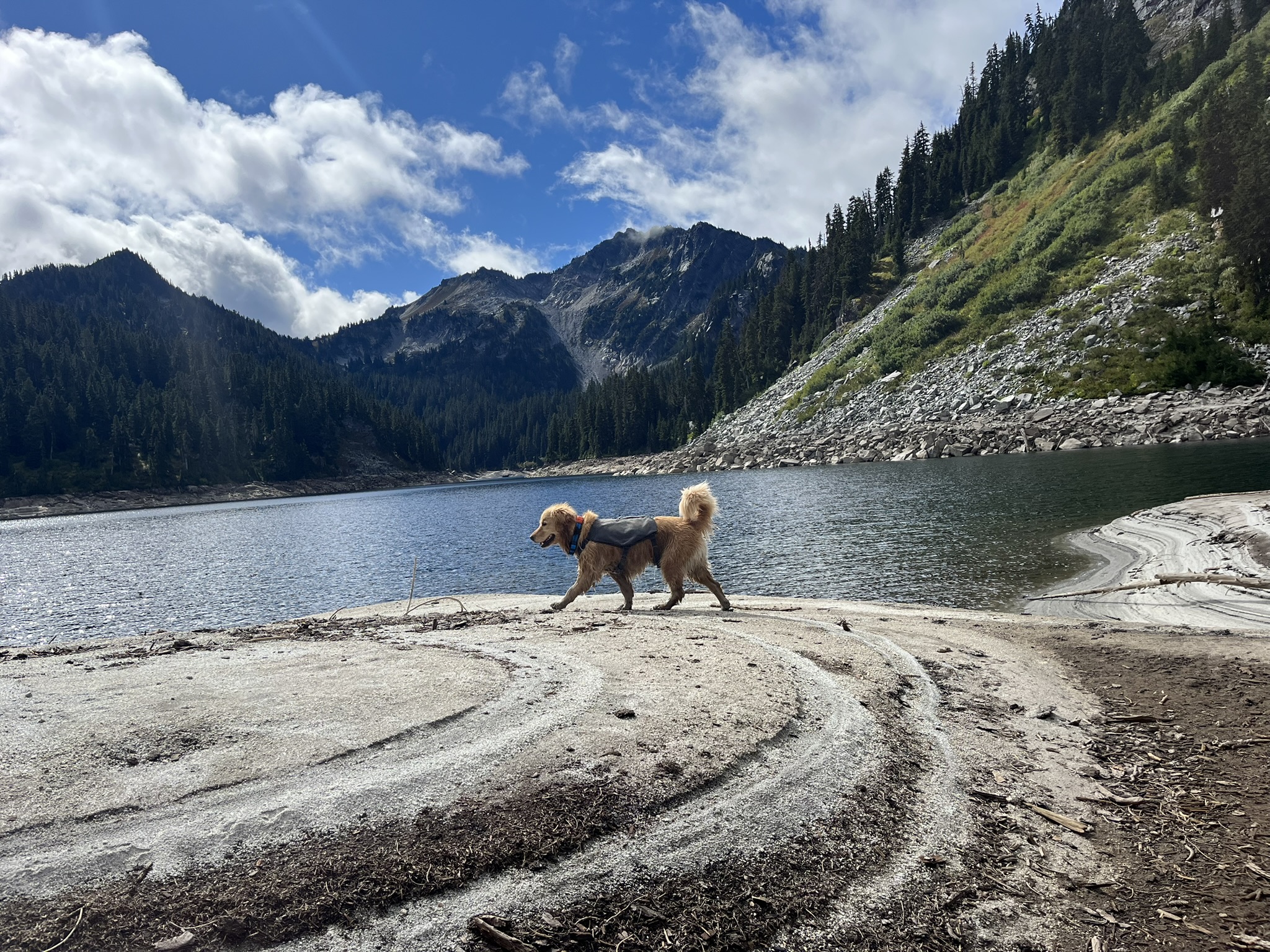
East Through the Basin
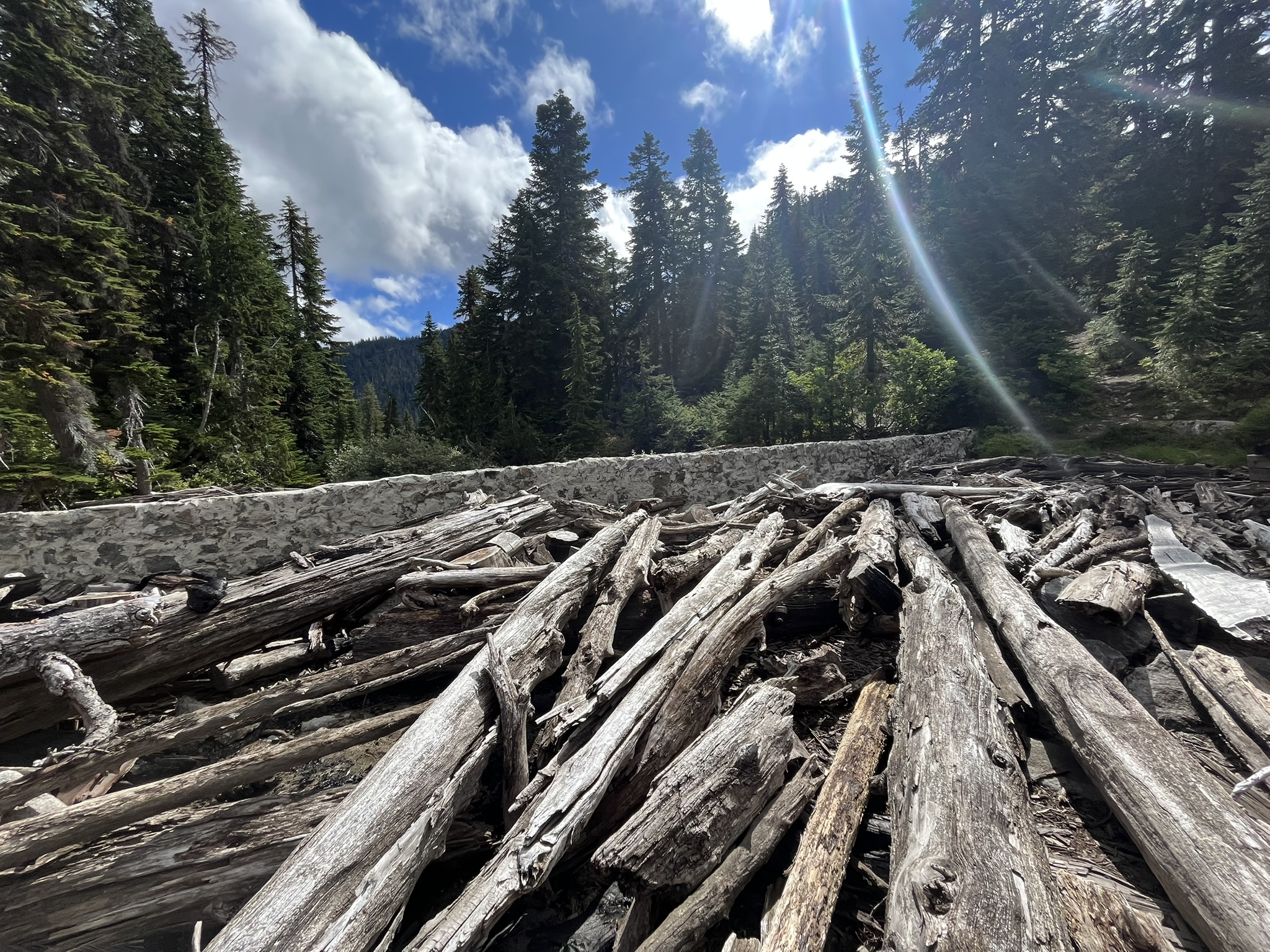
Past Snow Lake the route entered the forest. We hit a massive logjam — hundreds of bleached logs piled twenty feet high, a dam of dead wood choking the outlet. The logs were stripped smooth by water and time, stacked at impossible angles, the sun streaming through gaps in the canopy above them. Getting through required climbing over and under and between. My paws are made for this.
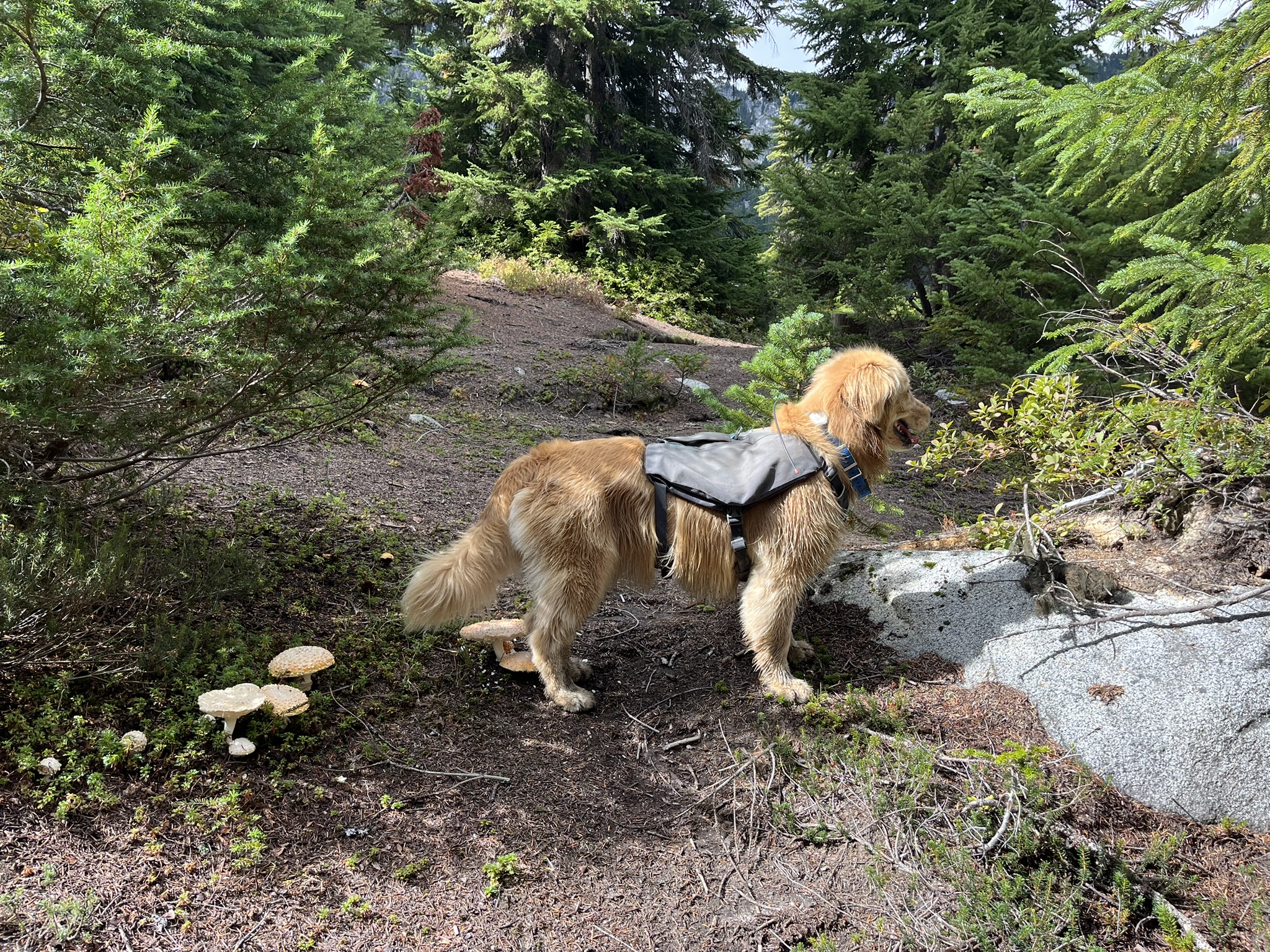
On the other side of the logjam I stood on a forest trail with my pack on, sniffing. The ground was soft and dry and covered with fallen needles. A cluster of pale mushrooms pushed up from the dirt at my feet — the forest floor doing what it does in September. The brush was thick on both sides of the trail, huckleberry and salal, the air warm and still.
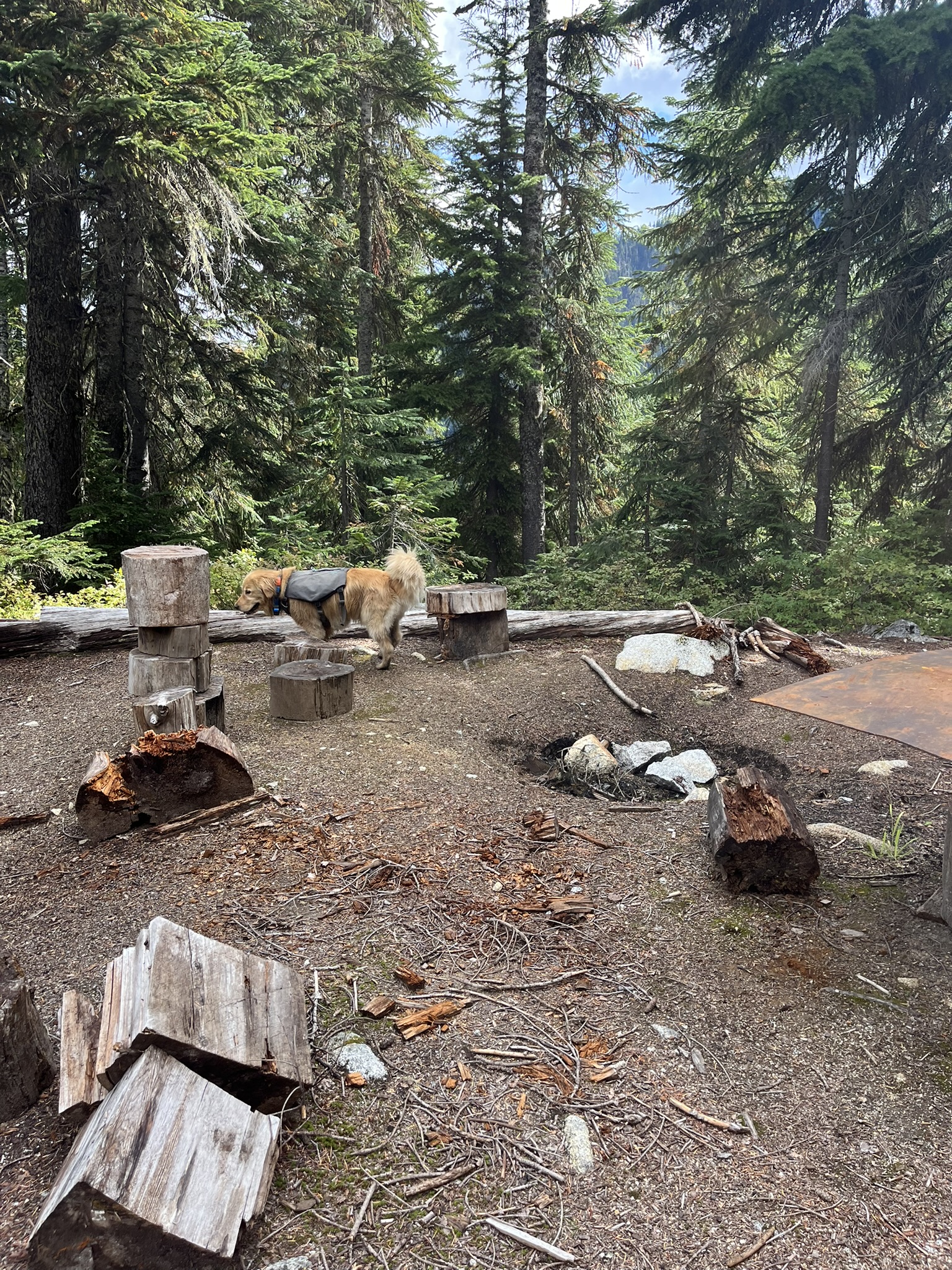
We passed through an old campsite — fire ring, rusted stove parts, cut log rounds scattered in the dirt. I investigated. The ground smelled like decades of campfire smoke baked into the soil, and underneath it something animal. The forest had been slowly reclaiming this place for years.
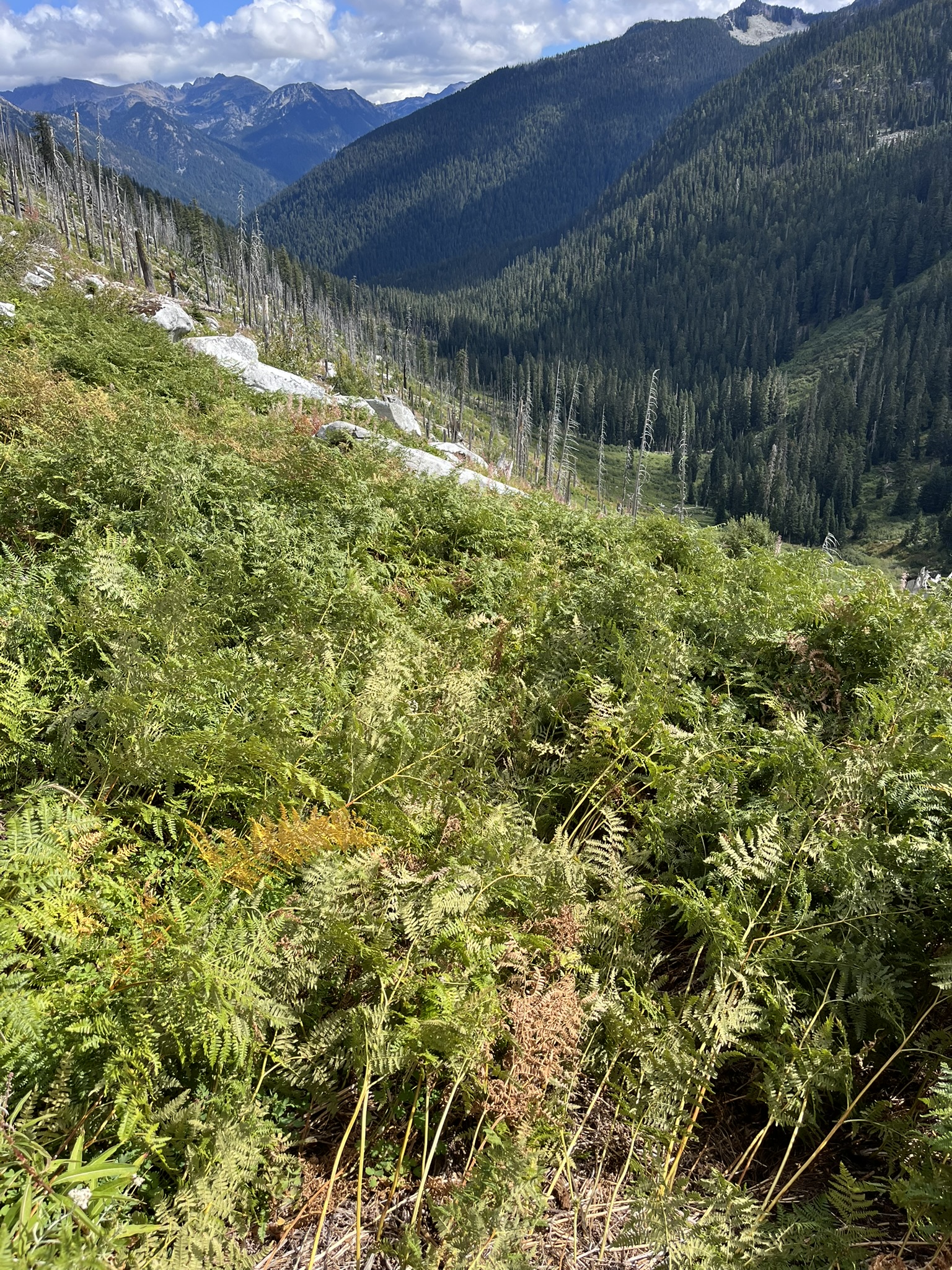
Then the forest opened and we were in meadows. A narrow trail cut through waist-high wildflowers — yellow and green, the last of the summer bloom — with a rocky mountain rising above the treeline in the distance. Blue sky, cumulus clouds, the air warm enough to feel summer's last exhale. The brush was thick and the trail was faint and everything smelled like pollen and warm earth. I pushed through it at a pace that said I knew where I was going, even when I didn't.
Sunday Morning — Mirror Lake
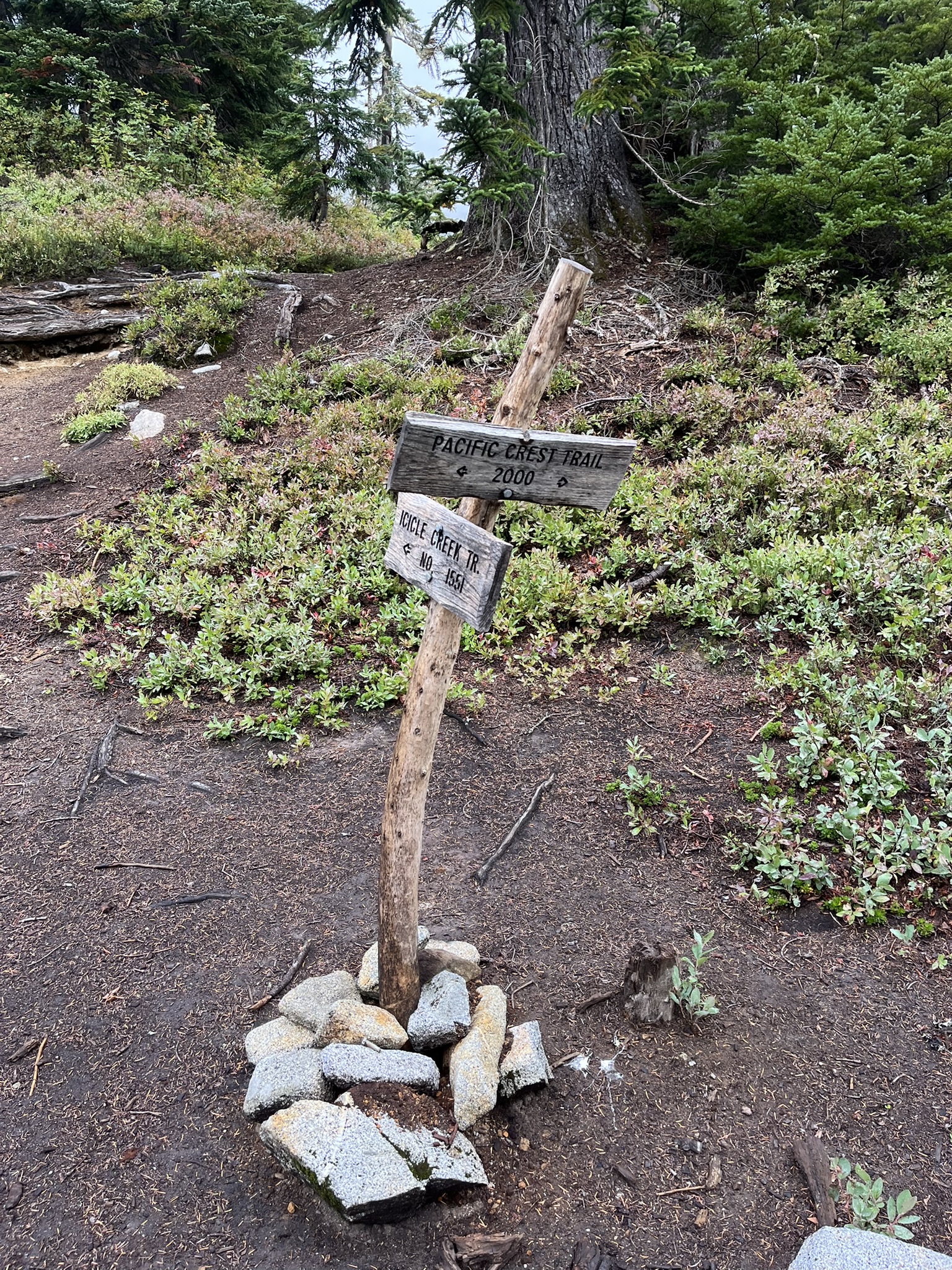
We'd camped somewhere in the PCT corridor Saturday night. Sunday morning dawned cool and overcast — 35 degrees at elevation, fog in the trees. We hit a trail junction early. Wooden signs on a post, cairn of white rocks at the base, pointing in two directions through the subalpine brush.
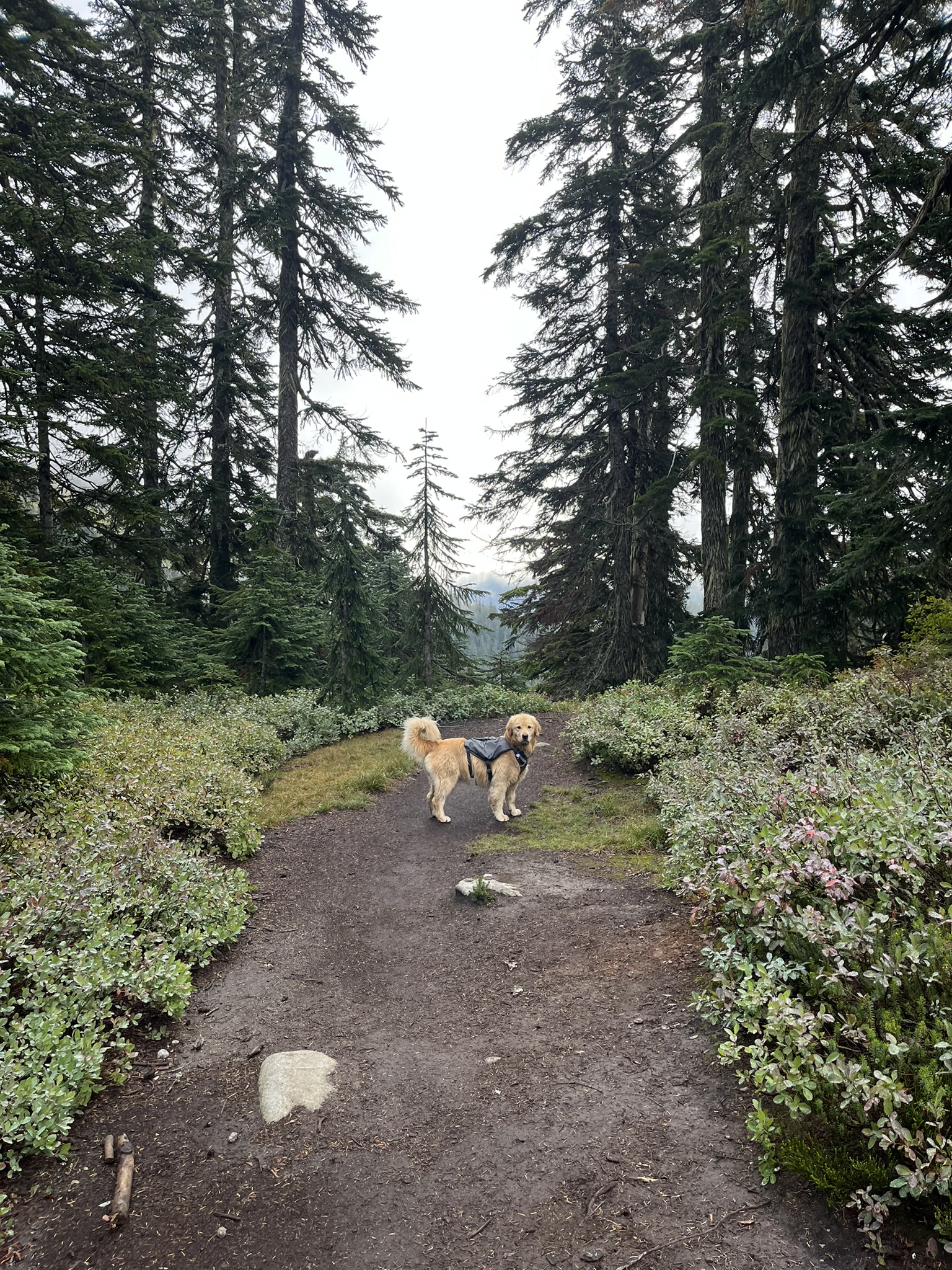
I led the way down the trail through subalpine forest — the path wide and well-trodden here, blueberry bushes thick on both sides, tall fir and hemlock overhead. The overcast sky made everything flat and quiet. My pack was lighter on day two. The trail smelled like wet duff and cold air.
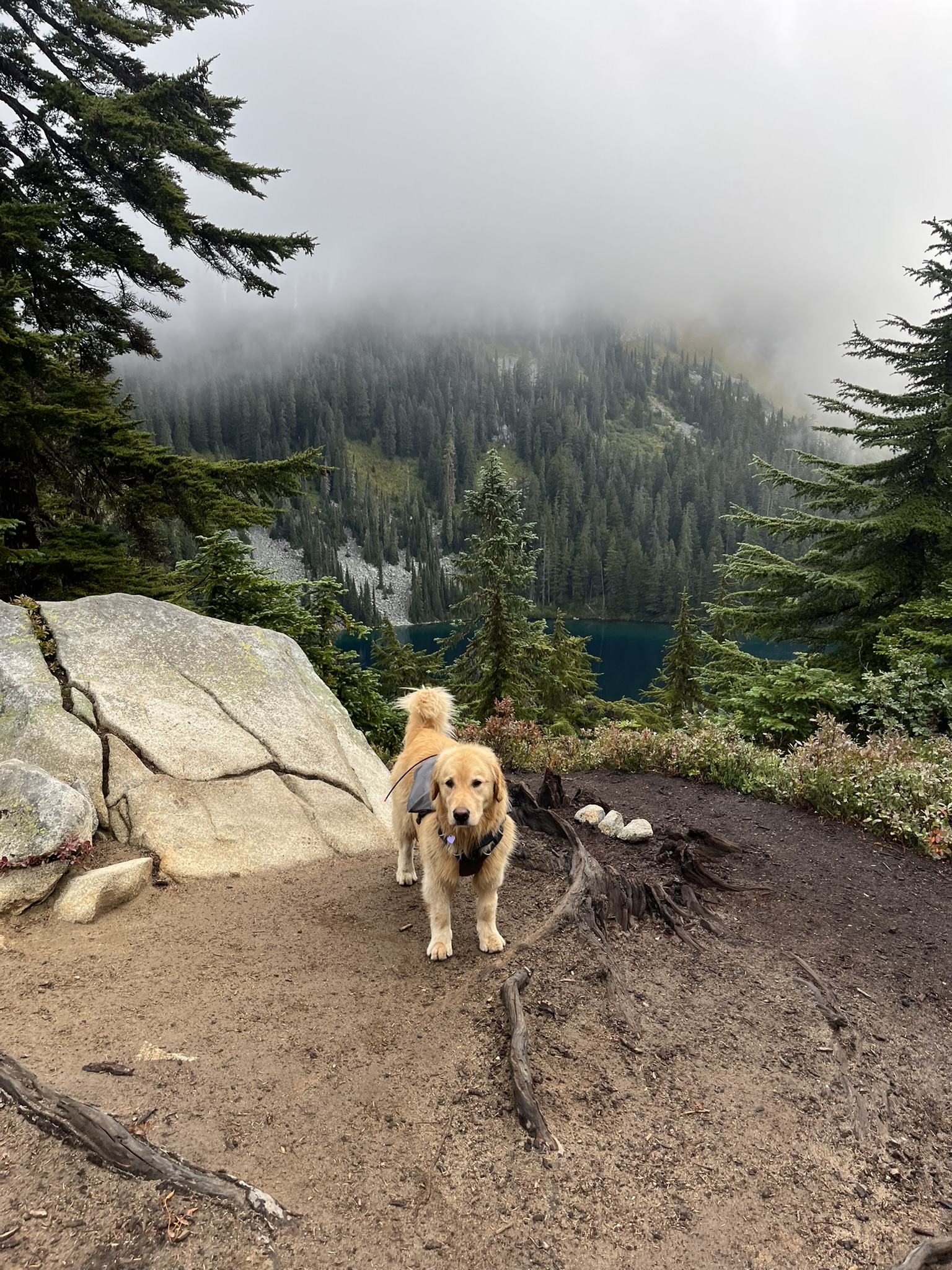
Then the trees opened at a viewpoint and there it was — a deep teal alpine lake sitting in a cirque below, the far mountainside forested and disappearing into fog, the water intense and still. I stood at the edge next to a large granite boulder and looked down. The fog was moving, lifting and settling, revealing and hiding the ridgeline in slow pulses.
The PCT Lakes
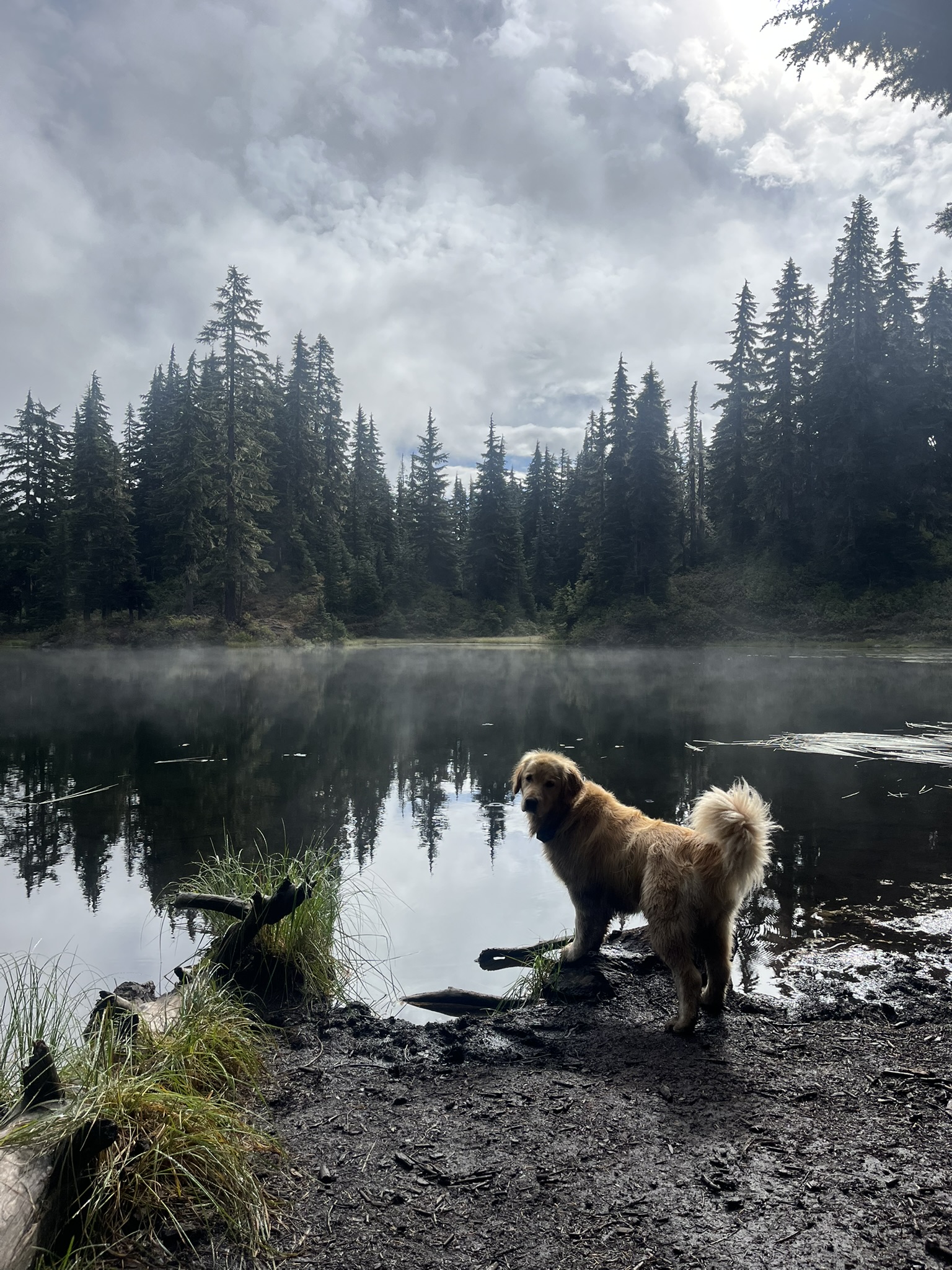
We dropped to a lake in the forest that was doing something with the light. The water was perfectly still, the conifers reflected so cleanly they created a second forest beneath the surface. Wisps of mist rose from the water in slow curls. The clouds were breaking overhead, dramatic and fast-moving, and the whole scene felt suspended between states — not quite raining, not quite clearing, the forest holding its breath. I stood at the muddy shore and watched the mist rise. The water smelled like tannin and decaying needles and the cold mineral smell of deep water warming in morning sun.
The Return — Alpine Meadows
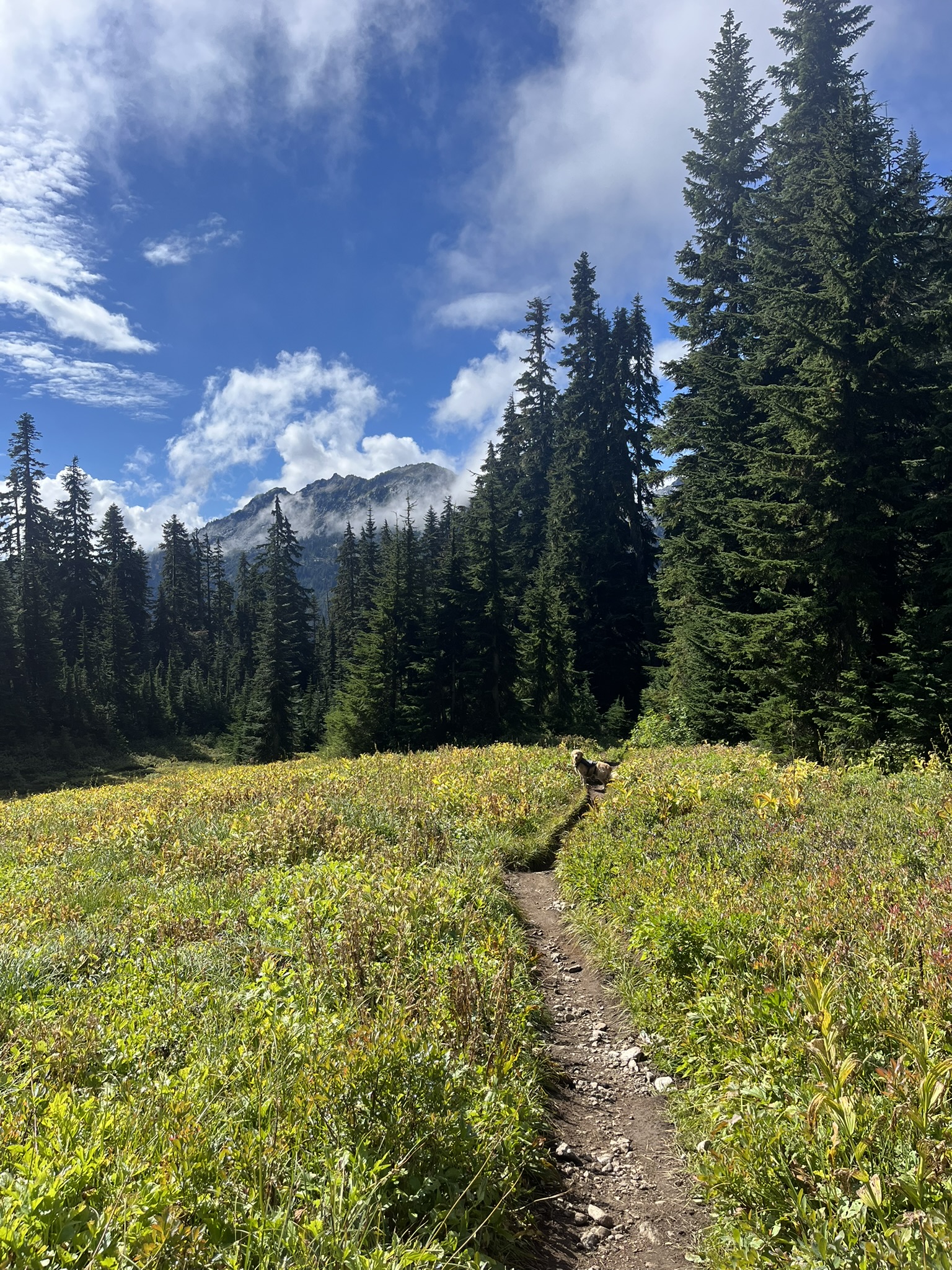
The route west climbed back into the alpine. I walked a narrow trail through meadows that were turning — the wildflowers shifting from green to gold and russet, the subalpine fir standing dark against a sky that was finally committing to blue. A rocky summit rose ahead through the trees, partially wrapped in cloud. The air warmed as the sun broke through and the whole mountainside came alive with color and scent. September in the Cascades. The best month.
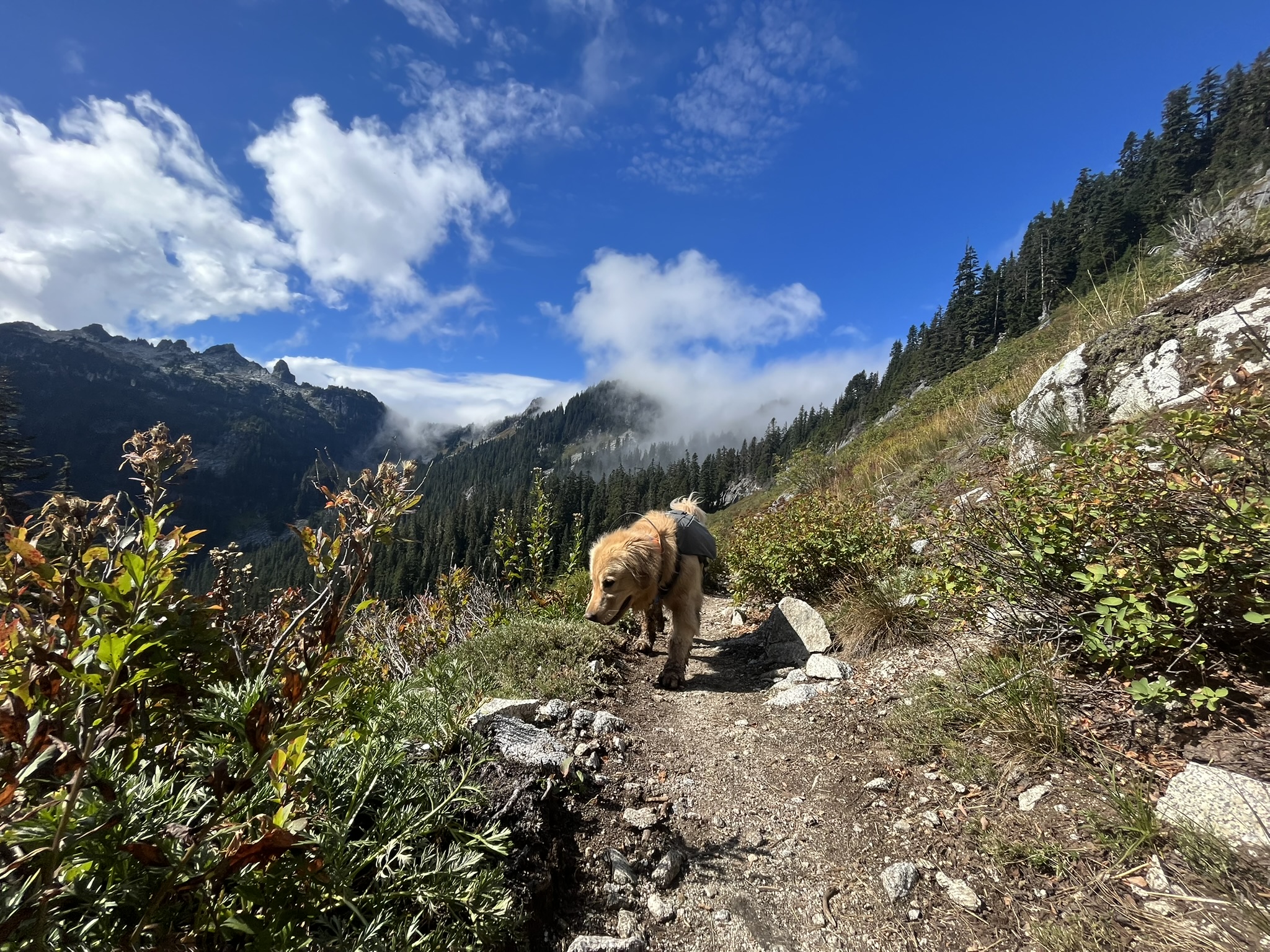
The trail traversed a ridge with views that opened up in both directions. Mountains layered to the south, their ridgelines fading from green to blue to gray. Clouds streamed through the valleys below. The fall color was real up here — orange and red huckleberry mixed with green blueberry and the silver-gray of weathered rock. I moved along the rocky trail with my nose working, reading the wind that carried every scent from the valley floor to the ridgeline.
Back Past Melakwa
The route brought us back to the Kaleetan-Melakwa ridge. I could see a lake below — deep blue-green water in a granite cirque, talus and boulder fields dropping to its shores, jagged spires rising above with cloud streaming through the notches between them. The fog was lifting fast now, revealing rock faces that had been hidden all morning.
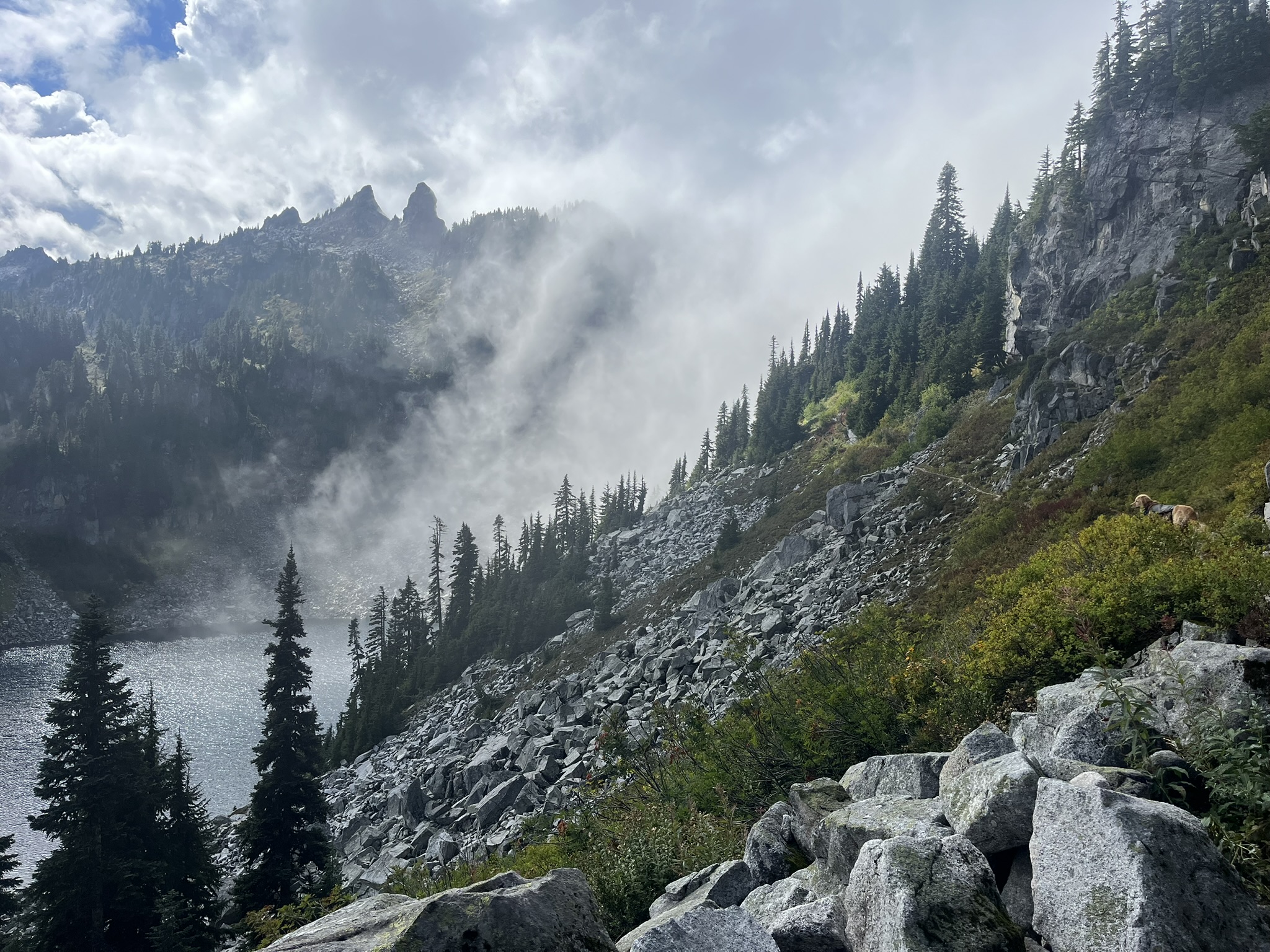
The view expanded. Below the ridge, a boulder field of white granite stretched down to another lake partially hidden by fog. The clouds were doing something dramatic — lifting and swirling and revealing the forested valley below, distant ridgelines emerging, the sun catching patches of meadow and rock. The scale of it — the cirque, the boulders, the fog, the mountains behind the mountains — was the kind of thing that makes you stop walking and just stand there.
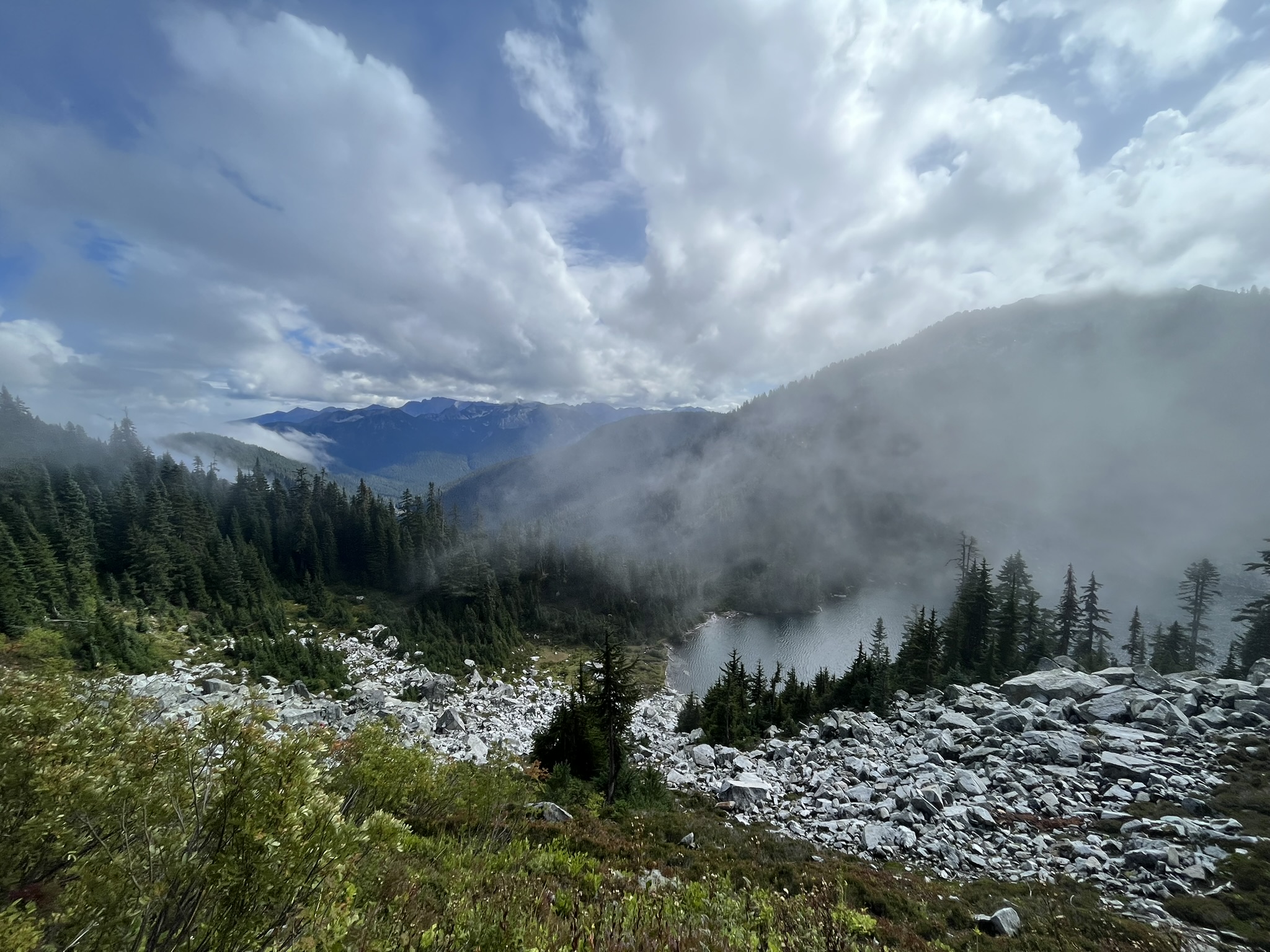
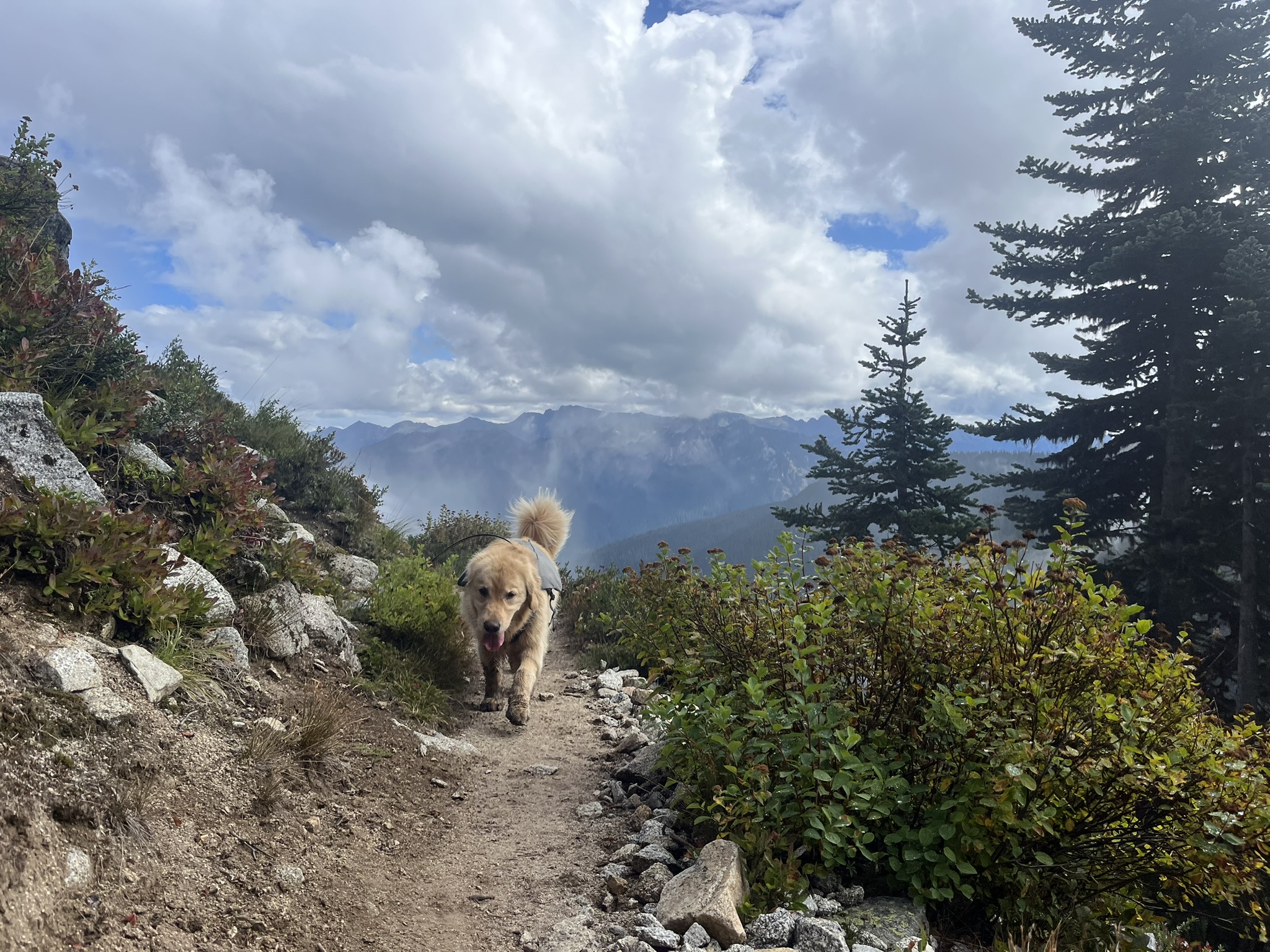
Then we were on the ridge trail heading back, the views behind me. I walked the narrow path with the whole Alpine Lakes Wilderness spread out to the south and west — mountain peaks, cloud shadows, the deep green of old-growth forest. The trail was rocky and the bushes were in full fall color and the wind was carrying everything.
Denny Creek
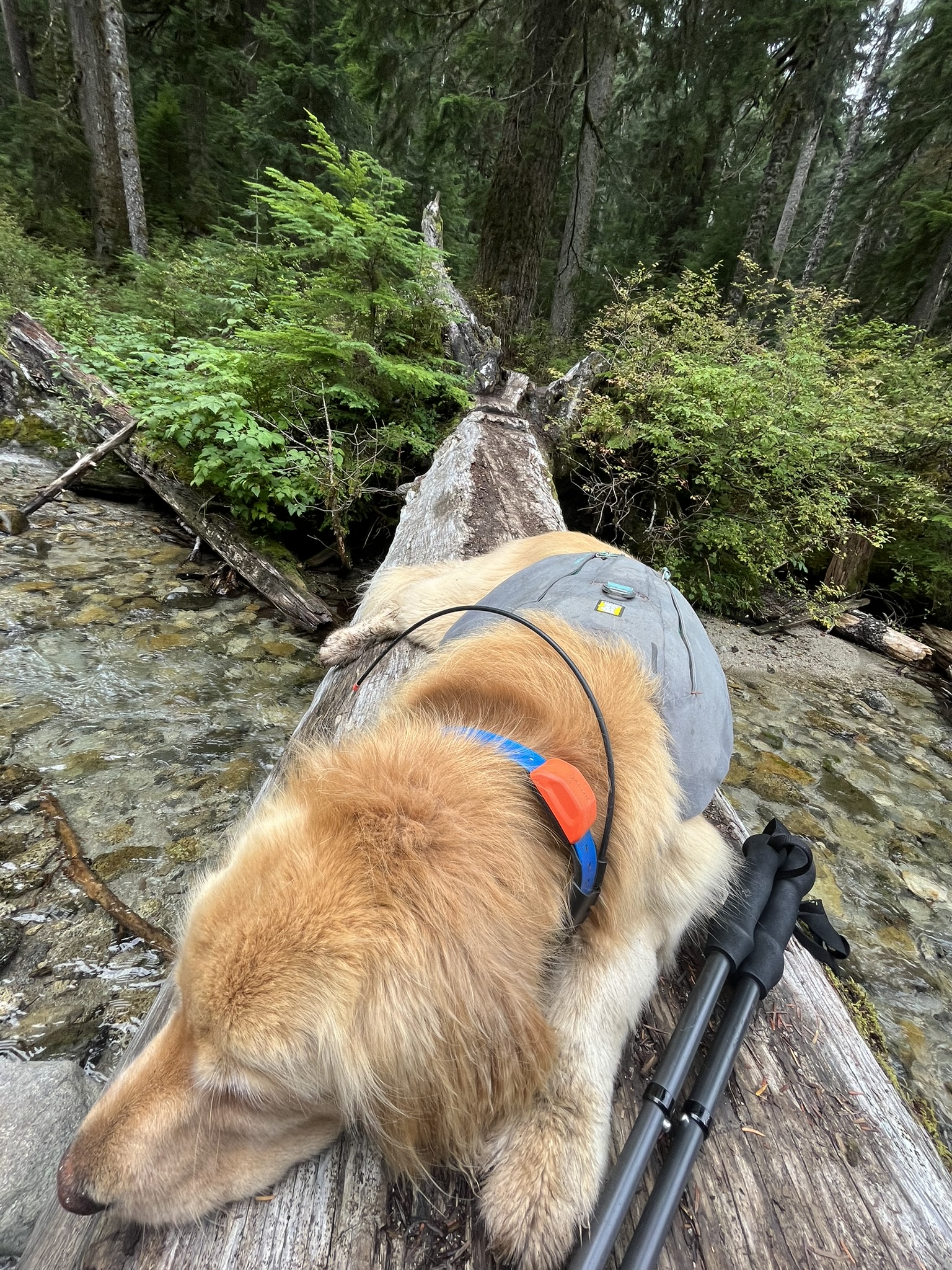
The descent was long and steep. We dropped off the ridge, through the upper forest, and into the Denny Creek drainage. At one point the trail crossed a creek on a fallen log — I walked it with my pack on, balancing above the water, the forest dense and dark and green on both sides. My human's trekking pole clattered behind me. The creek was clear and cold and moving fast over round stones. I could have stayed in it but we had miles to go.
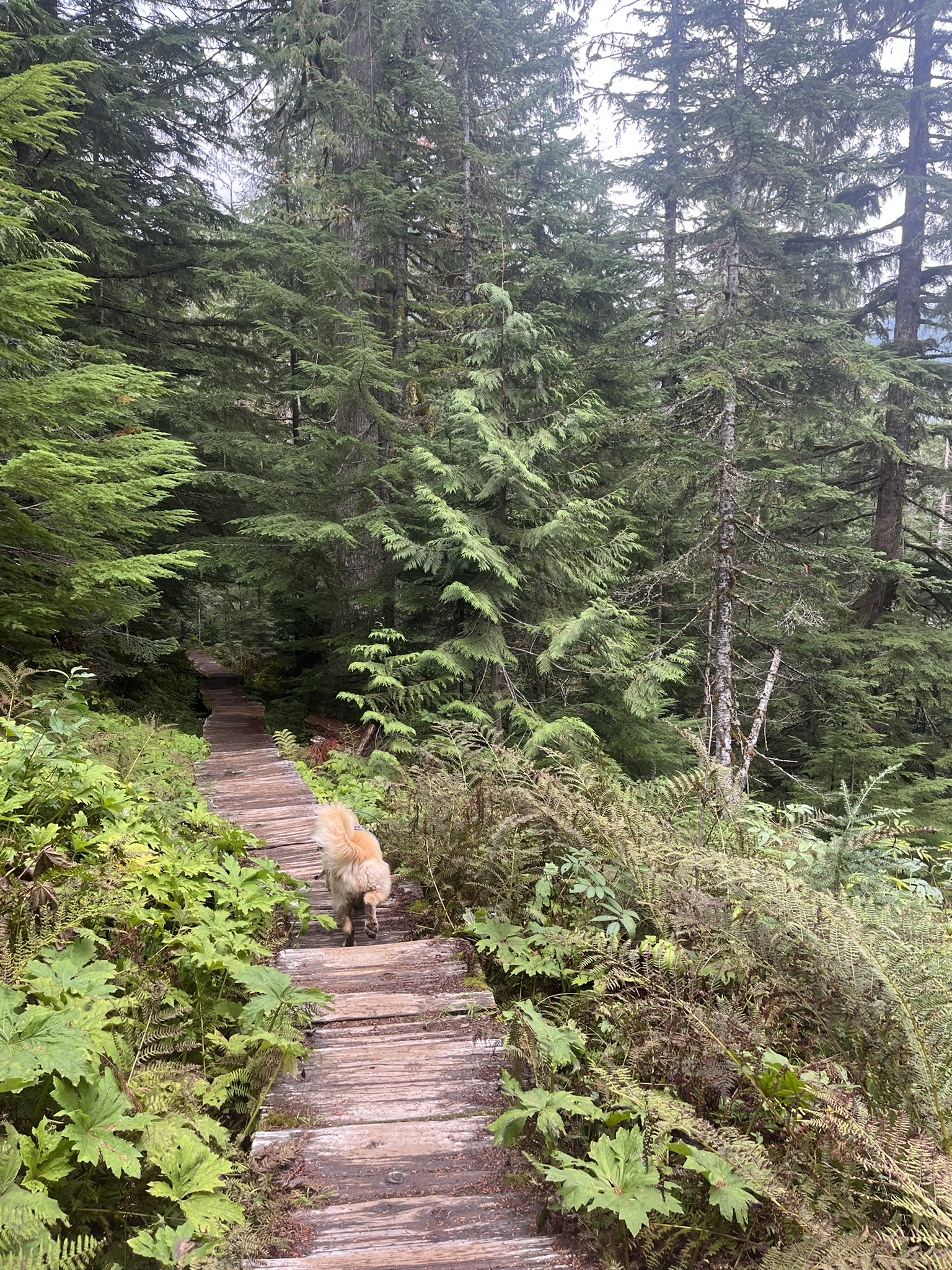
The last mile followed boardwalk through wet forest — wooden planks laid over mud and fern, the trees tall and close and impossibly green. The air was thick and humid and smelled like rotting wood and sword fern and the particular dampness of low-elevation Cascades forest. I trotted ahead, tail up, done with the alpine and ready for the car.
The Loop
Two days. Thirty-nine miles. Ten thousand feet of gain. Melakwa Lake in the dark on a Friday night. The flanks of Kaleetan Peak at 6,500 feet in fog and drizzle. The milky turquoise of Snow Lake from a boulder field. Alpine meadows turning gold. The Pacific Crest Trail through mist. A still lake with no wind and perfect reflections. Ridge after ridge after ridge, each one revealing another lake, another cirque, another piece of the Alpine Lakes Wilderness that most people will never see because you can't get there on a maintained trail.
The square loop. Four sides. West up Denny Creek. South over the Kaleetan ridge. East through the lake basins. North along the PCT. And back. My paws covered every foot of it. Some of it on trail, most of it not, all of it mine.
Thirty-nine miles is a lot of ground. But I'm a golden retriever with good legs and a human who doesn't believe in turnarounds, and the Alpine Lakes Wilderness is the kind of place that rewards the ones who keep going.