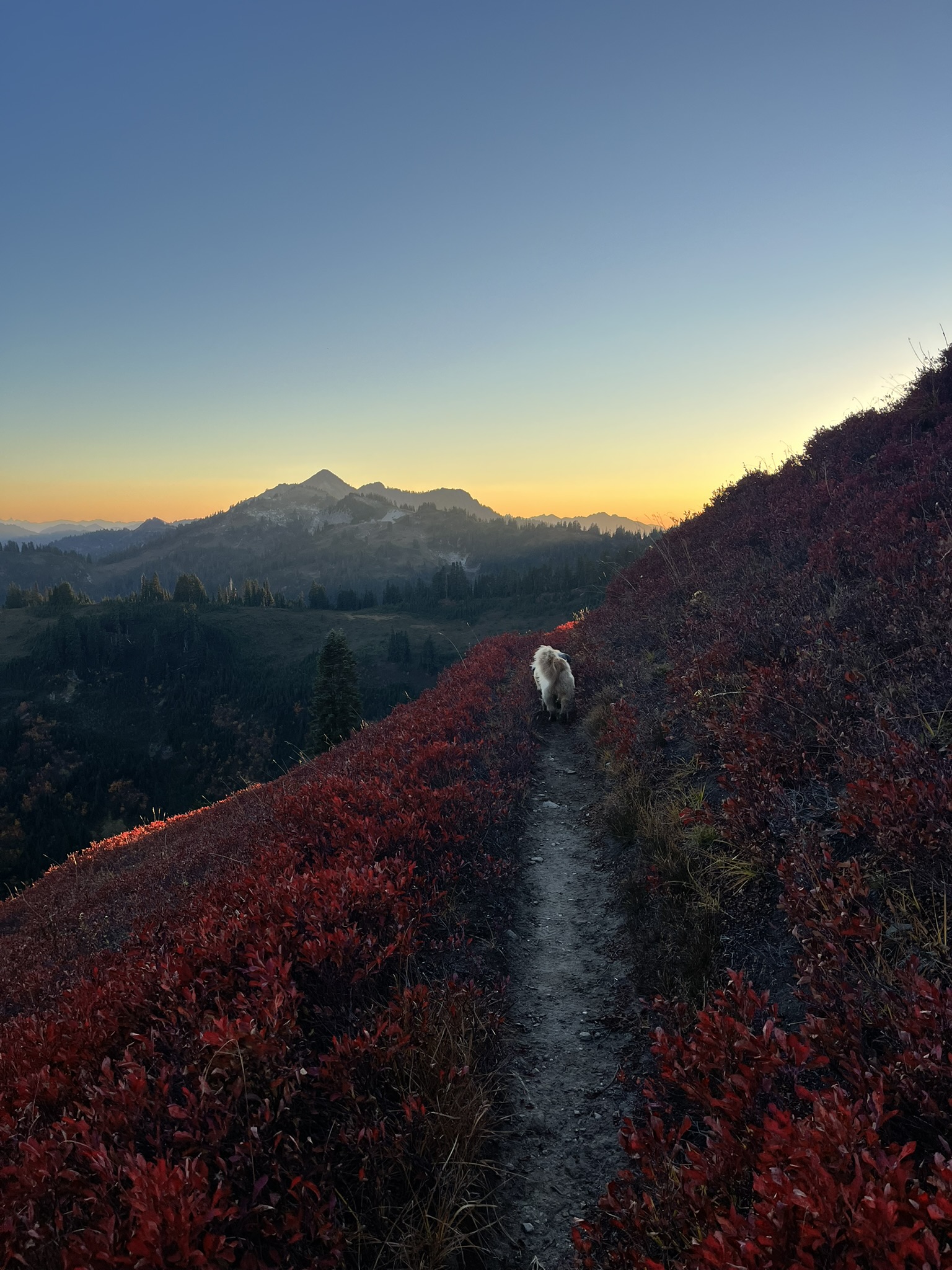
Little Siberia Lost Loop
A fifty-three-mile off-trail loop through the Glacier Peak Wilderness — campfire sausages, a rainbow at ridgeline, Nova swimming in alpine lakes, lahar devastation, lion's mane mushrooms, and miles of crimson huckleberry with the volcano watching.
Elevation Profile
Friday Evening — Rainbow Ridge
We left the trailhead Friday afternoon and climbed straight up. No warmup. The trail gained the ridgeline fast and by the time we broke above treeline, the sky was doing two things at once — spitting rain from the east and catching the last sun from the west. The result was a rainbow.
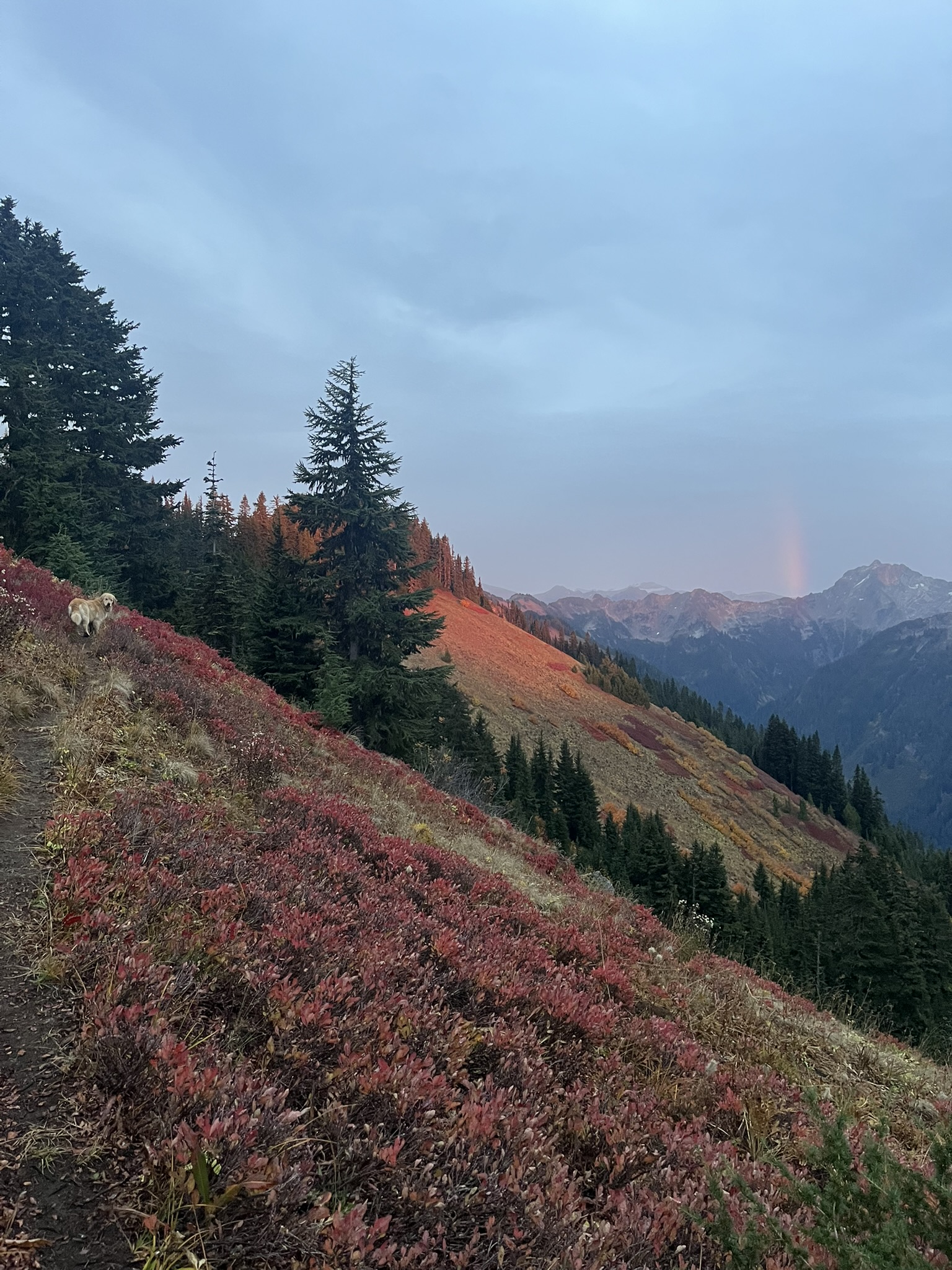
It sat there between the peaks, framed by red huckleberry slopes and the first snow-dusted ridgelines of October. The rain was light enough that I didn't mind. Light enough that it felt intentional — like the mountains were just setting the mood.
By the time the rainbow faded, the sky behind us had gone full orange. Glacier Peak and the surrounding ridges were silhouetted against a sunset that burned through the trees.
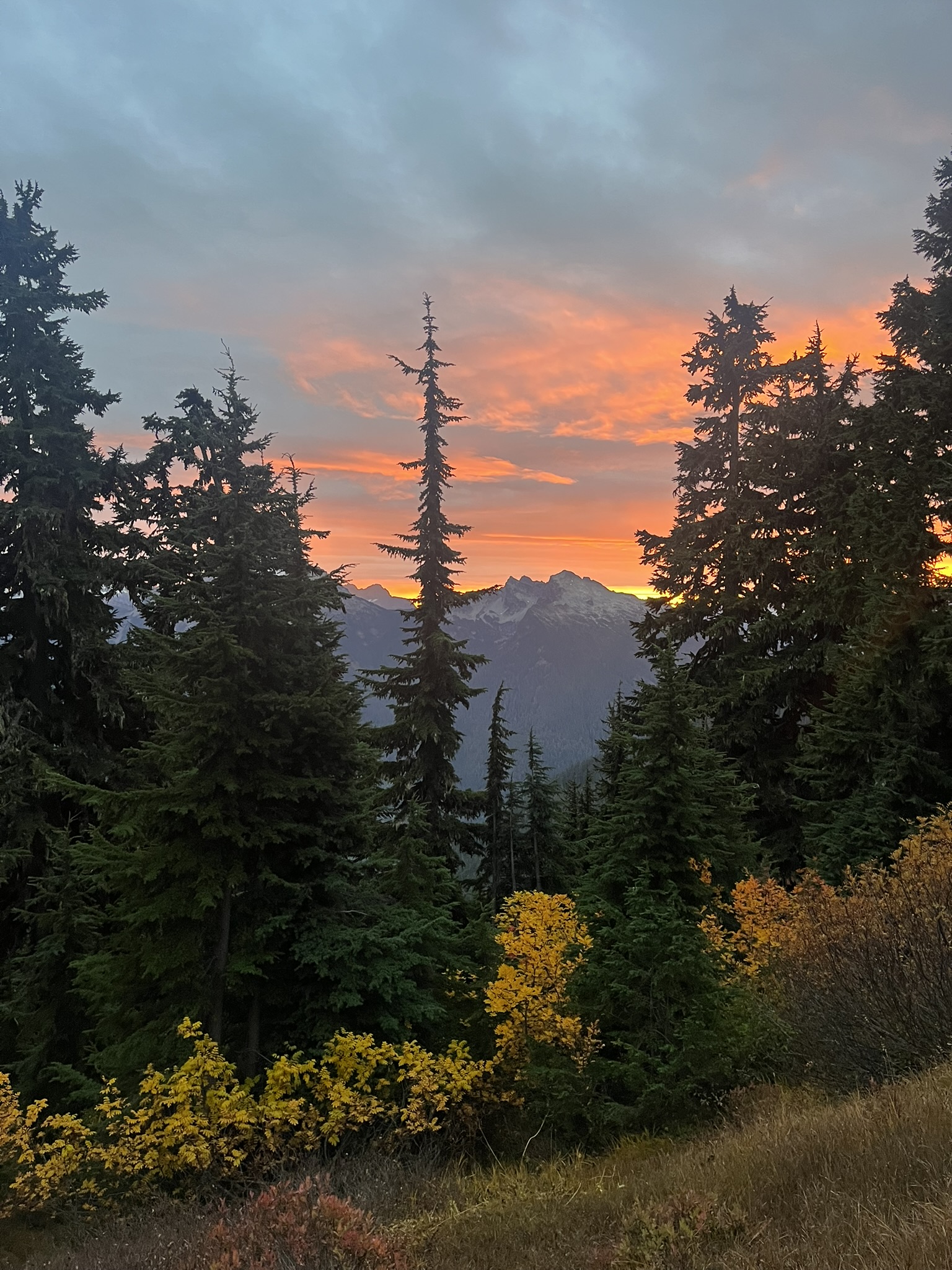
We made camp on a bench at 5,600 feet, tucked into the ridgeline with views in every direction. My human built a fire. The moon came up through the clouds and hung there behind the tent, silver and huge. I lay by the fire and watched the sparks lift into the dark.
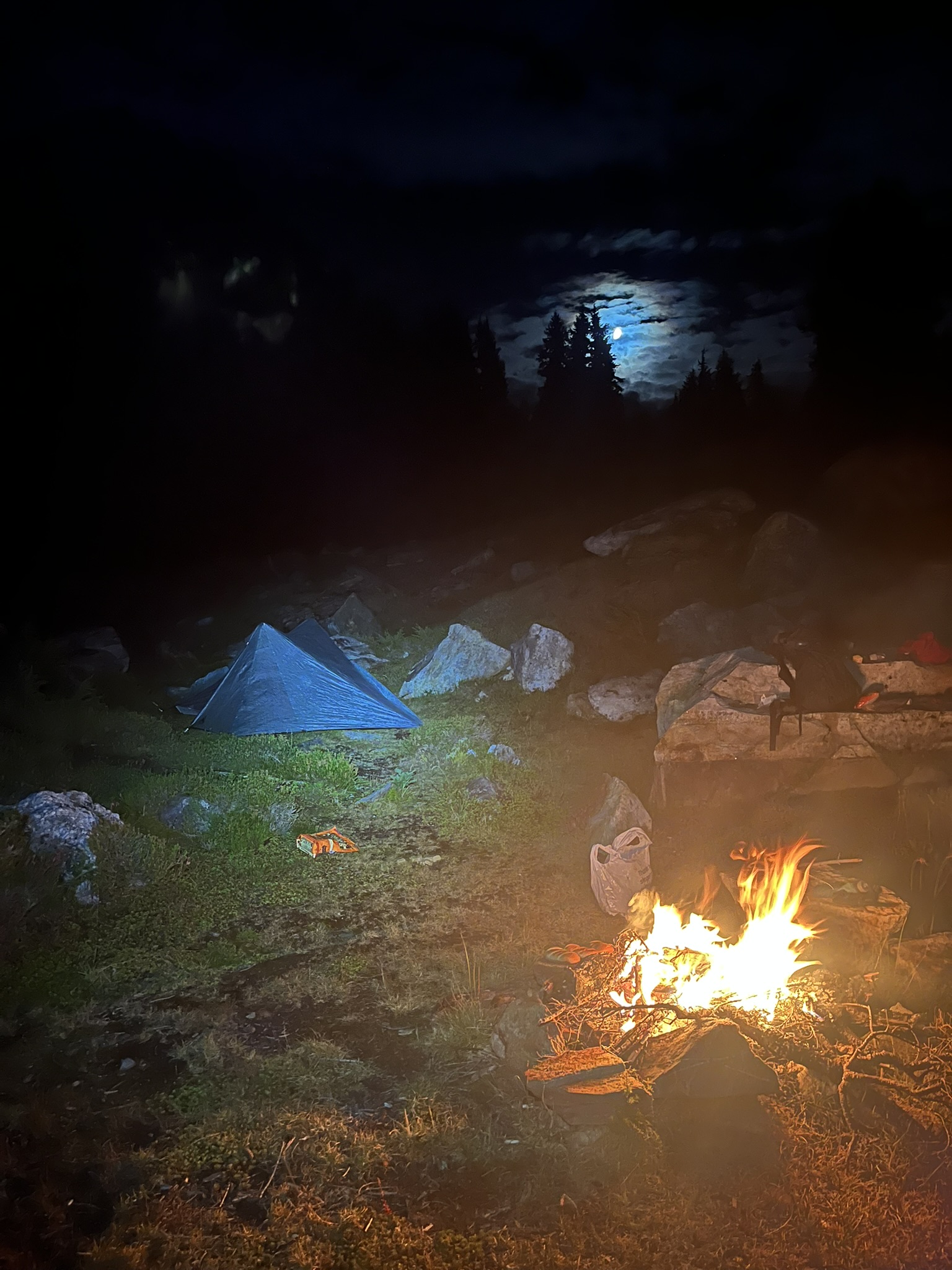
Then my human pulled out sausages and hot dog buns. Campfire sausages are my favorite kind of dinner. I pretended not to care. I cared deeply.
Saturday Morning — The Lake
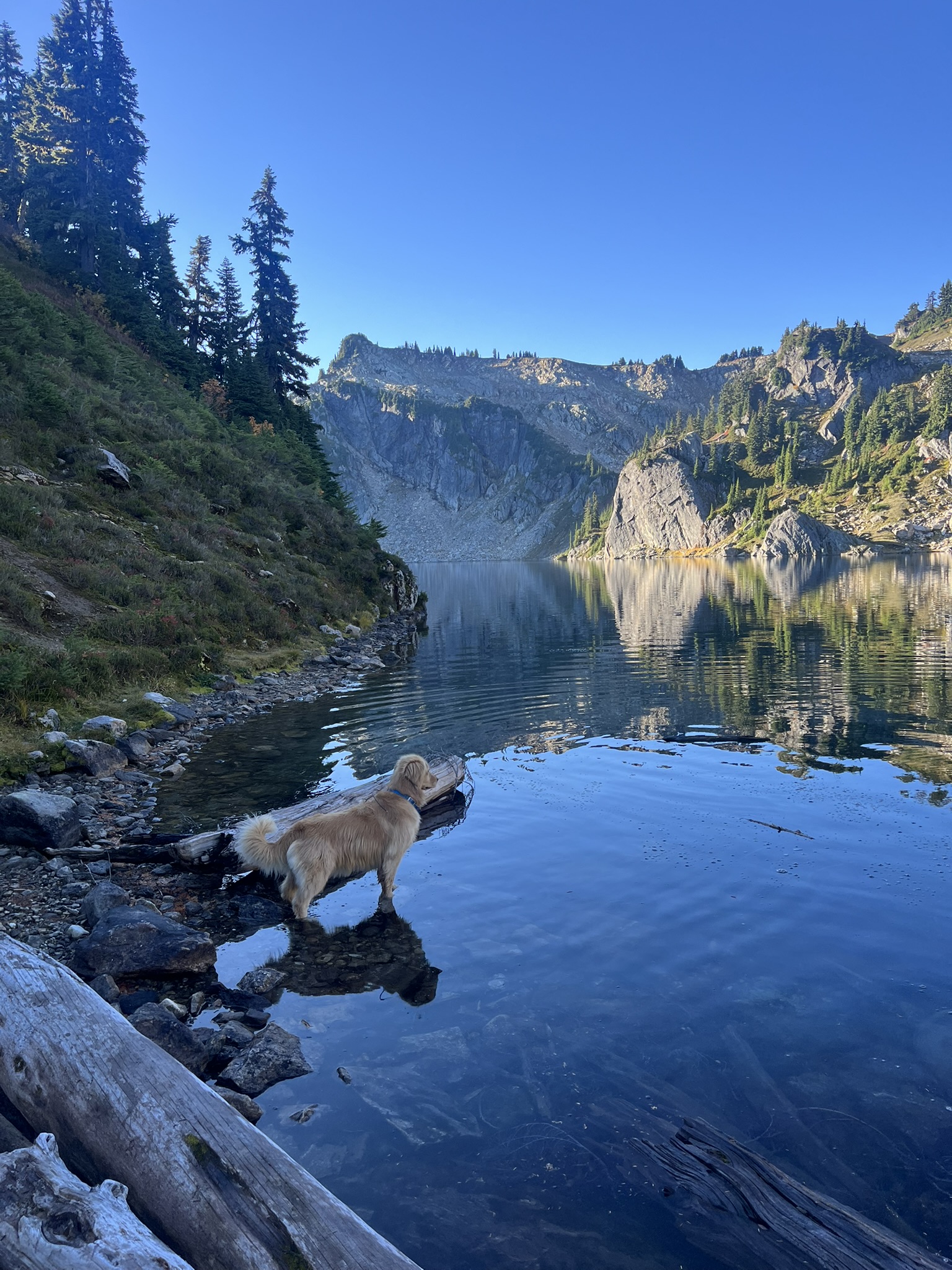
I woke to blue sky so clear it looked fake. The morning light was cutting through the trees at an angle that turned everything gold. We broke camp and traversed the ridge eastward, dropping slightly to a lake that sat in a cirque below the trail — deep blue water surrounded by rocky slopes and subalpine fir.
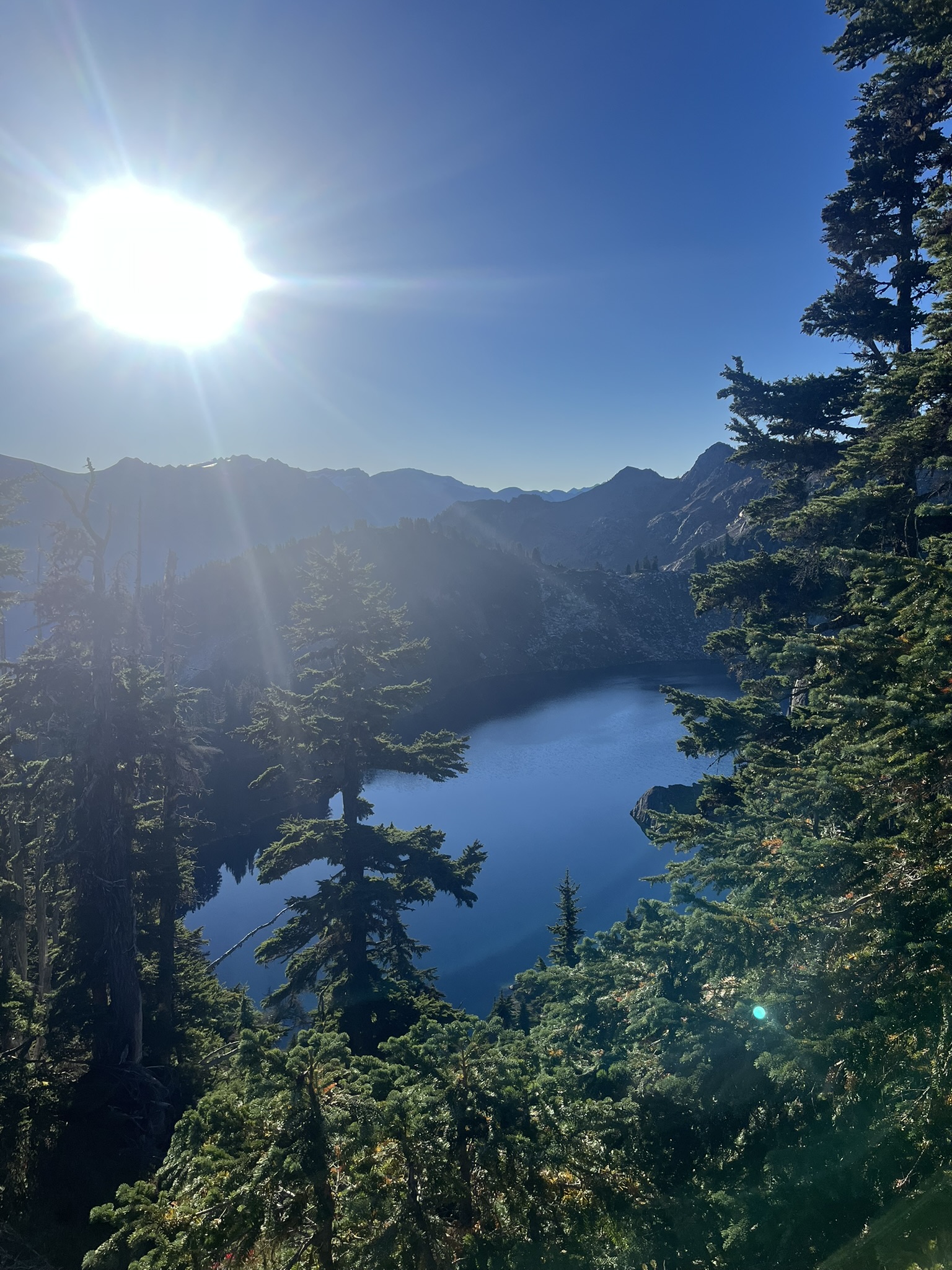
We dropped to the shore. The water was still, the reflections sharp, the rock walls rising on all sides. I went straight in. October water at 5,500 feet is cold in a way that makes your whole body pay attention. I didn't care. I waded to chest depth and stood there.
The White Chuck Devastation
Below the lake, we dropped into a different world. The White Chuck River valley has been wrecked. In 2003, a glacial outburst flood — a lahar — tore down from Glacier Peak's flanks and scoured the valley to bedrock. Twenty years later, the evidence is everywhere. Dead standing trees, fields of gray boulders, the river running wild through rubble with no banks to hold it.
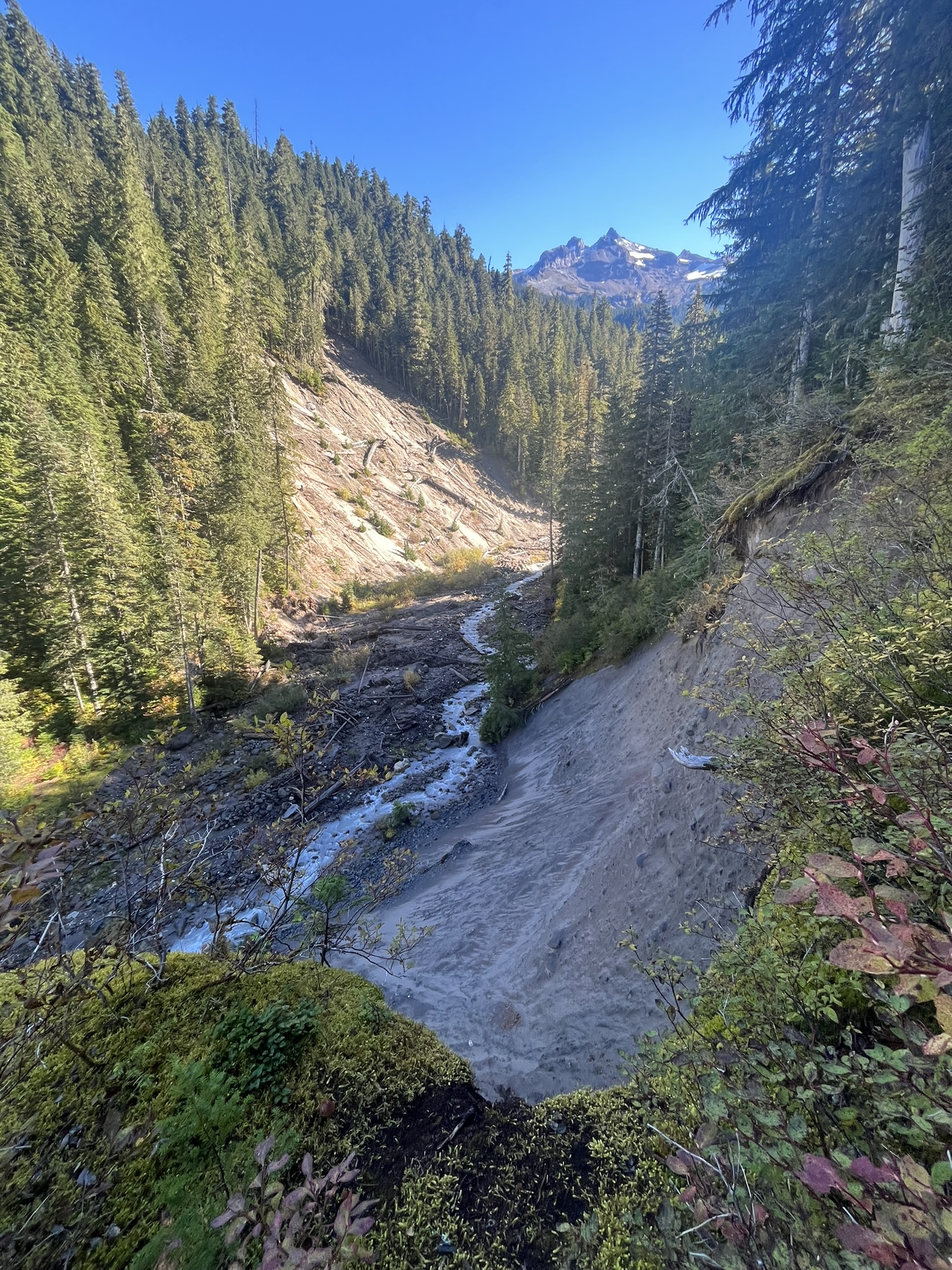
We picked our way through the devastation — boulder-hopping over the river, climbing banks of loose gravel and fallen timber. The smell was wet stone and rot and something sulfurous from the volcanic rock. It felt less like a hike and more like crossing a war zone that nature had started to reclaim.
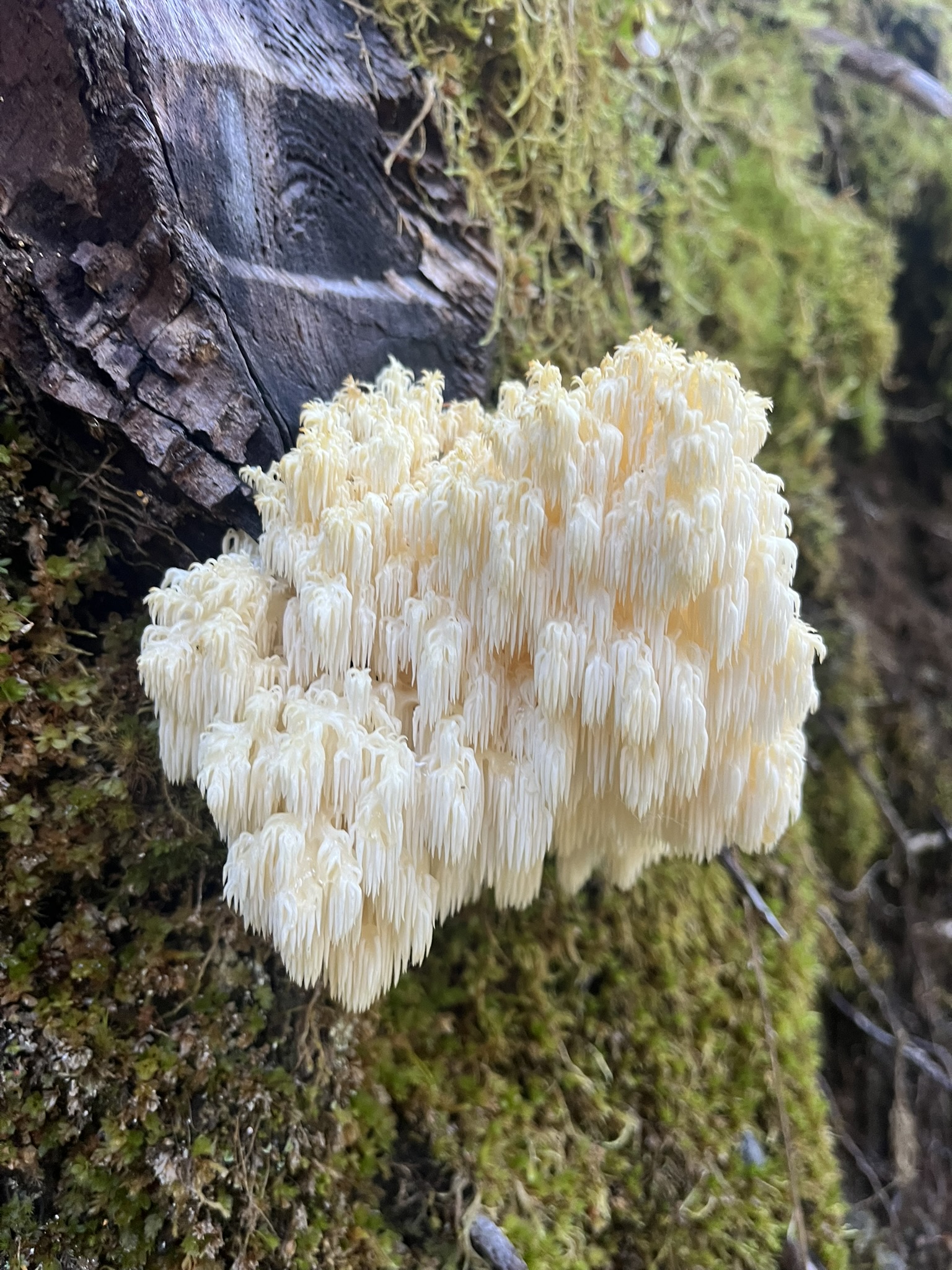
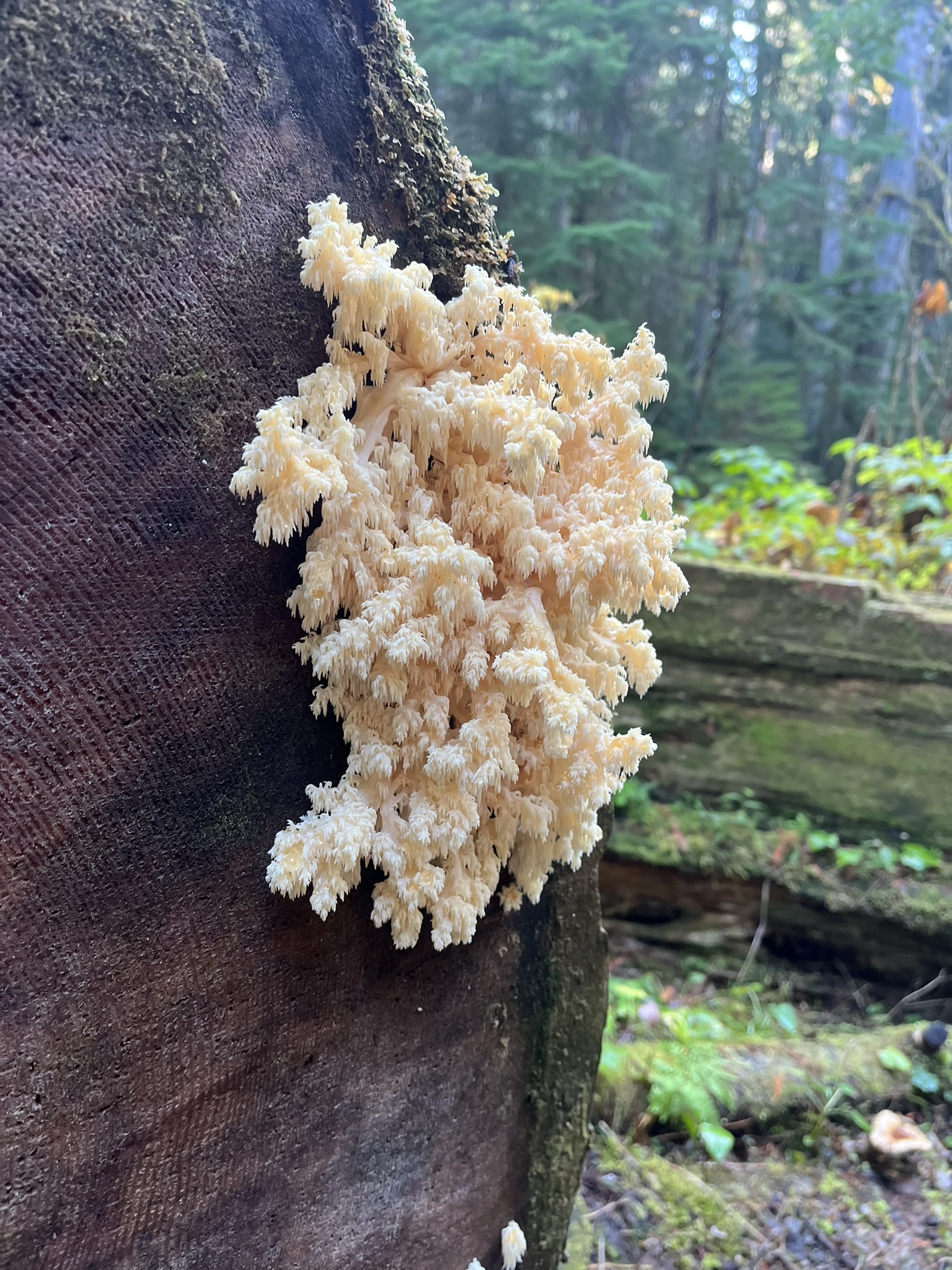
Then the forest closed back in and everything changed. Old growth. Moss on every surface. And on a mossy log, a lion's mane mushroom — white, cascading, perfect.
Approaching the Volcano
From the river valley, we climbed. Up through forest, across a narrow log bridge over a creek, and back onto open ridgelines. The forest gave way to meadow and suddenly there it was — Glacier Peak, filling the horizon. White glaciers, dark rock, snow down to the treeline. I could see it from miles away but it still felt close. The trail led straight toward it through brown heather and the last of the fall wildflowers.
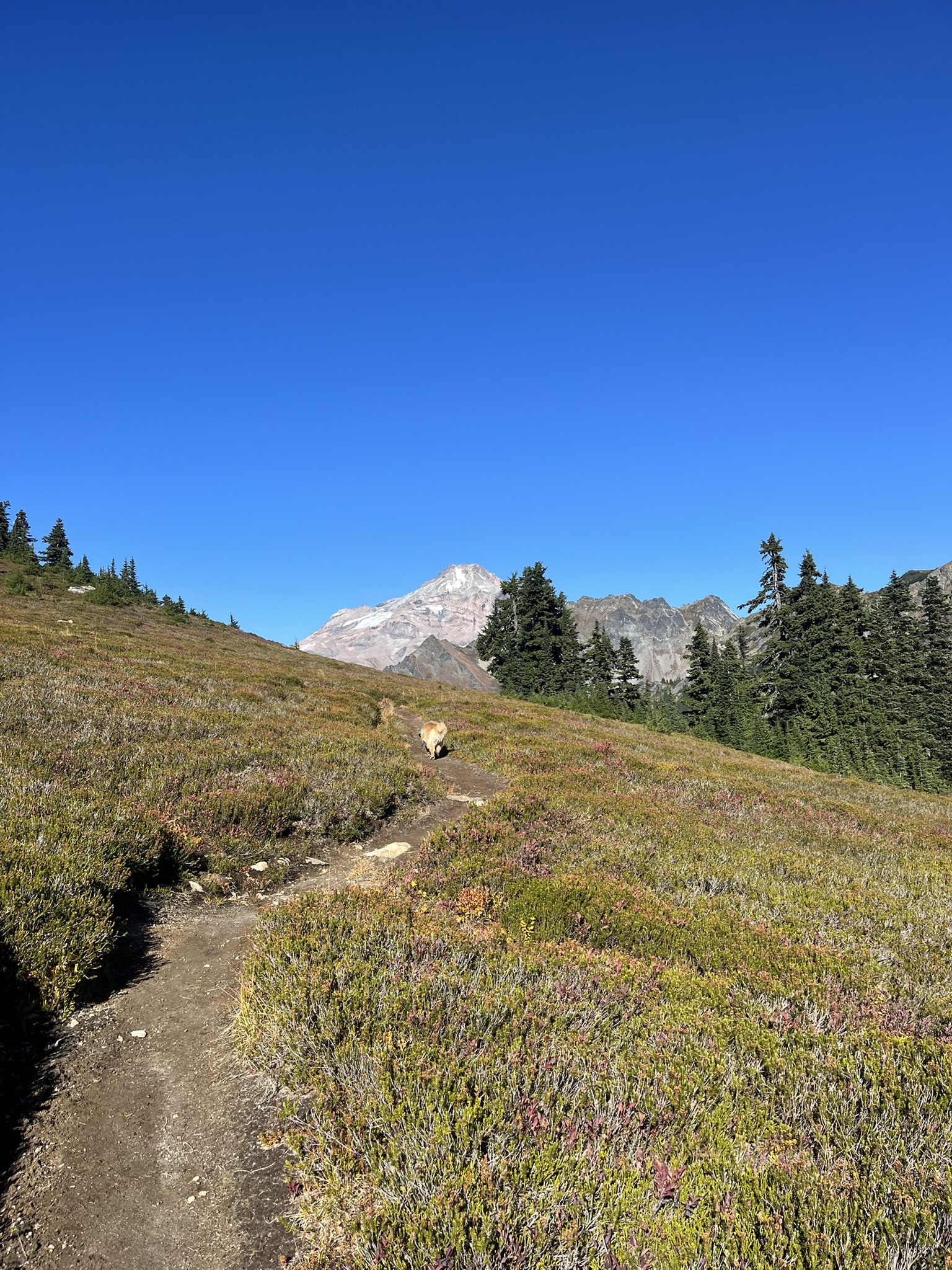
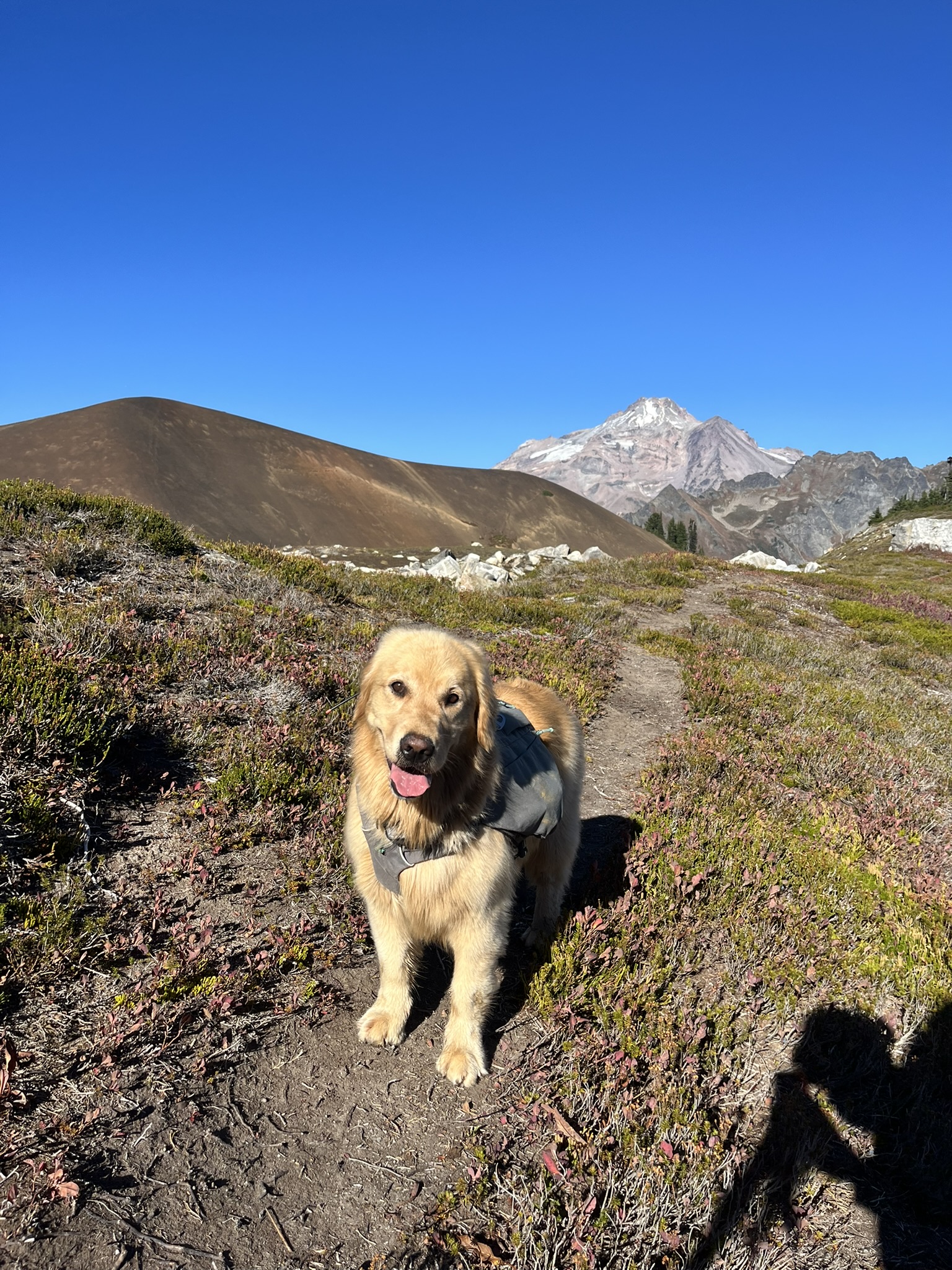
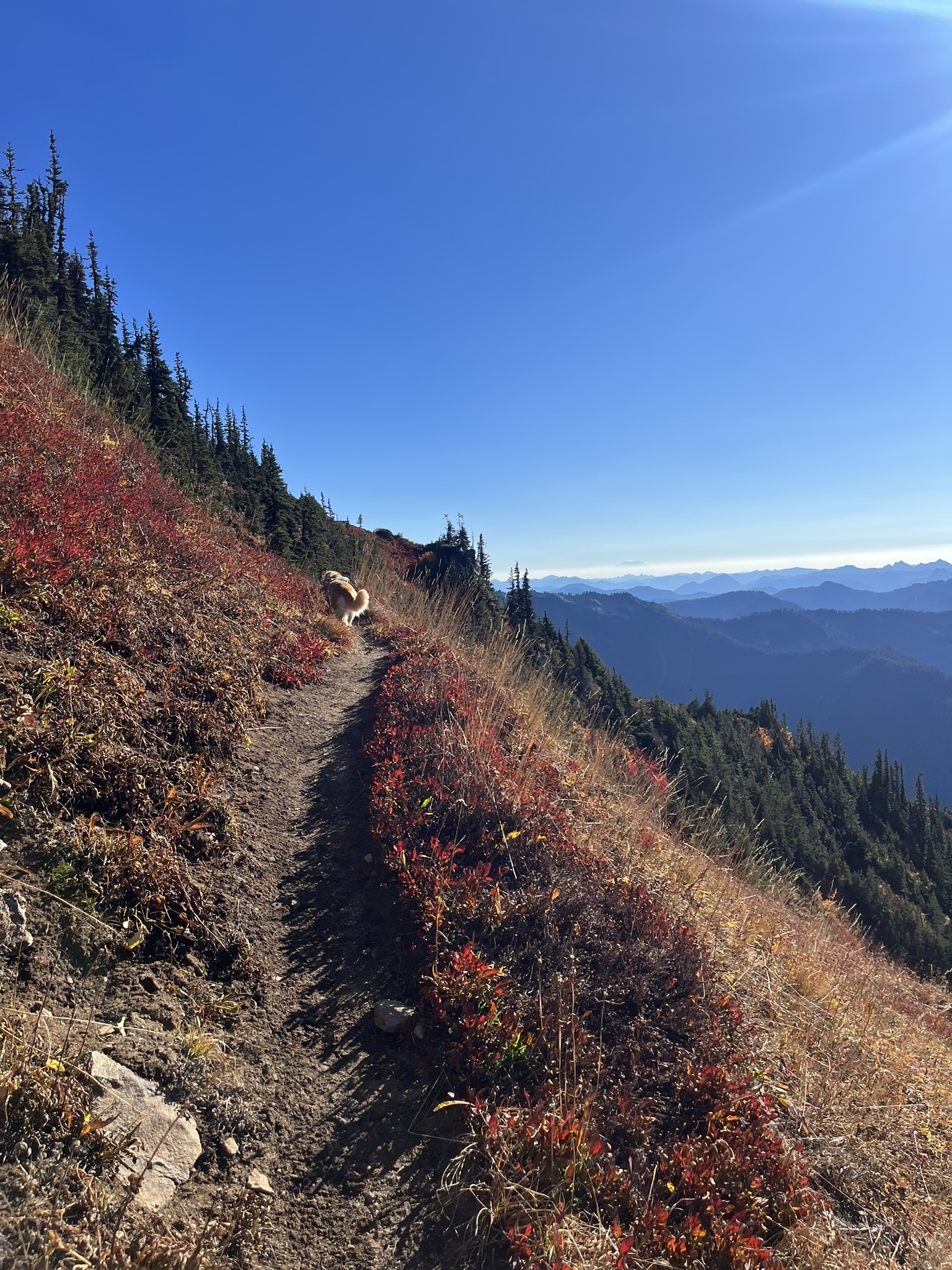
We reached the high point at 6,516 feet in the mid-afternoon. The ridge trail was lined with crimson huckleberry that had peaked perfectly — every bush a different shade of red and orange against the brown grass and blue sky. The views fell away on both sides into deep valleys.
The Crimson Ridge
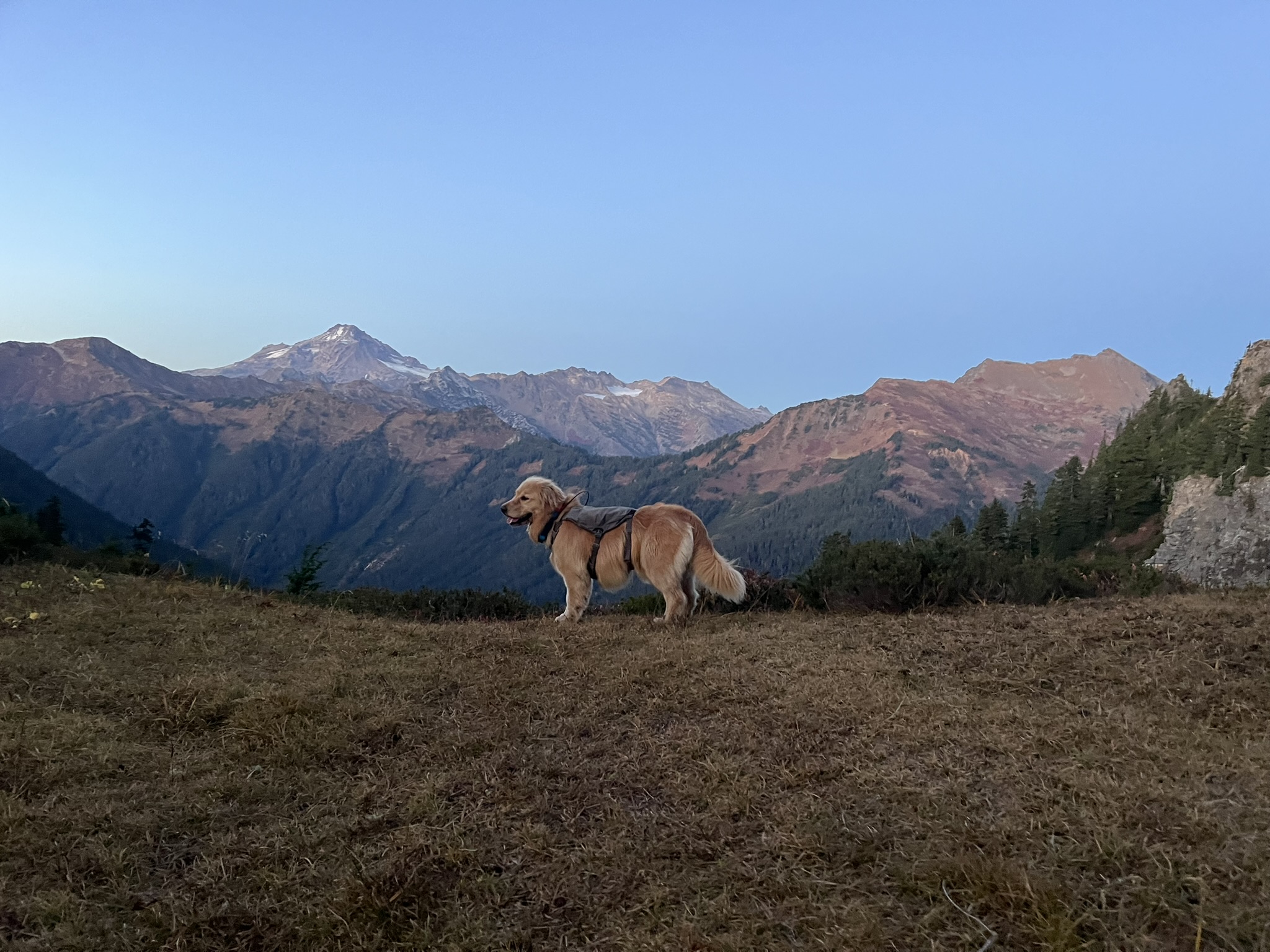
The rest of Saturday was the best ridge walking I've ever done. Miles of open ridgeline with Glacier Peak always in view, the fall colors burning on every slope. Nova wore her pack and trotted ahead, golden fur against red huckleberry, mountains stacking up behind her to the horizon.
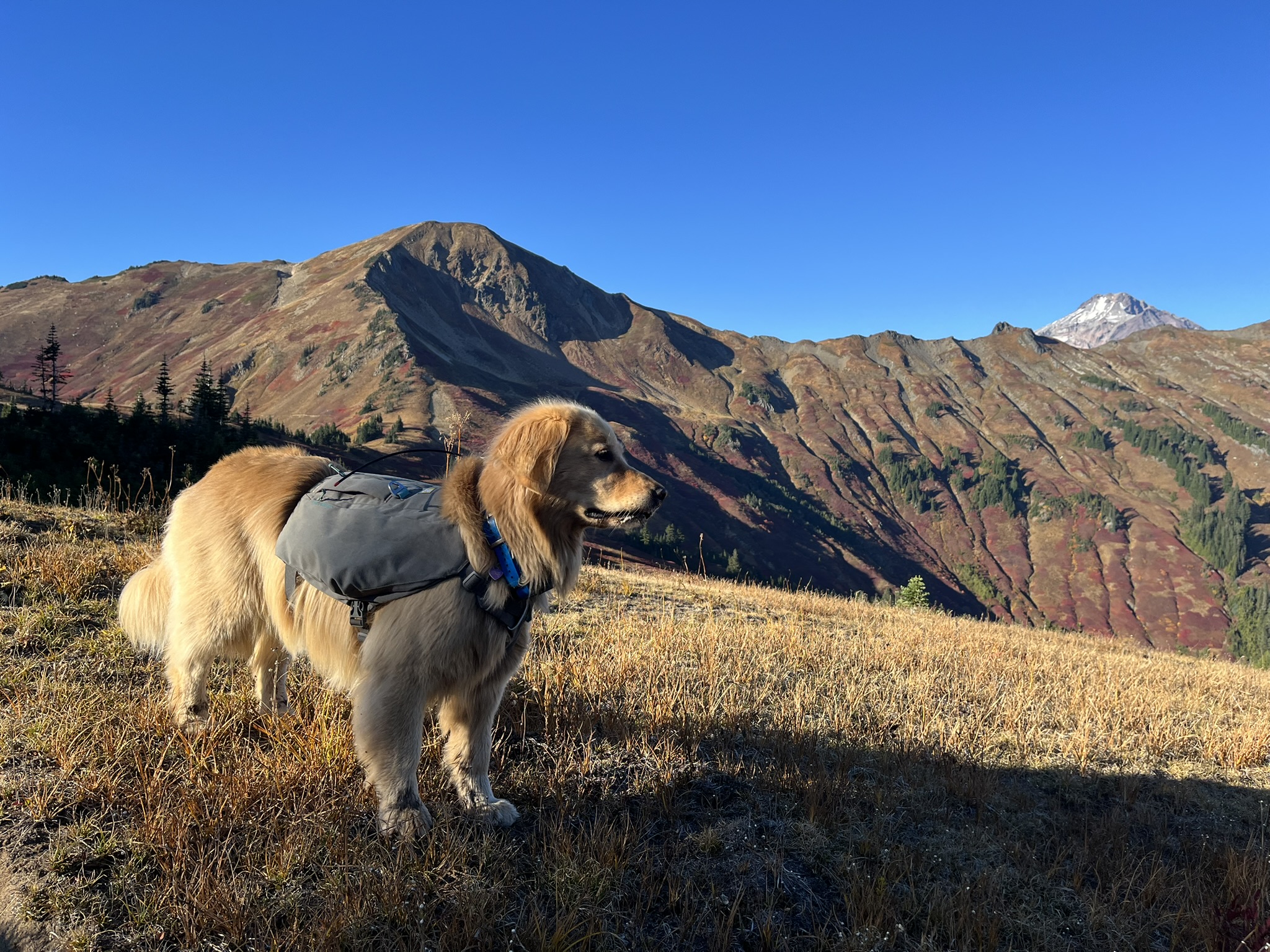
As the sun dropped, the light turned everything molten. The huckleberry went from red to crimson to something almost purple. The trail was a thin line between walls of color. Nova walked ahead into the sunset with a peak on the horizon and the whole world on fire around her.
The last light caught the peaks across the valley — alpenglow on snow, pink rock, dark timber. Nova stood on the ridge and watched it happen. She watches sunsets. This is not something I'm making up.
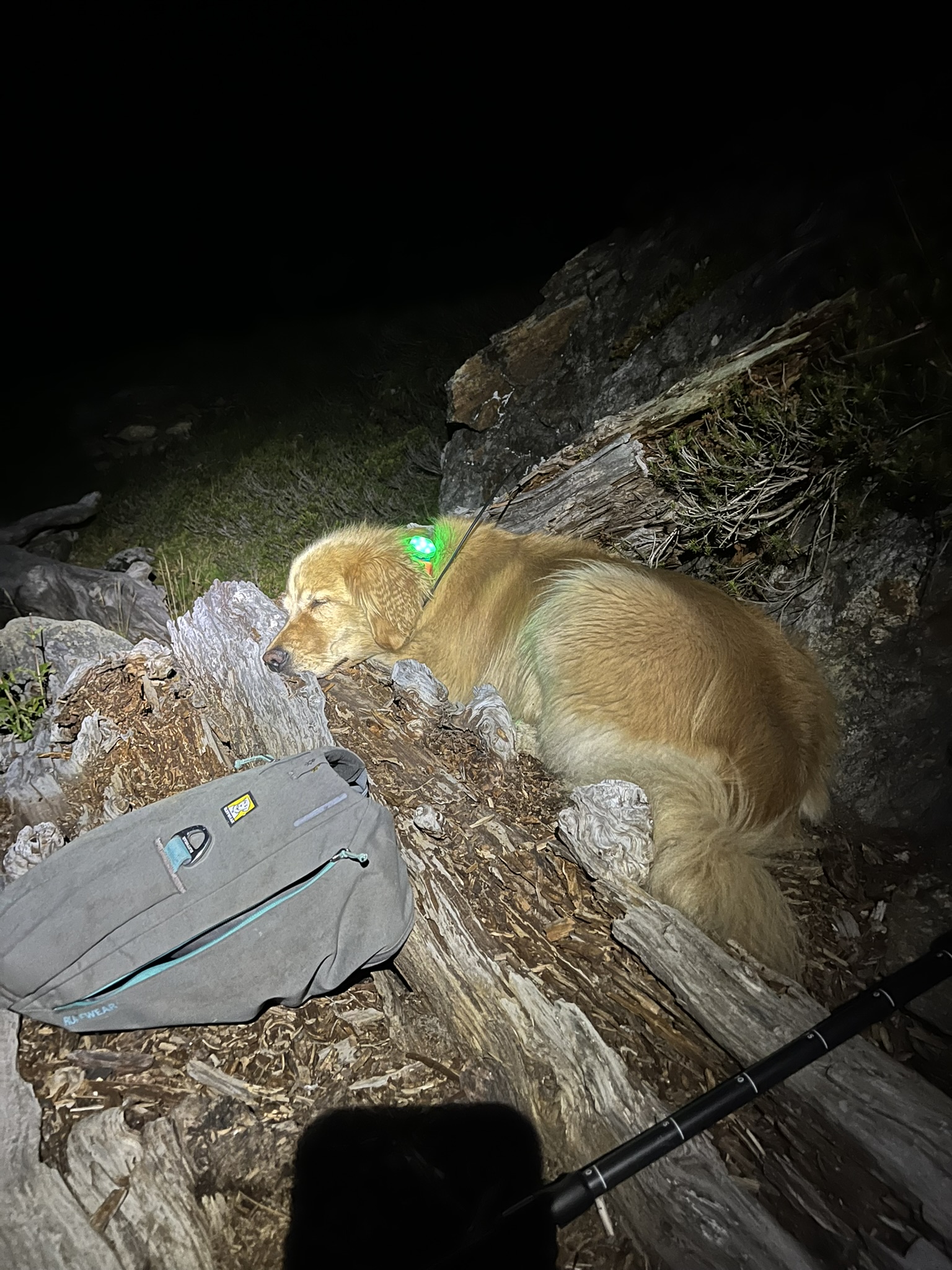
We hiked into the dark. By the time we found the lake and set up camp, Nova was done. She fell asleep on the rocks before the tent was up — headlamp illuminating her golden fur, her GPS collar glowing green, her pack still on. Fifty-three miles in a weekend will do that.
Sunday Morning — The Lake Camp
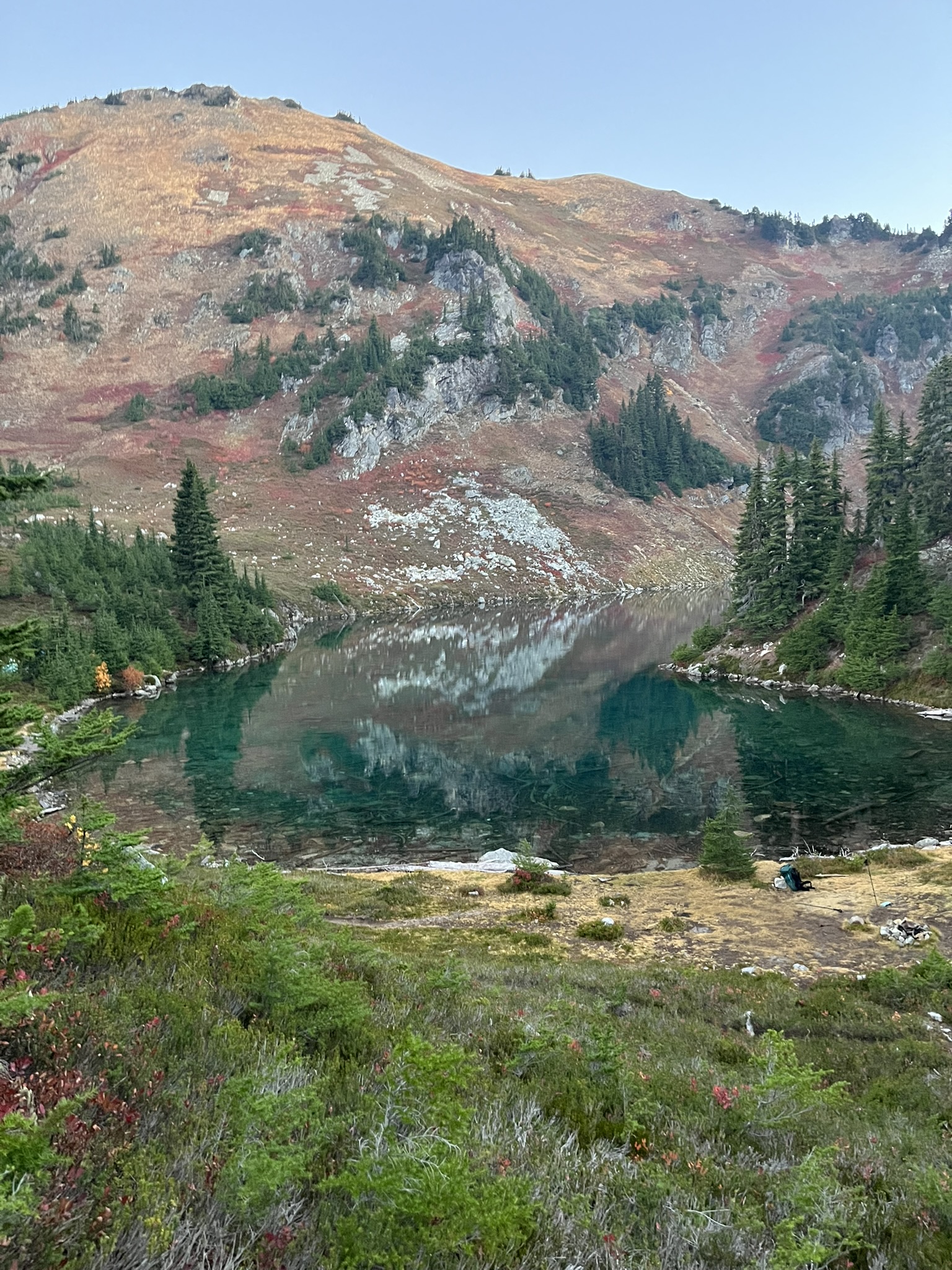
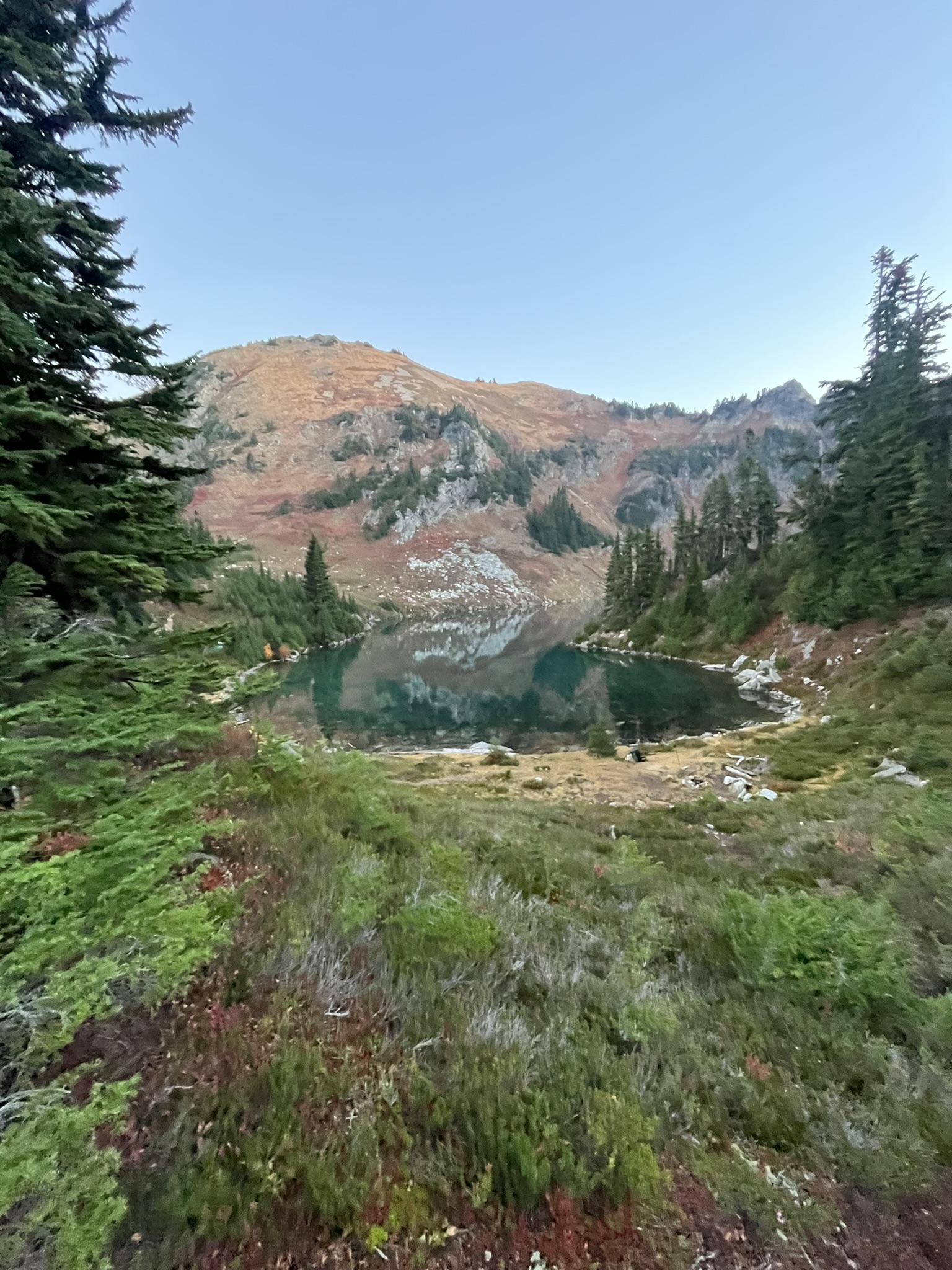
Morning revealed where we'd camped. A small alpine lake sat in a bowl below a mountain whose slopes had gone orange and red with the season. The tent sat right on the shore. The water was glass — a perfect reflection of the peak above, subalpine firs framing both sides. Quiet doesn't describe it. It was the absence of any sound that wasn't water or wind.
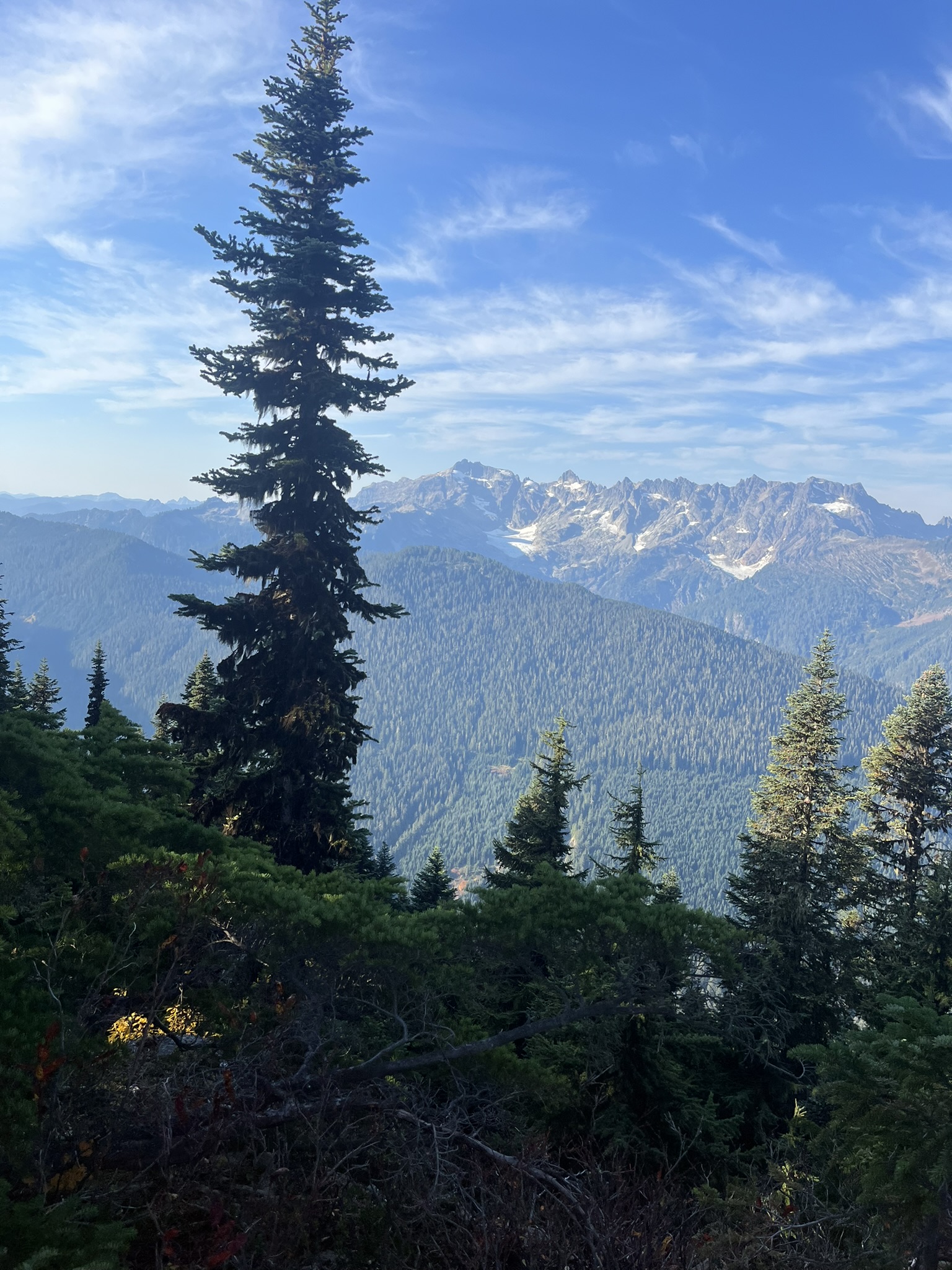
We broke camp and headed west, back toward the trailhead. The morning views gave us one last look at Glacier Peak from the ridgeline — the volcano hanging in the haze with ridges falling away on both sides, red huckleberry still blazing in the foreground.
The Mushroom Forest
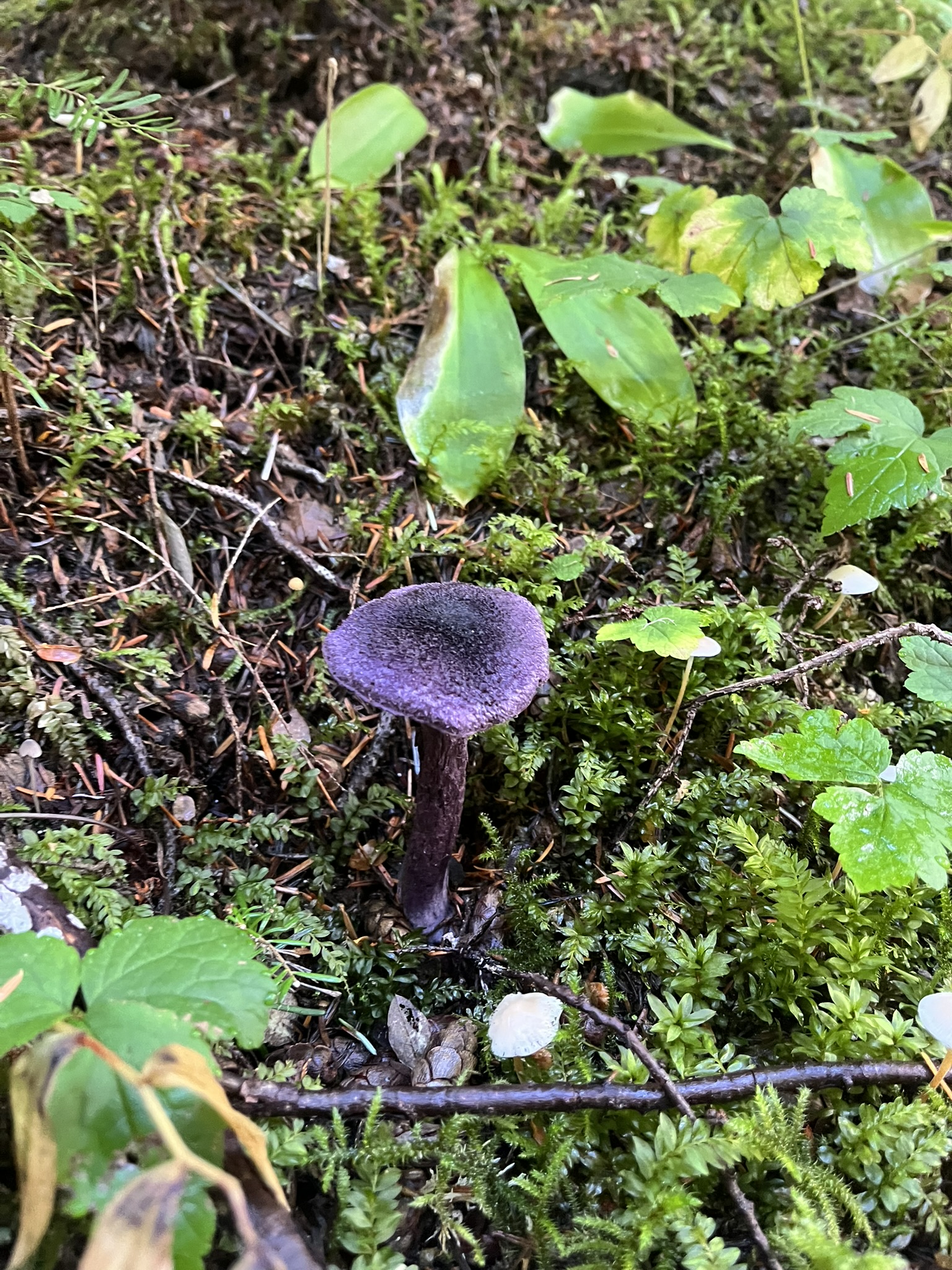
The descent dropped through old-growth forest rich with fall mushrooms. Every log and stump had something growing on it. A purple cortinarius pushed through the moss — dark, clean, almost alien.
On a fallen log, another lion's mane — or its cousin, a bear's head tooth fungus — cascading in white and cream from the bark. The forest down here smelled like wet earth and decay and growth all at once. Everything was alive.
Three days. Fifty-three miles. Fourteen thousand feet of climbing. A rainbow on Friday, a volcano all day Saturday, and a mushroom forest on the way out. The White Chuck devastation in the middle of it — a reminder that these mountains don't just sit here looking pretty. They do things.
I slept the whole drive home. Obviously.