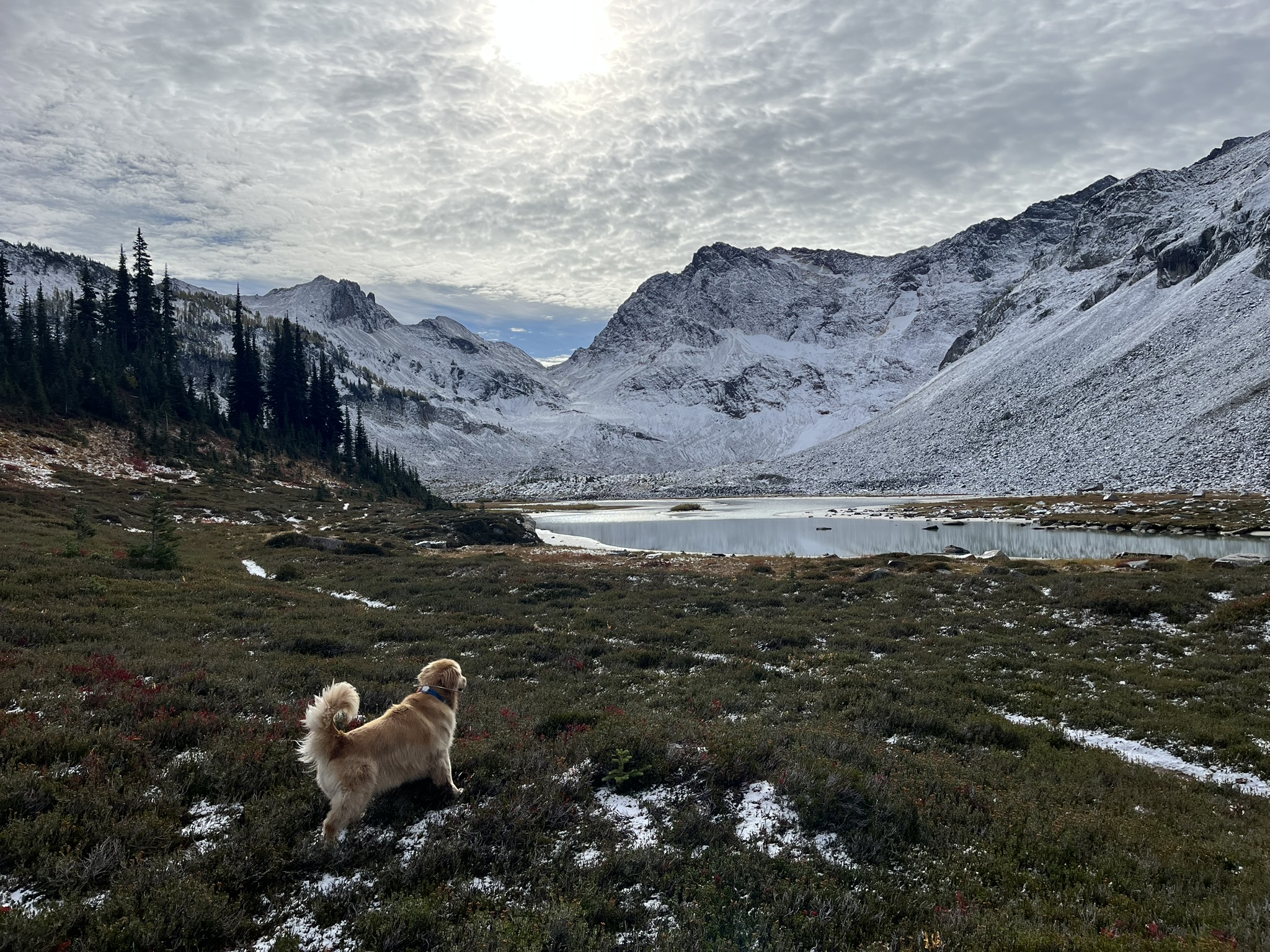
Holden
Three days through Holden Village, Lyman Lake, and over Spider Gap — golden larches, frosty dawn reflections, and a 7,000-foot pass crossing in early October.
Elevation Profile
Friday Evening — Into the Dark
We left Friday afternoon. My human loaded the car with that quiet efficiency that means big miles ahead. I know the signs. I sat in the back and watched the road climb.
The trail started in the late afternoon — Railroad Creek drainage, forest, the usual sounds of water and wind. No photos. When you're covering ground in fading light, there's no time to stop. The creek was loud and cold-smelling and I could feel the temperature dropping with every mile of elevation. We made Lyman Lake in the dark. My human set up the tent by headlamp somewhere in the meadow above the shore. I curled up on the ground pad and listened to the silence. At this elevation, early October silence has a particular weight to it. Everything is shutting down for winter and the mountains know it.
Saturday Morning — Lyman Lake
I woke to this.
Lyman Lake sat in its basin like a piece of broken sky. The peaks around it had caught the first real snow of the season overnight — every ridge and couloir dusted white, the rock still dark underneath. The air was cold. Mid-30s, maybe less. I could smell frost on the meadow grass and something mineral from the snowmelt feeding the lake.
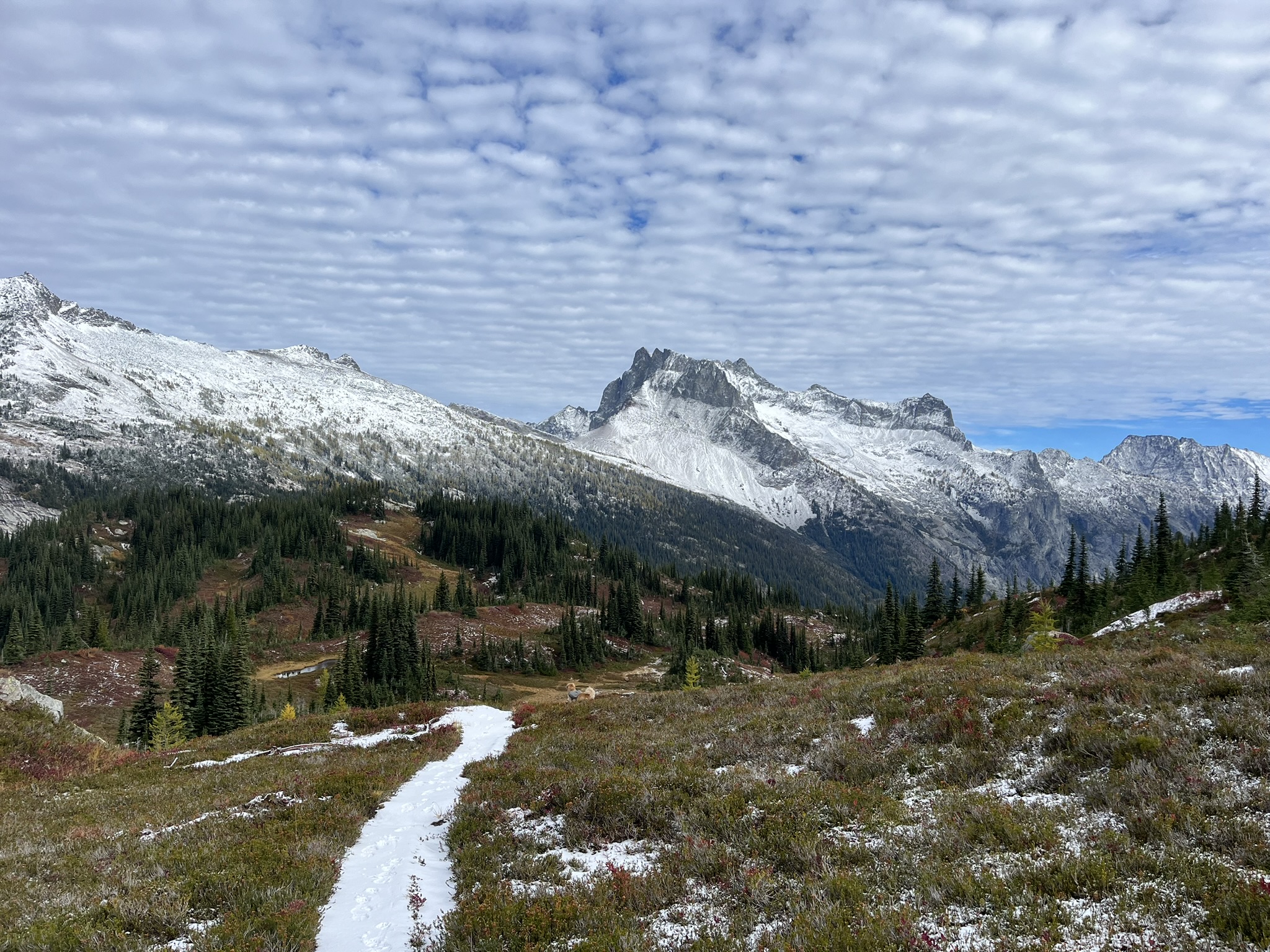
We explored the upper basin in the morning. The trail wound through subalpine fir and across meadows that were still half-green, half-gold. Above treeline, a snowy path led toward Cloudy Pass with a massive peak filling the horizon — rock and ice and fresh October snow.
Down to Holden Village
By midday we dropped back down the drainage. The plan: resupply at Holden Village, then hike back up for one more night at Lyman Lake before crossing Spider Gap in the morning.
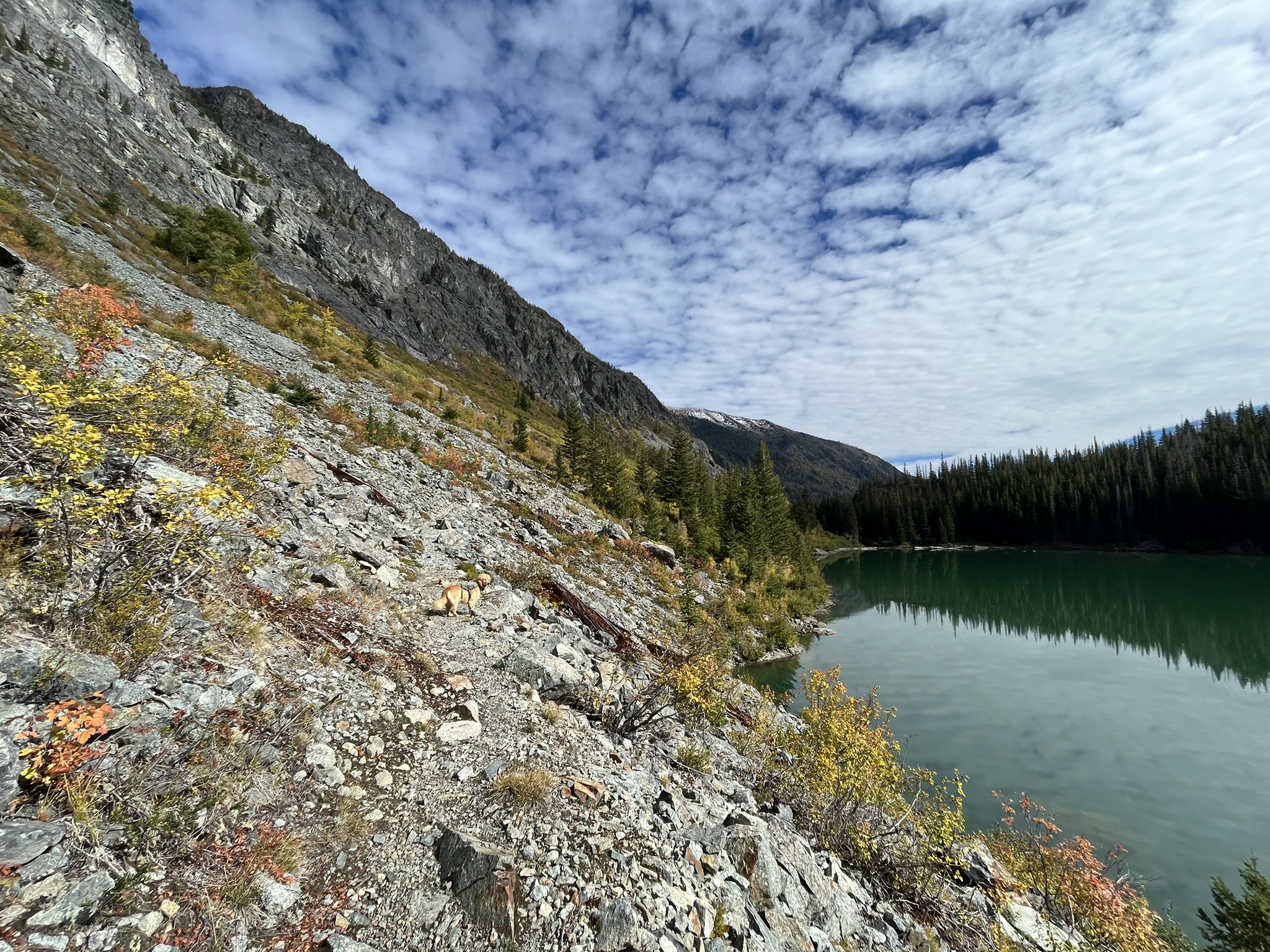
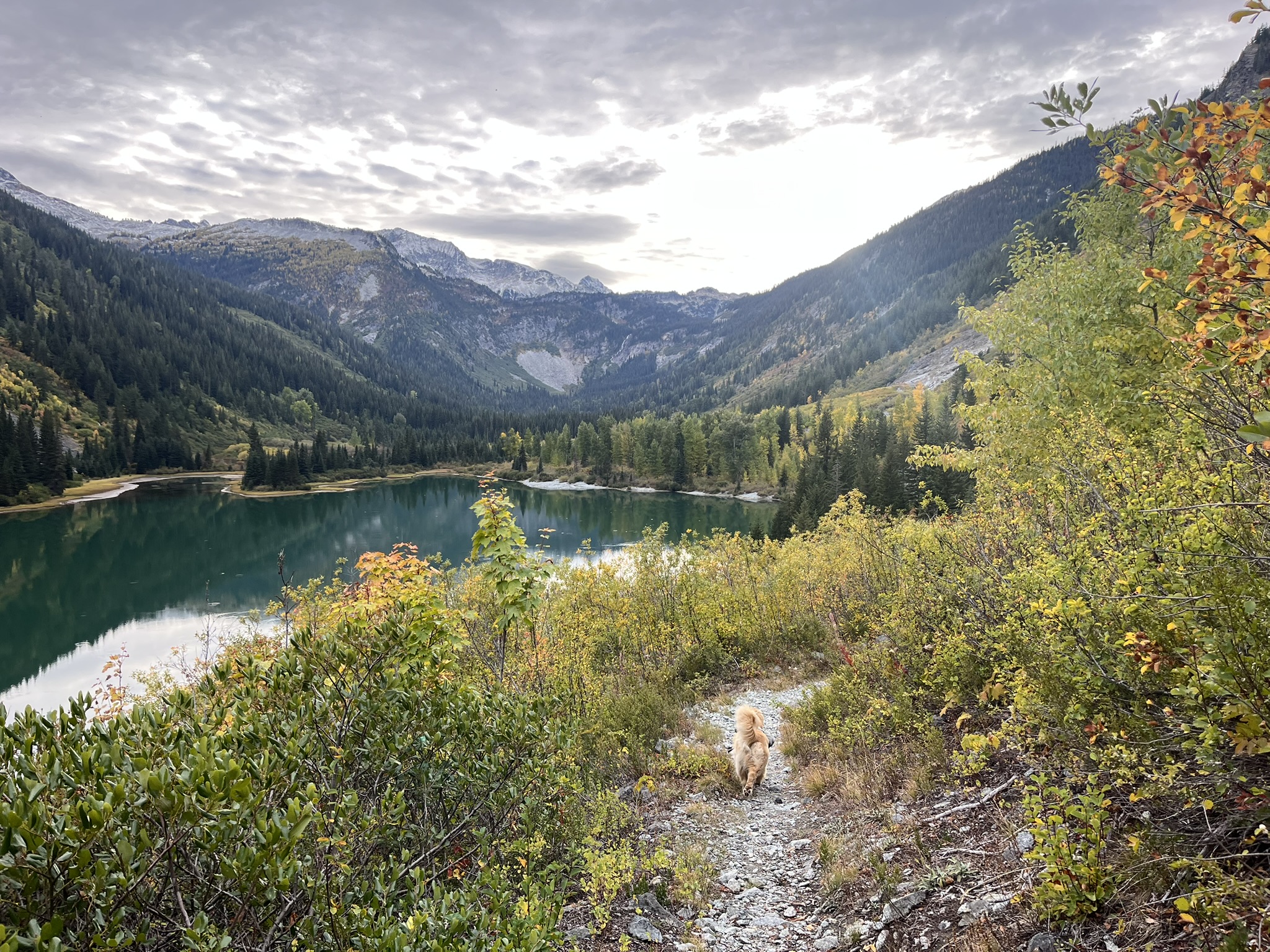
The descent followed Railroad Creek through fall color that got more intense with every hundred feet of elevation loss. Hart Lake appeared below the trail — turquoise water against rocky talus, yellow and orange shrubs crowding the shore.
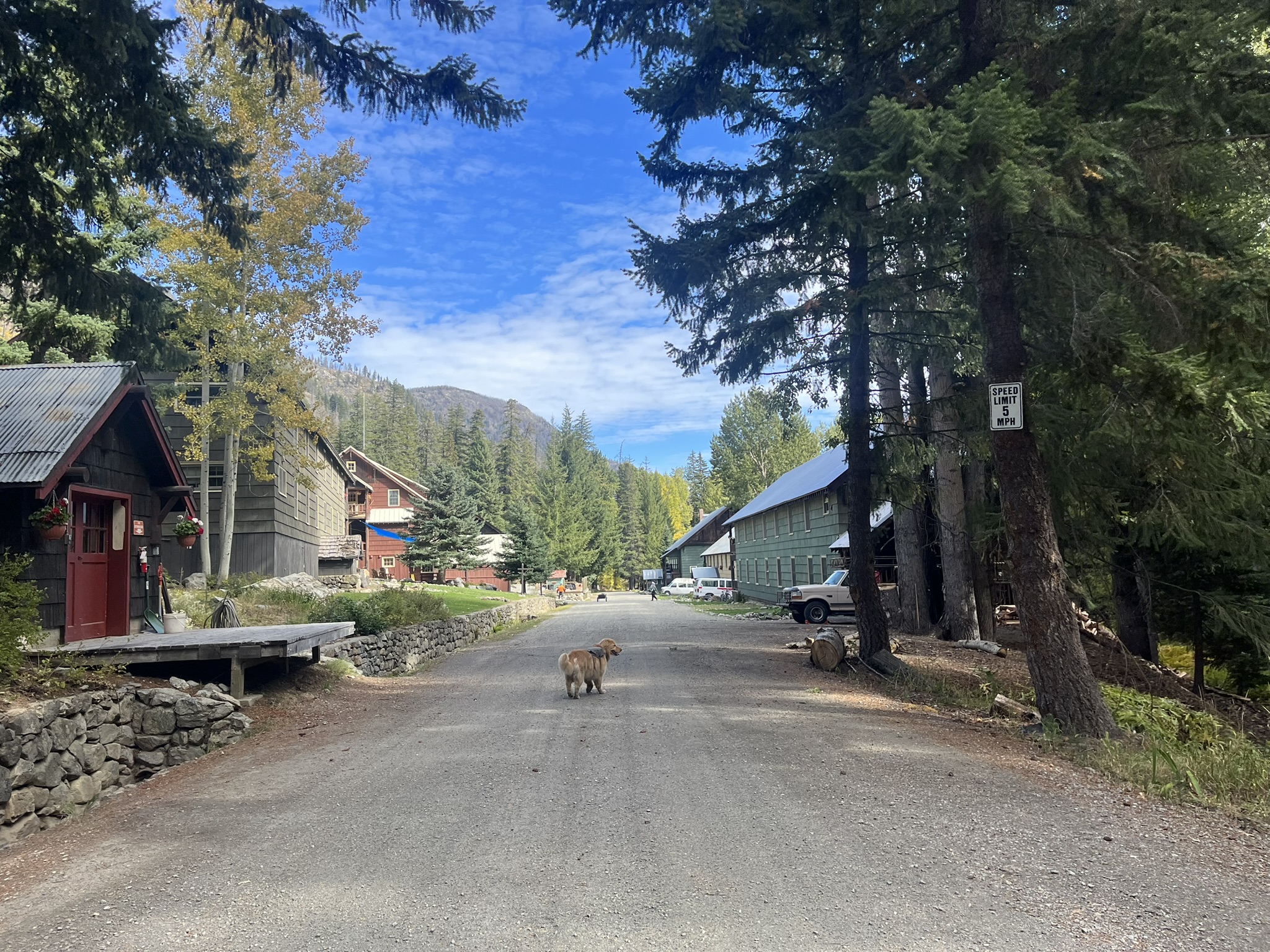
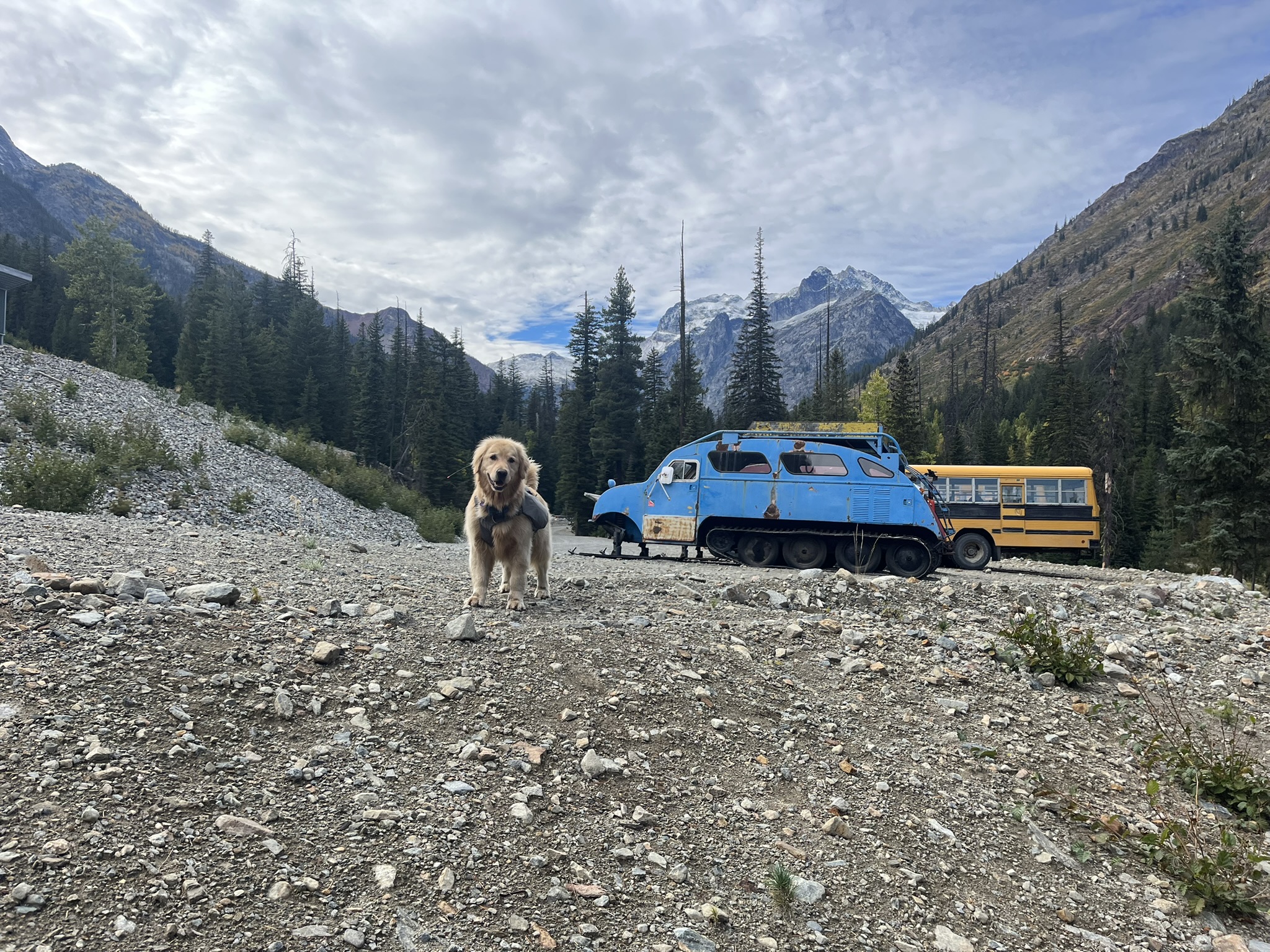
Holden Village is a strange and wonderful place. A former copper mining town turned Lutheran retreat center, tucked in the mountains at the end of an 11-mile road from Lake Chelan. No cars beyond the village. Rustic buildings, big trees, the smell of woodsmoke and cafeteria food. I walked the main road like I owned it.
There was a footbridge over Railroad Creek on the way out of the village. The mountains behind it were showing off — jagged peaks dusted with snow, fall color climbing the slopes. I stood on the boards and looked at all of it.
The Evening Return
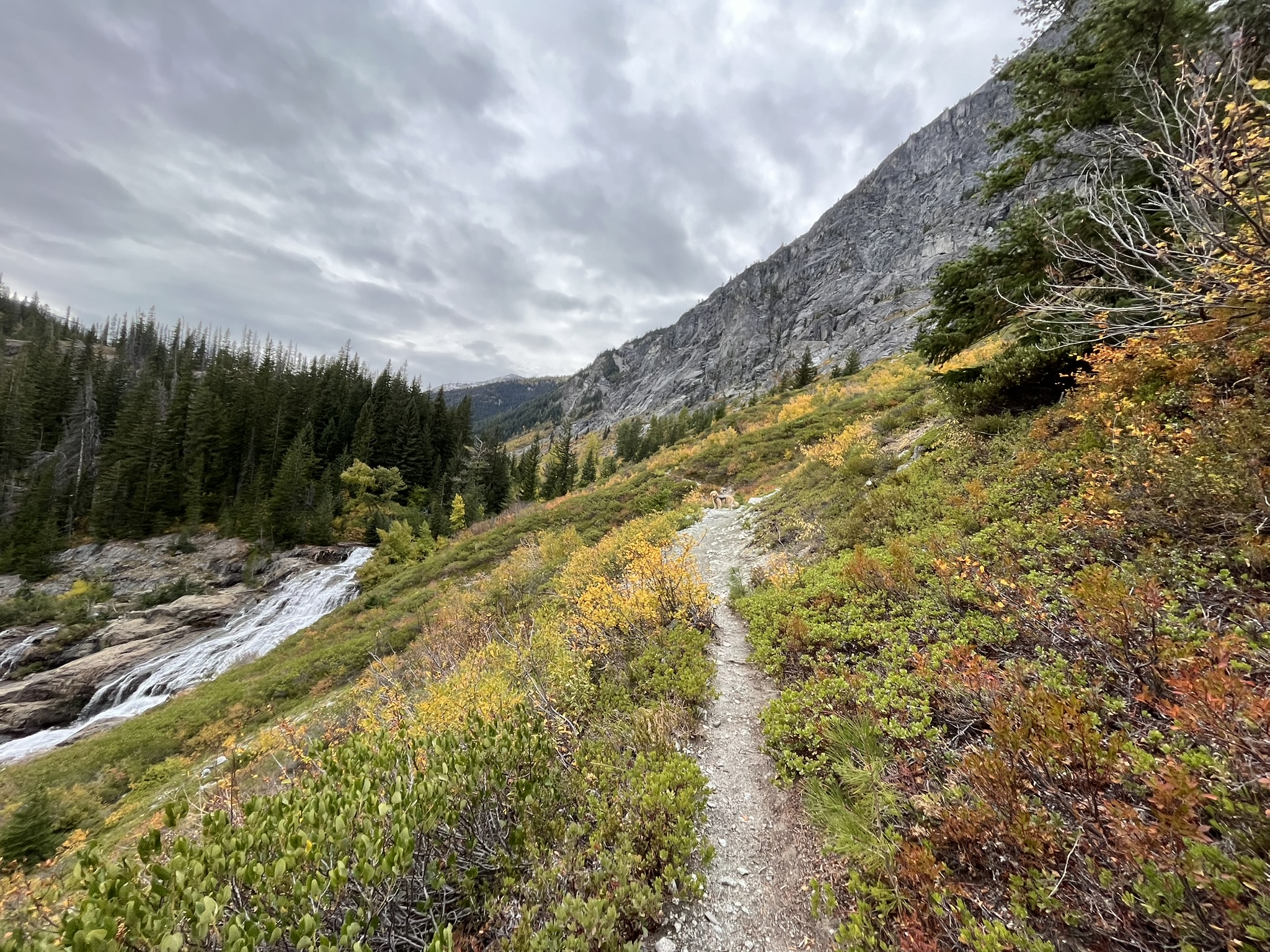
We climbed back up through the Railroad Creek drainage in the late afternoon. The trail ran alongside a waterfall — white water cascading down smooth rock, fall color blazing on both sides, a gray cliff wall rising above it all. The sound of the falls filled the whole valley.
Then the sky did something.
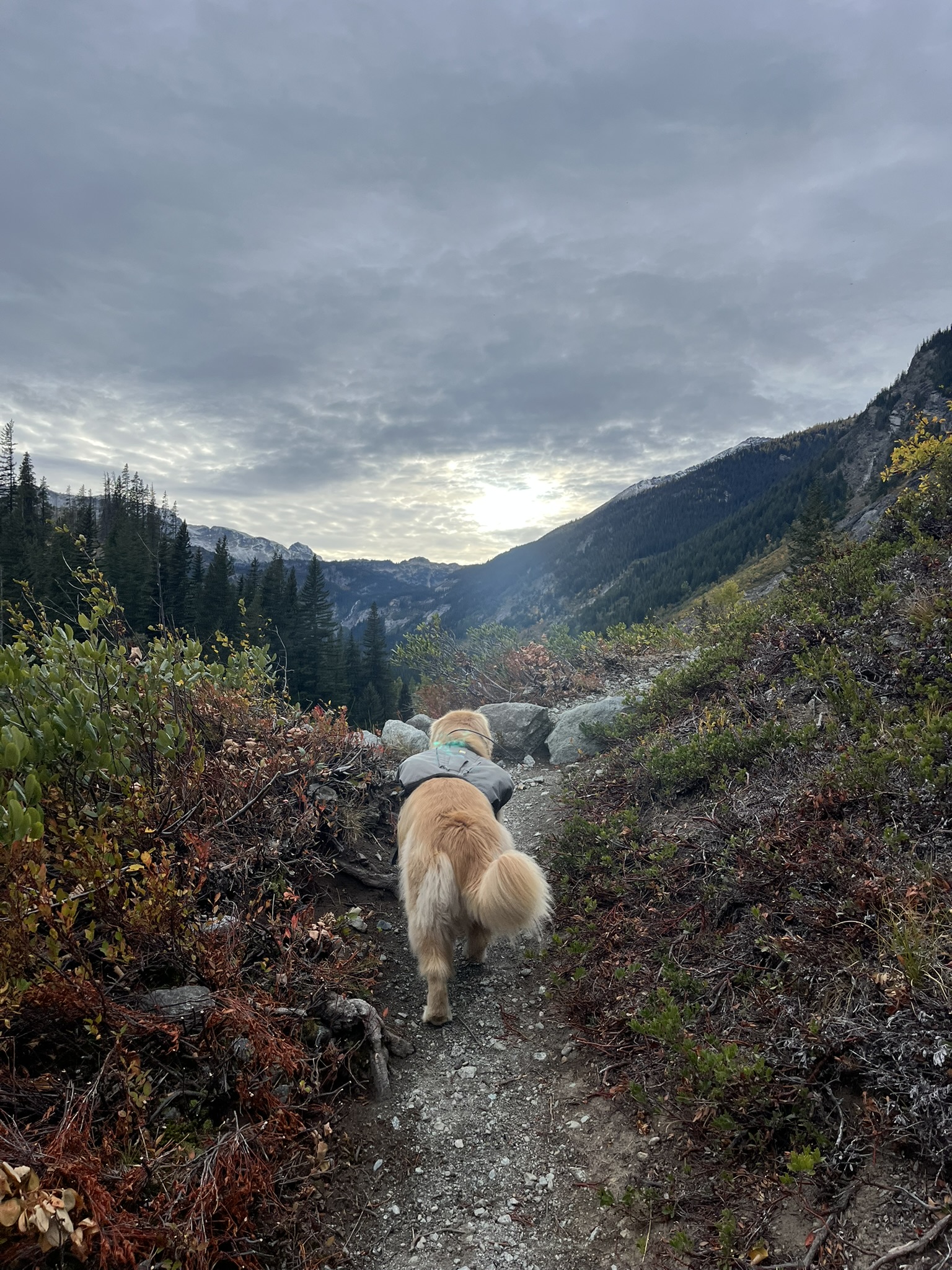
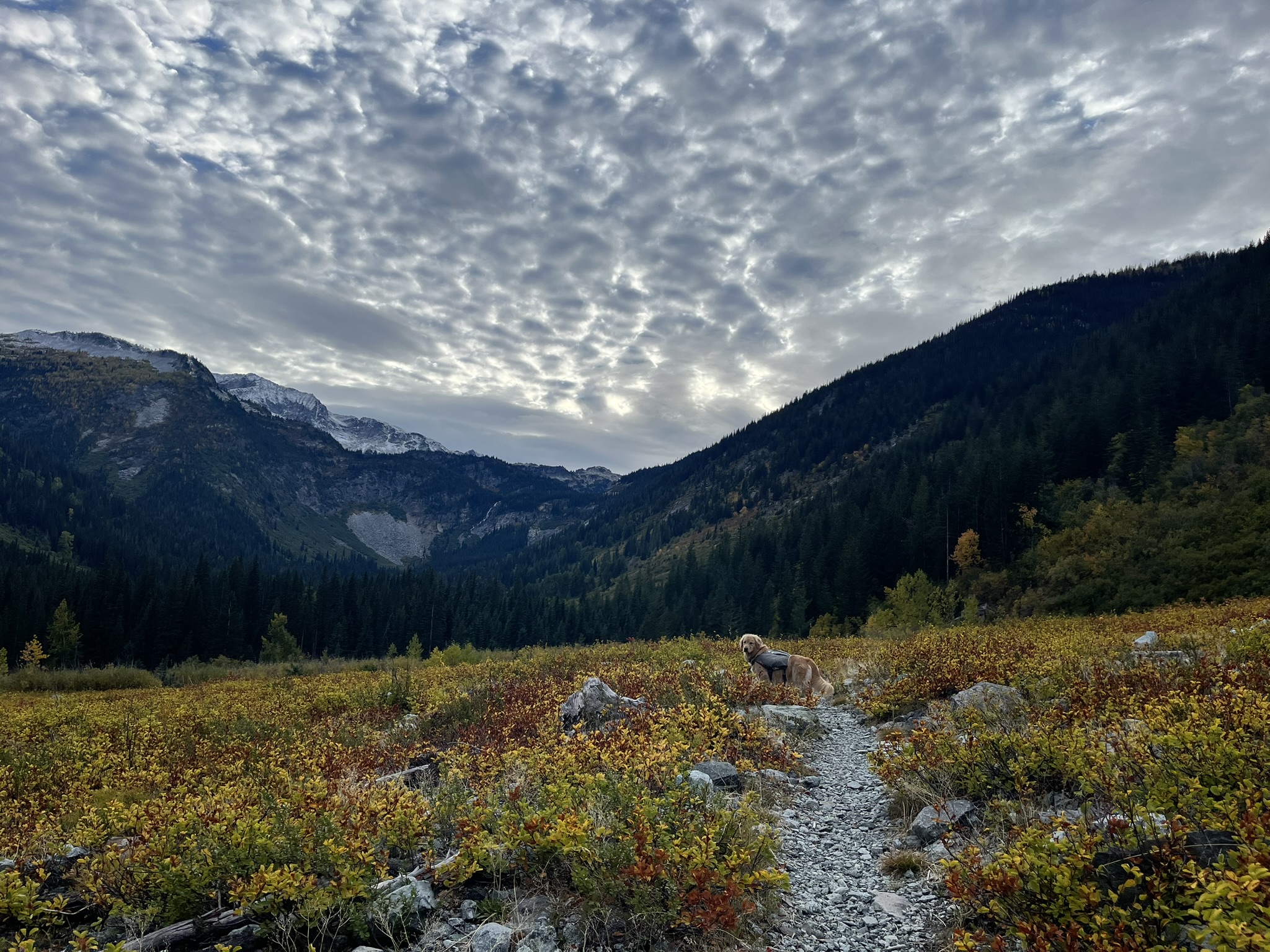
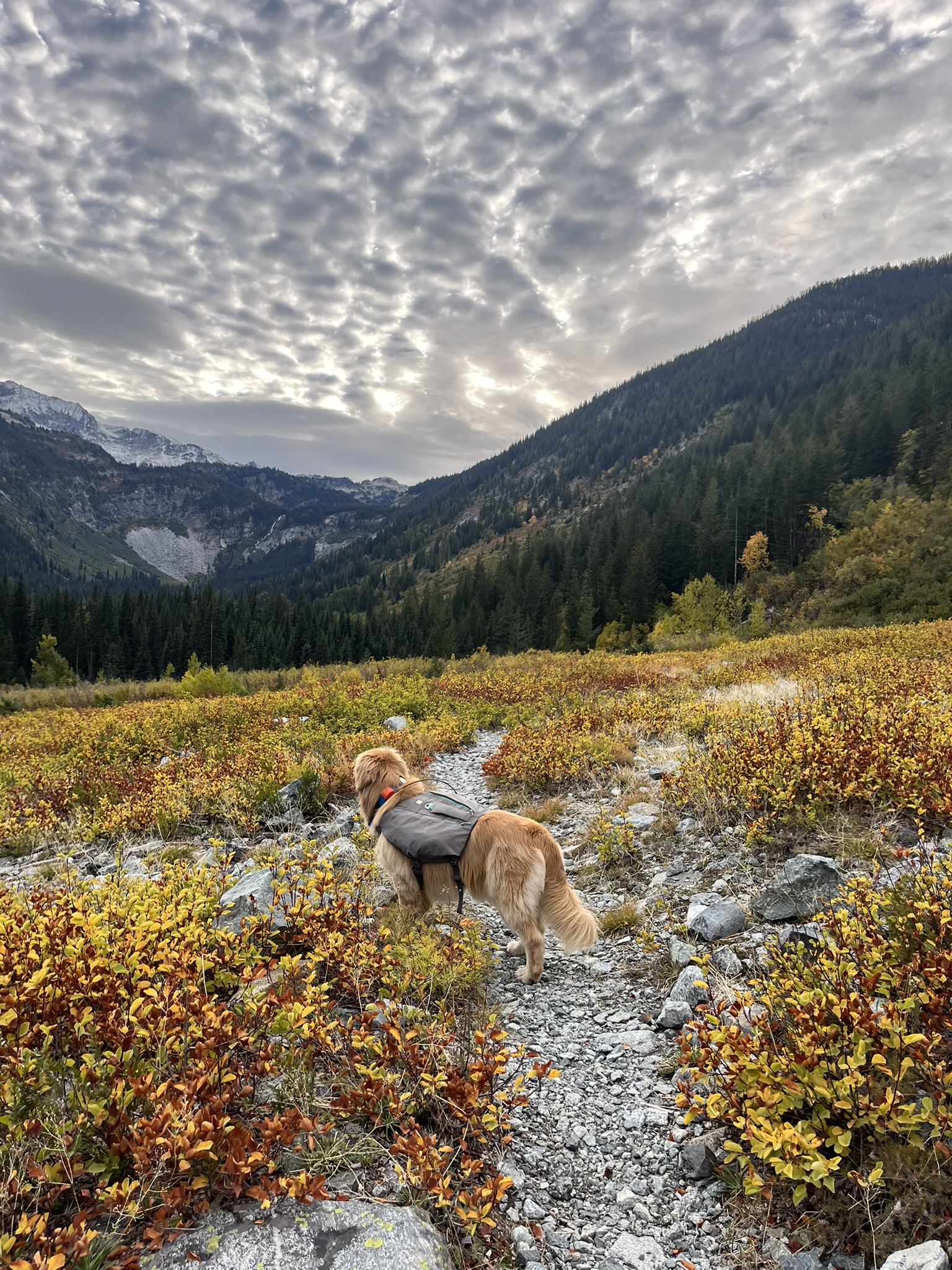
Mackerel clouds rolled in — thousands of small rounded puffs arranged in rows across the entire sky, backlit by the setting sun. Below them, the meadows had turned gold and crimson. I walked through it wearing my pack, looking down the valley toward where we'd come from. The light was the kind that makes you stop and forget you're tired.
We passed Hart Lake again on the way up. The turquoise water had gone still in the evening air, reflecting the clouds and the forest. I walked the shore trail above it, driftwood and dead trees framing the view.
Sunday Dawn — Lyman Lake
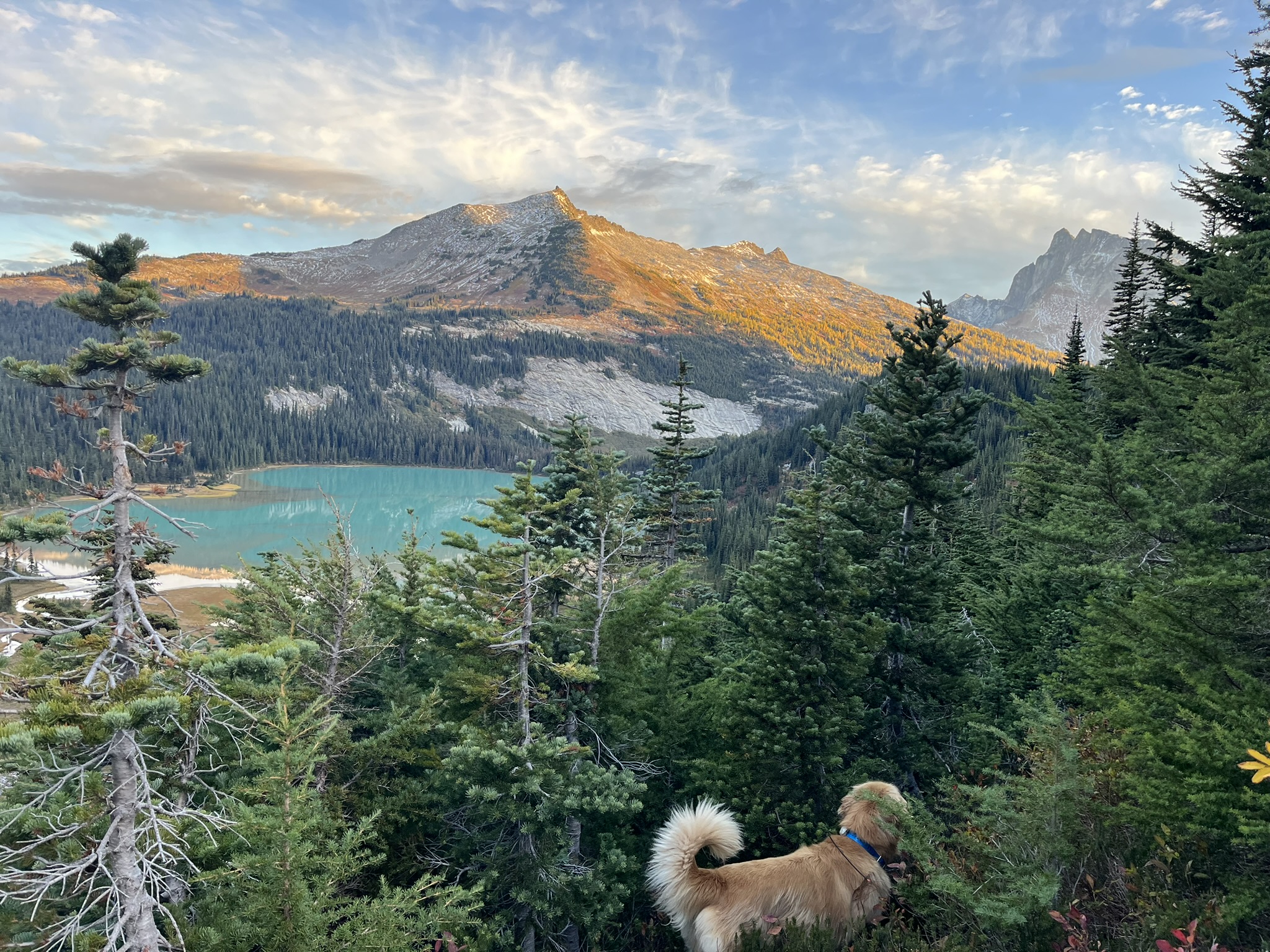
The temperature dropped hard overnight. When I stepped out of the tent at first light, frost coated every blade of grass. The meadow crunched under my paws. Twenty-two degrees, according to my human. The lake was absolutely still — not a ripple — and the snow-covered peaks reflected in it like a painting someone had folded in half.
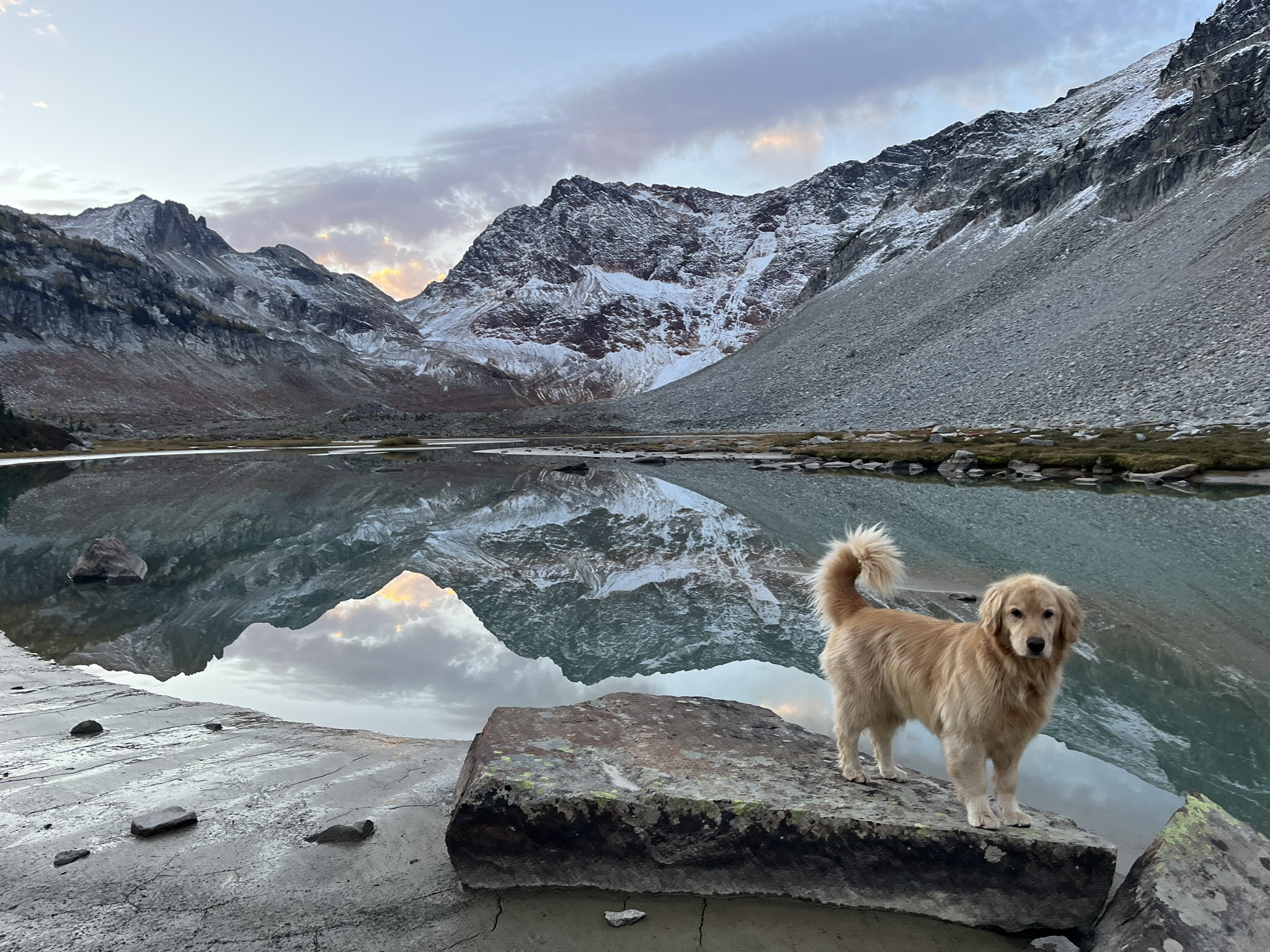
I stood there on a rock at the water's edge and watched the alpenglow creep down the peaks. The reflection was so sharp that you couldn't tell which mountains were real and which were water. I could see my breath. My paws were cold. I didn't care.
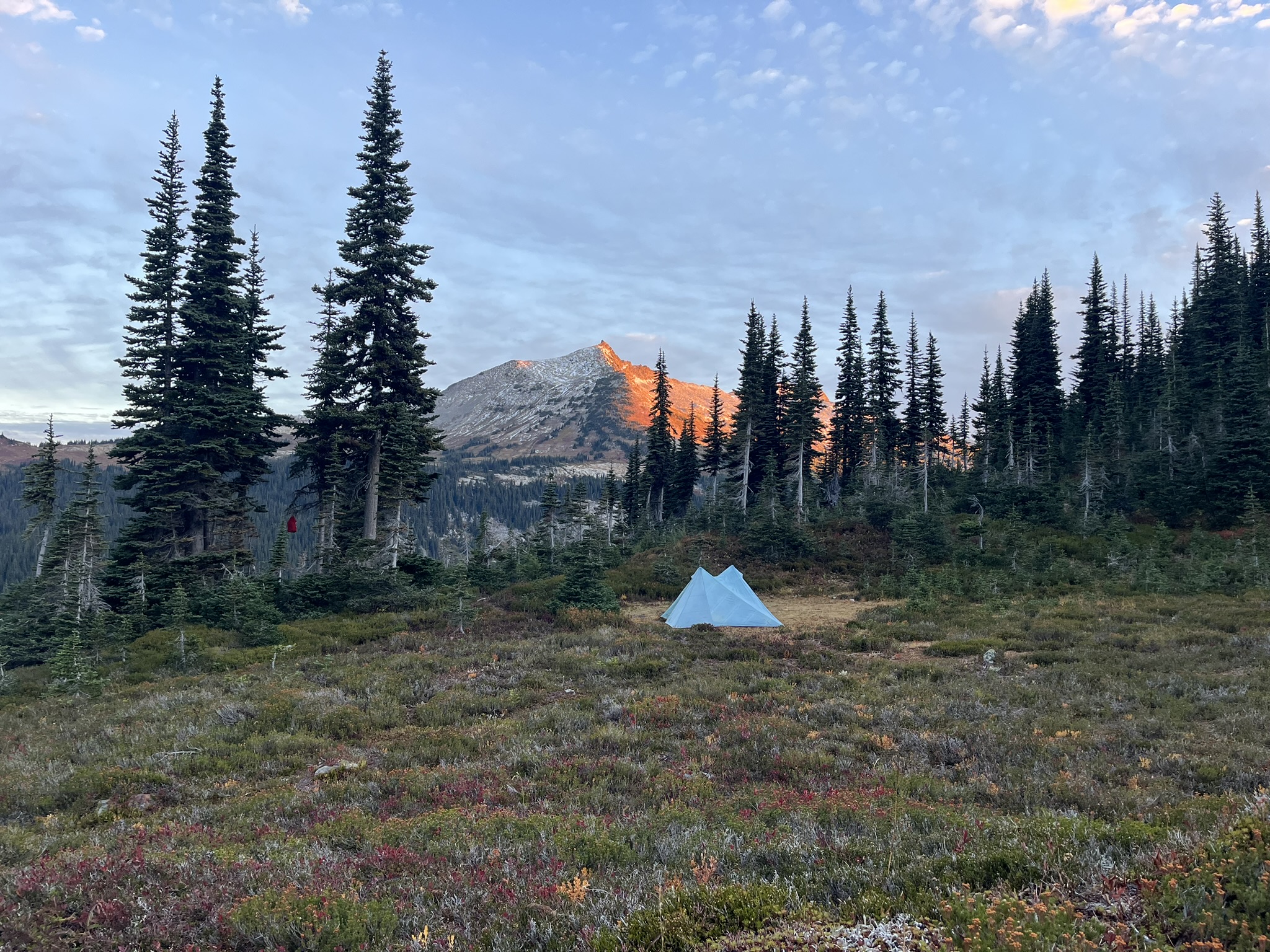
Our tent sat among the subalpine firs with a peak glowing orange behind it. Camp mornings like this are why we carry the weight.
From the trail above camp, I could look back at the full lake — turquoise water, white peaks, golden morning light hitting the ridgeline above. This was the view I'd slept next to for two nights without fully seeing it until now.
Upper Lyman Lakes
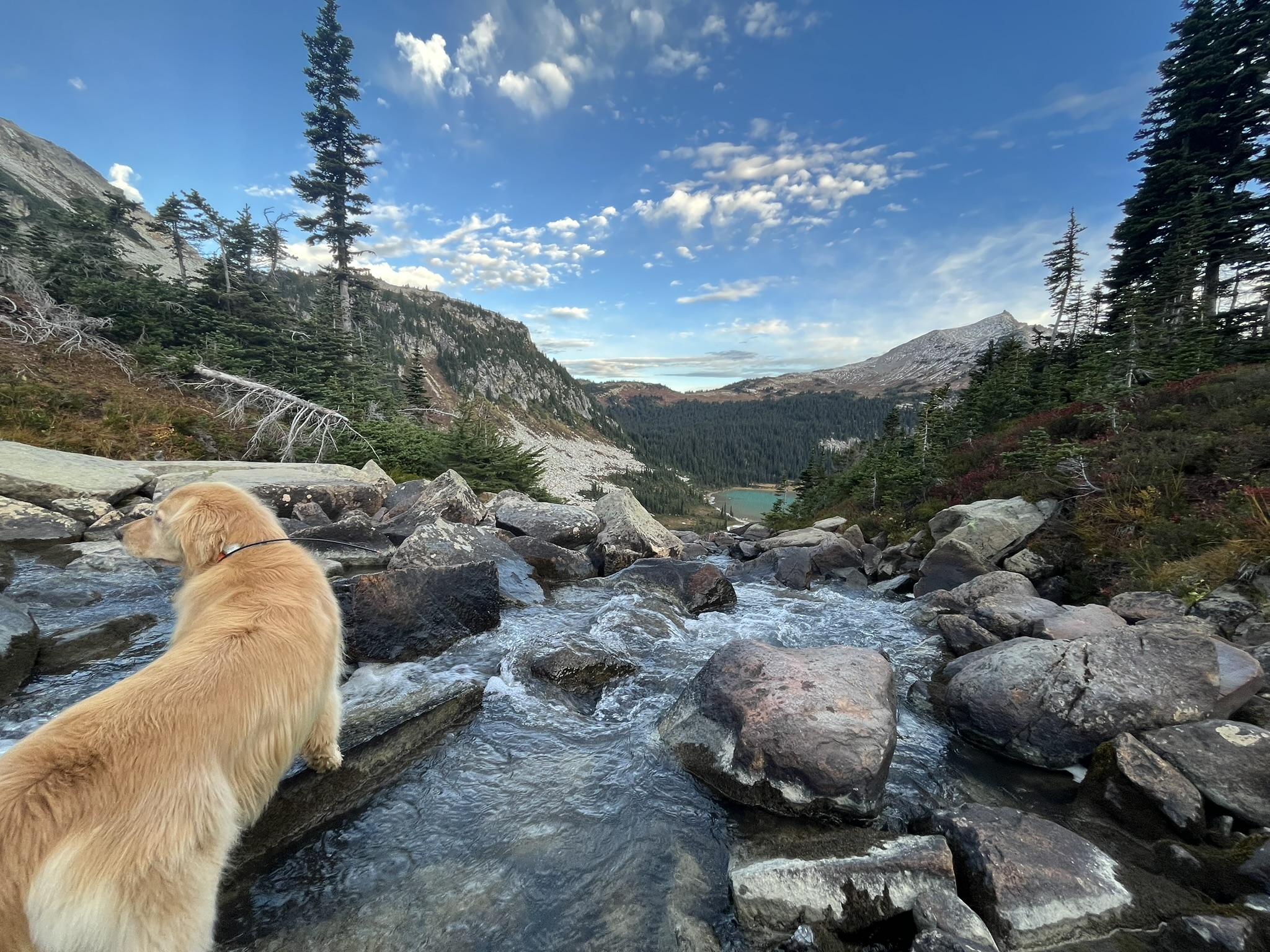
We broke camp and headed for Spider Gap. The trail climbed above Lyman Lake through boulder fields and creek crossings, the water running fast and clear over smooth rock. I stood at the outlet and looked back down at the lake one more time. Lyman Lake sat below me like a turquoise eye in the gray rock. The mountains rose on all sides. It was hard to leave.
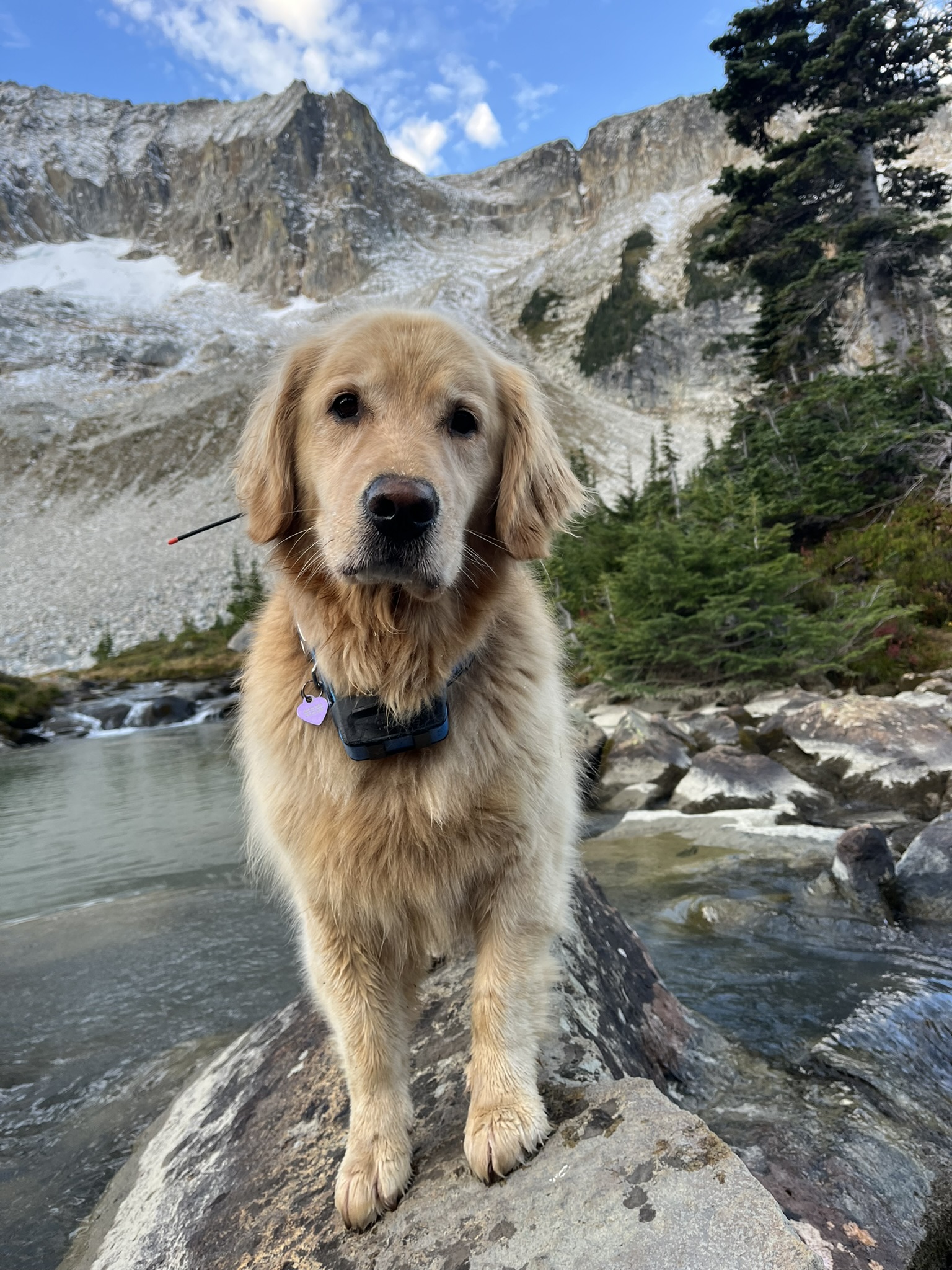
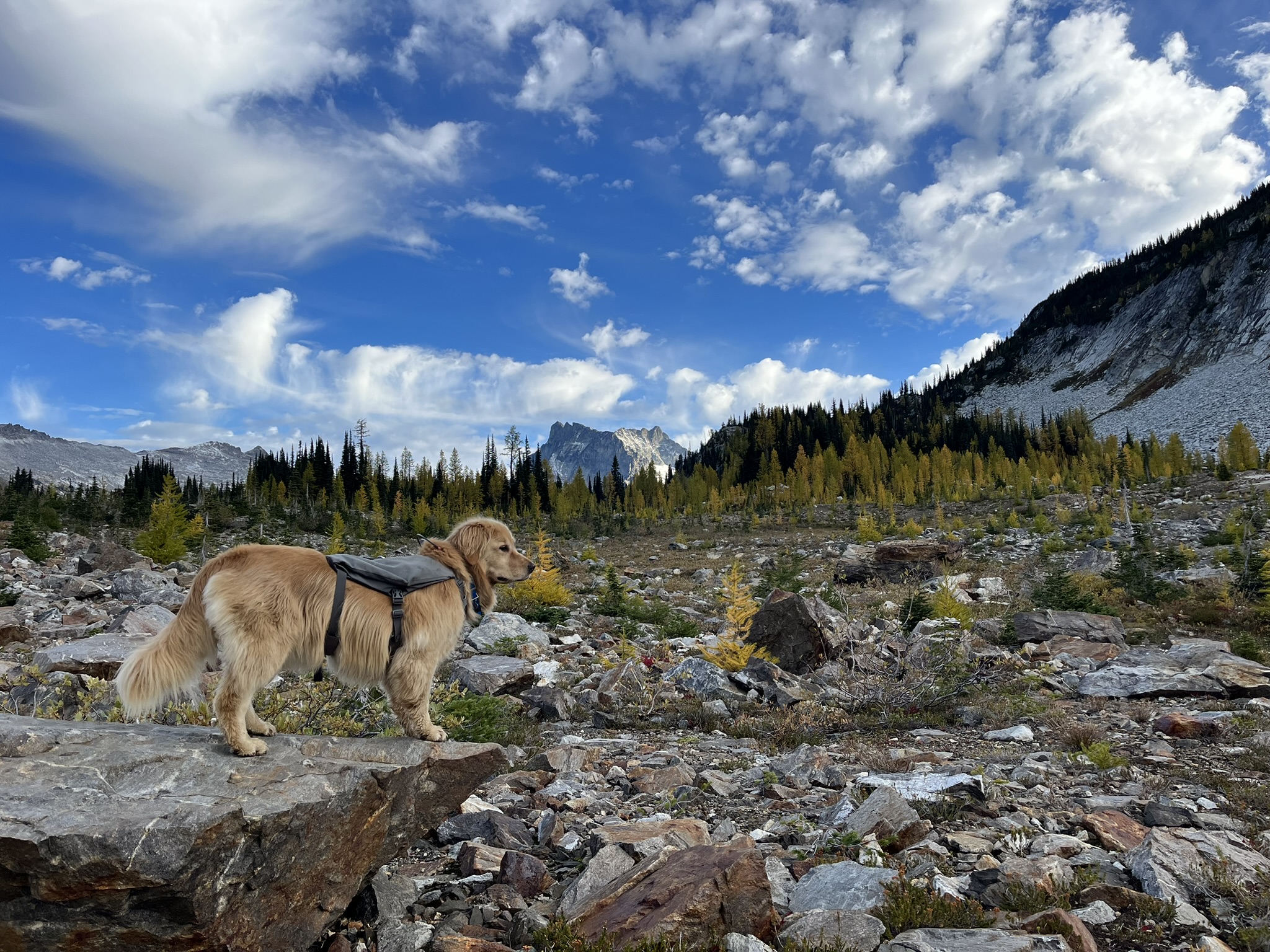
I found a stick at the creek. Obviously. It was a good one — straight, the right weight. I carried it onto a boulder and stood there with the glaciated cirque behind me while my human took my portrait. This is what I look like when I am extremely satisfied.
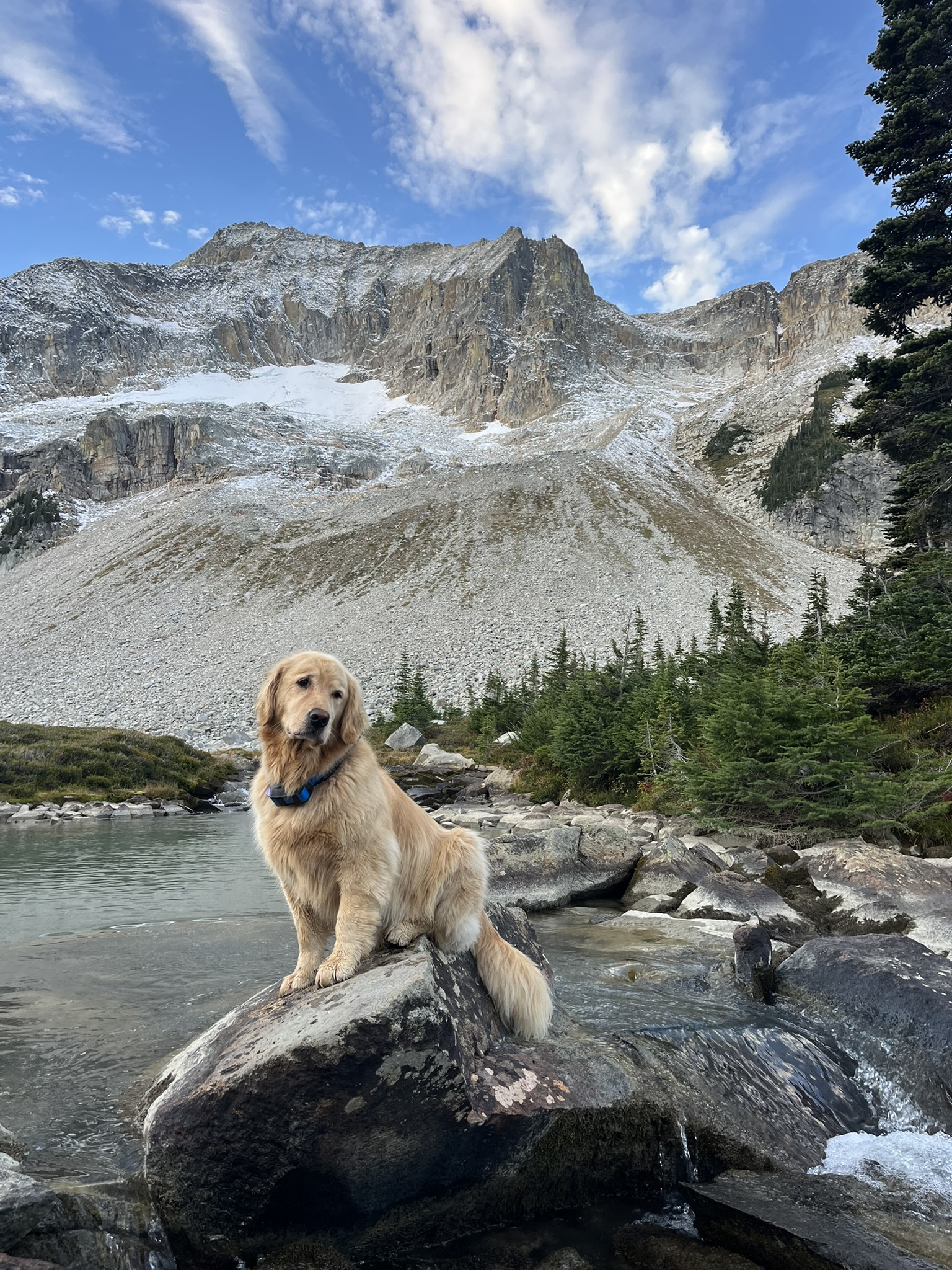
Upper Lyman Lake sat in a higher cirque, milky turquoise, hemmed in by talus and the remnants of Lyman Glacier. Nova sat on a boulder at its edge and took it all in. This was bigger, rawer, quieter than the lower lake. No trees. Just rock, ice, water, sky.
Then the larches appeared.
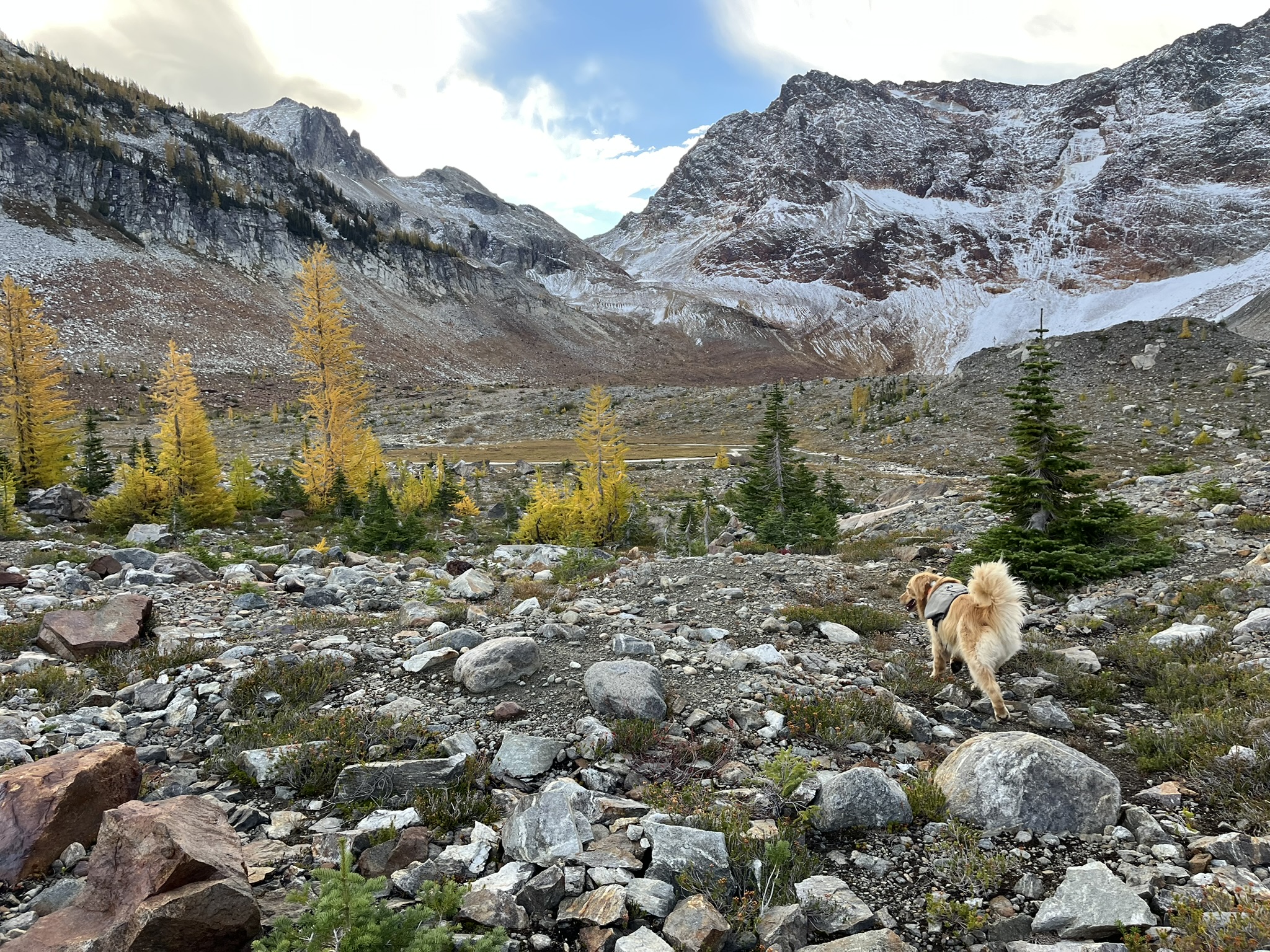
Golden larches scattered through the boulder fields like someone had lit candles in the rock. They were peak color — every needle turned, glowing against the gray talus and white snow. I walked through them with my pack on, sniffing the cold air, which smelled like resin and granite dust.
Spider Gap
The terrain above the larches turned to snow and talus. We climbed through a field of boulders toward the notch in the ridge — Spider Gap, 7,031 feet. The views kept opening up behind us. I could see the tarns and lakes we'd passed strung out below, with jagged peaks on the horizon.
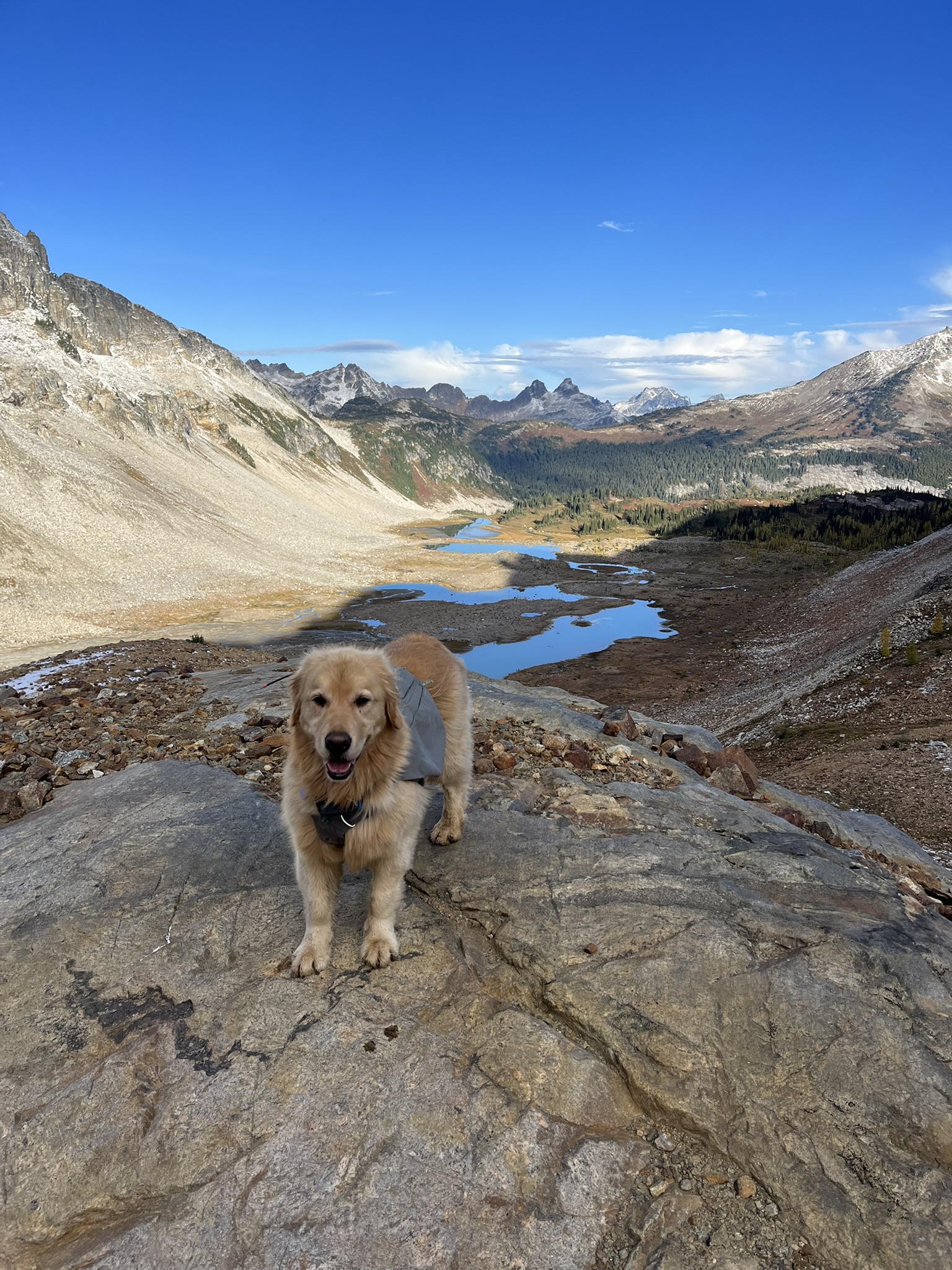
The last stretch to the gap was all snow. Fresh, white, crunching under my paws. I was grinning. Snow at 6,600 feet in early October, the sun full on my face, the whole Glacier Peak Wilderness spread out below. This is exactly where I belong.
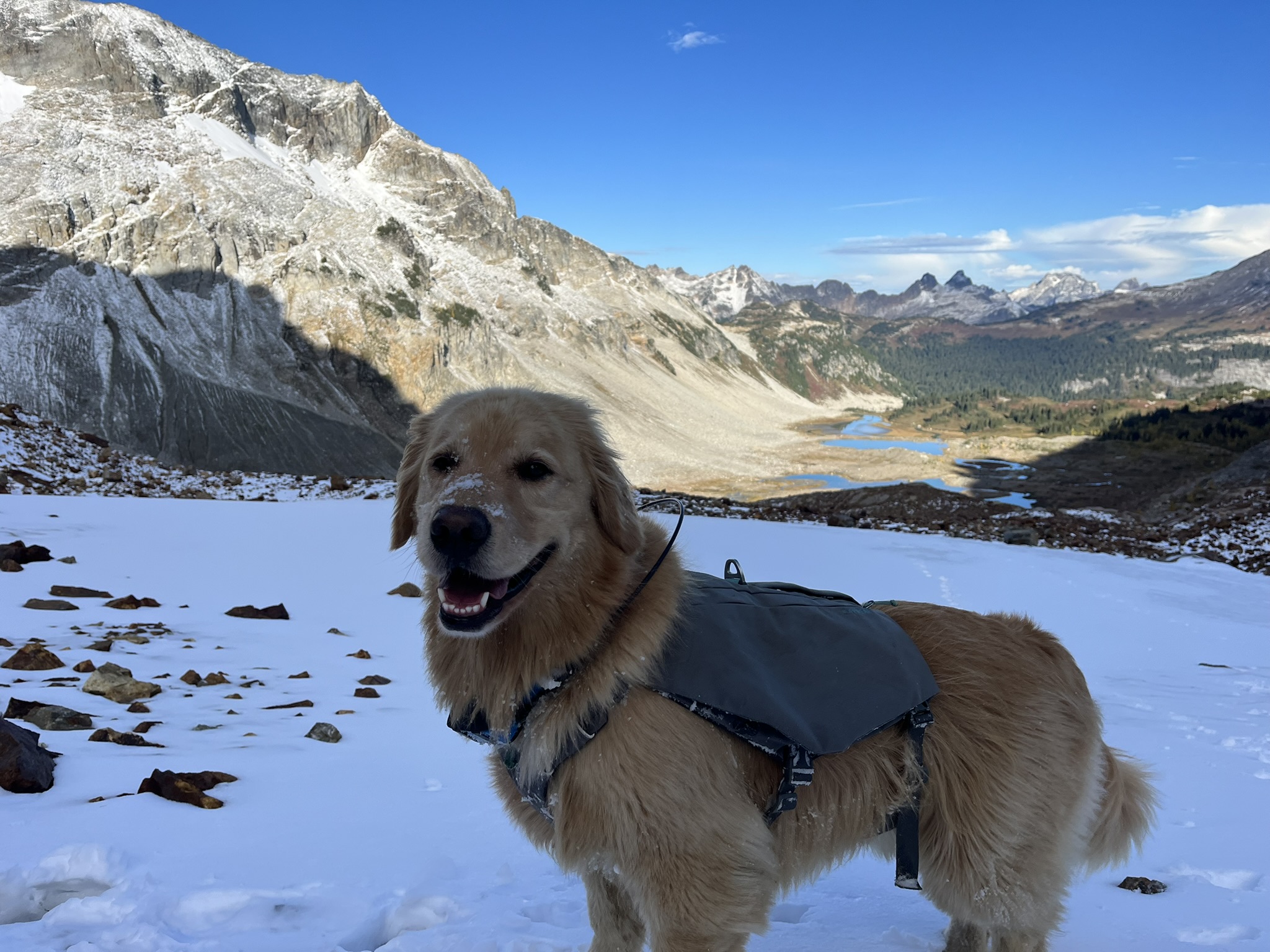
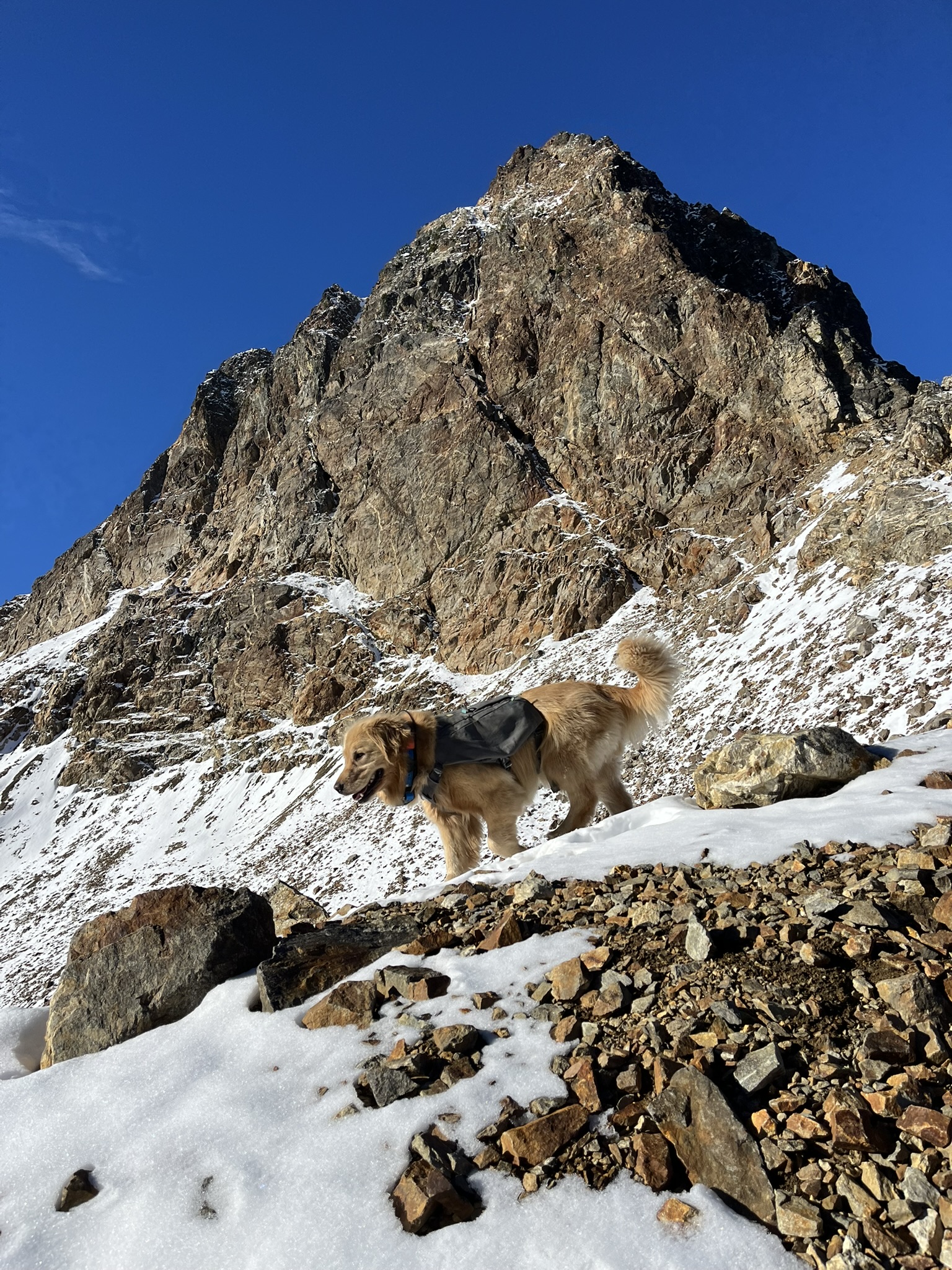
Spider Gap itself was a notch between dark rocky spires. I stood below the summit crag at 7,031 feet and looked up at it. Snow and rock and sky. The wind was light but the air was thin and cold. This was the high point — the highest we'd be on this trip.
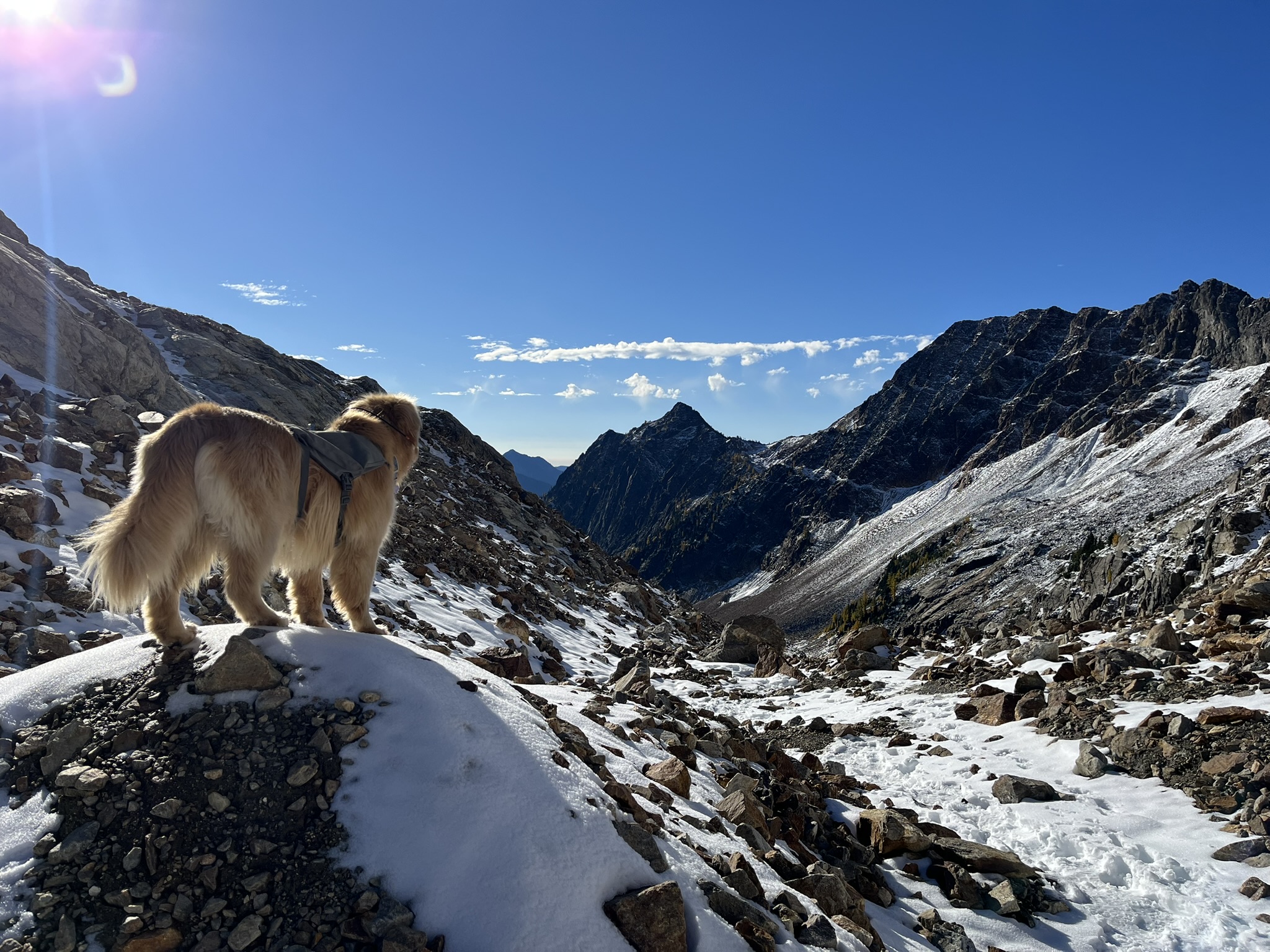
On the far side, the world dropped away. I stood at the edge of the gap and looked south through a corridor of dark rock toward a distant peak. The Spider Glacier fell away below us, white and steep. Everything on this side was different — wilder, less traveled, the snow deeper.
The Descent — Spider Glacier to Phelps Creek
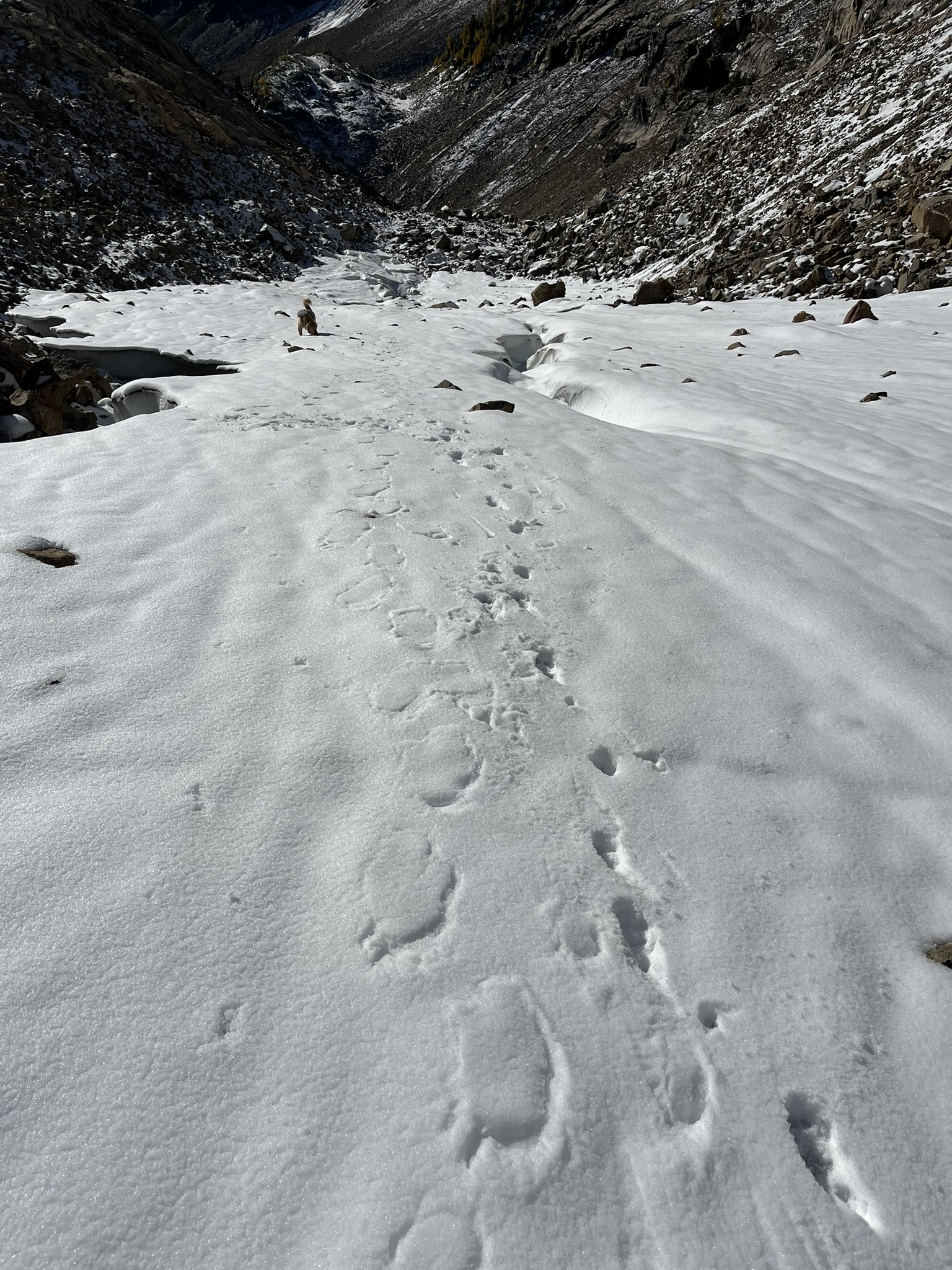
We descended through boot tracks in the snow. My human's prints and my paw prints, side by side, heading down the glacier. The snow was soft enough to kick steps in. Below us, the valley opened up — rocky walls, snow bridges spanning the meltwater channels, and silence.
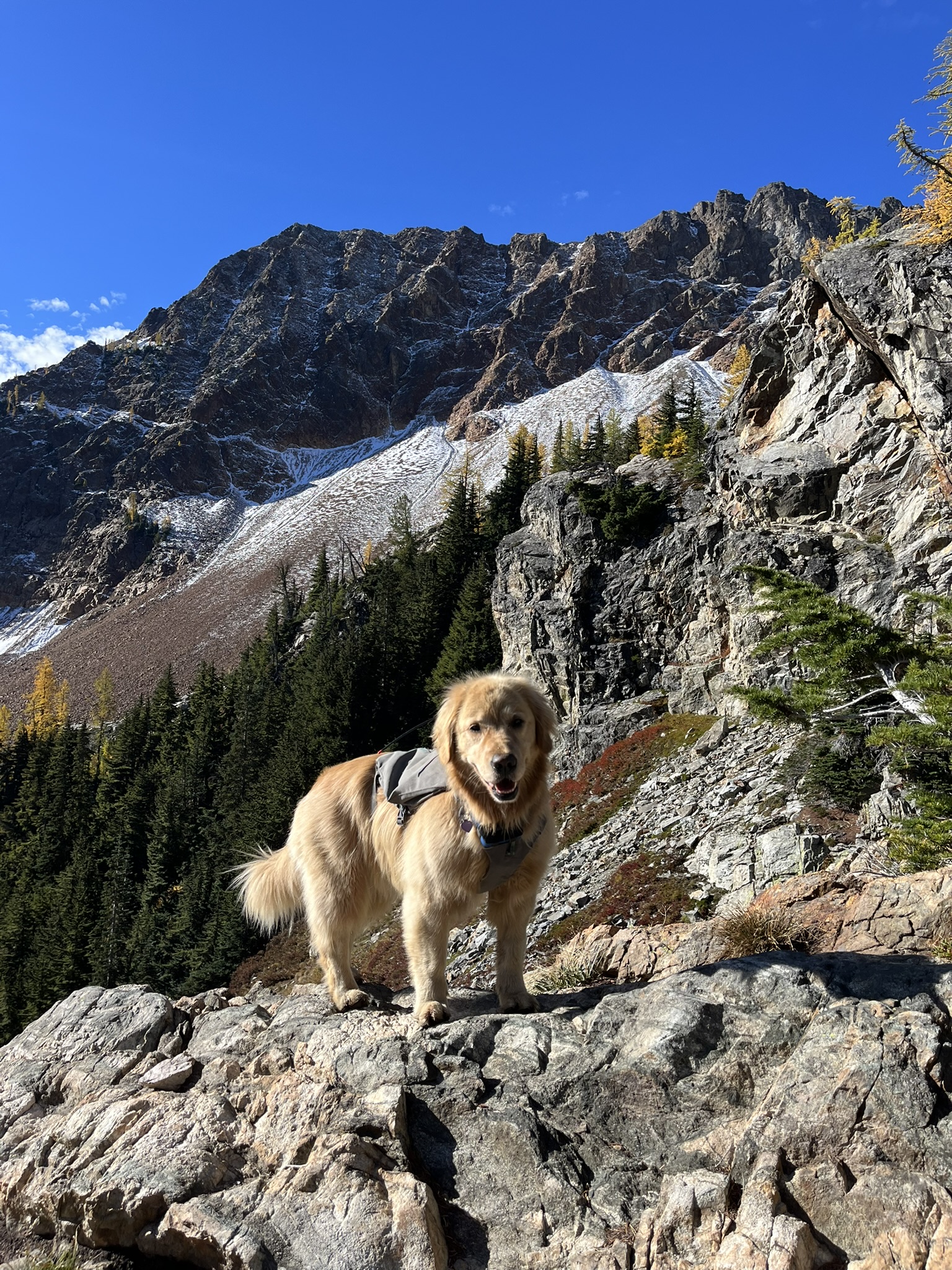
Below the snow, the trail dropped into a world of color. Golden larches gave way to red huckleberry, orange mountain ash, green subalpine fir. The lower we went, the warmer and more vivid everything became. I walked through it with the sun on my back, which felt like a reward after two cold mornings.
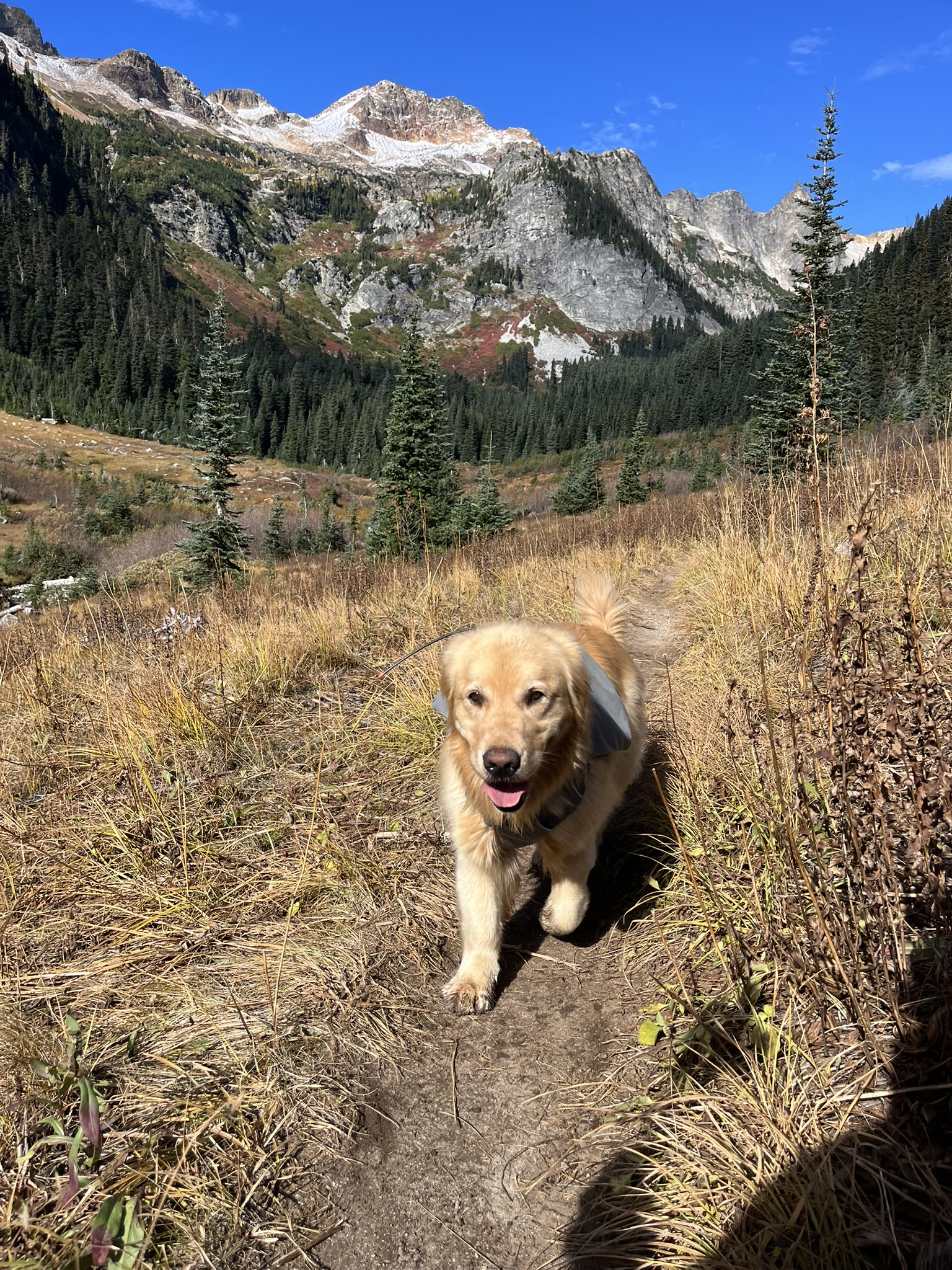
Spider Meadow opened up at the bottom — a wide, golden grassland ringed by mountains. I sat on a fallen log and looked around. The peaks above still held snow. The meadow grass was gold and dry. The creek ran somewhere nearby, quiet now after all the drama above.
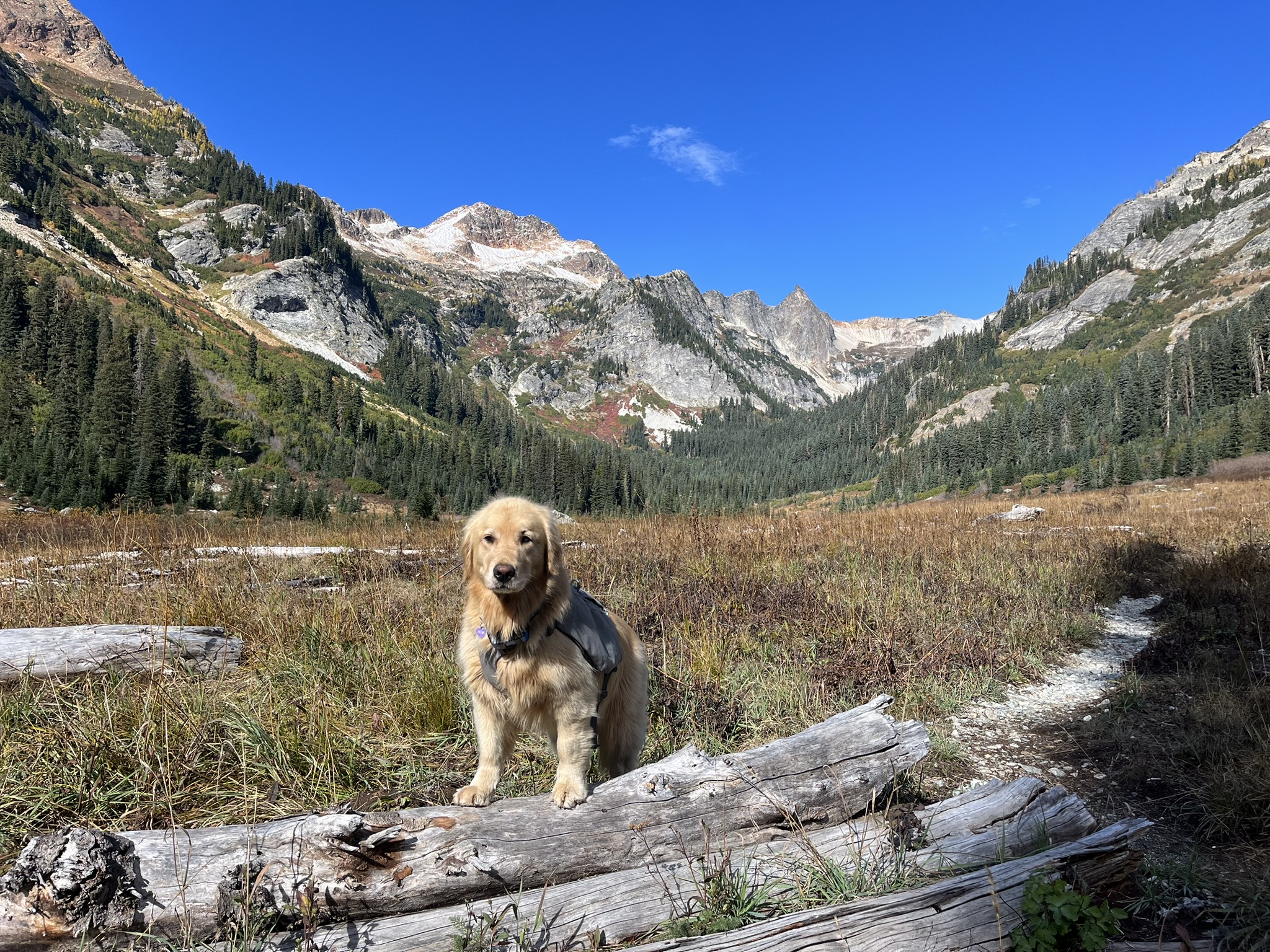
Three days. Forty-seven miles. Lyman Lake to Spider Gap and out the other side. Holden Village in the middle of it, with its woodsmoke and its bridges. Golden larches at treeline. A frosty dawn that turned the lake into a mirror. Snow underfoot at 7,000 feet.
I slept in the car on the drive home. Noted.